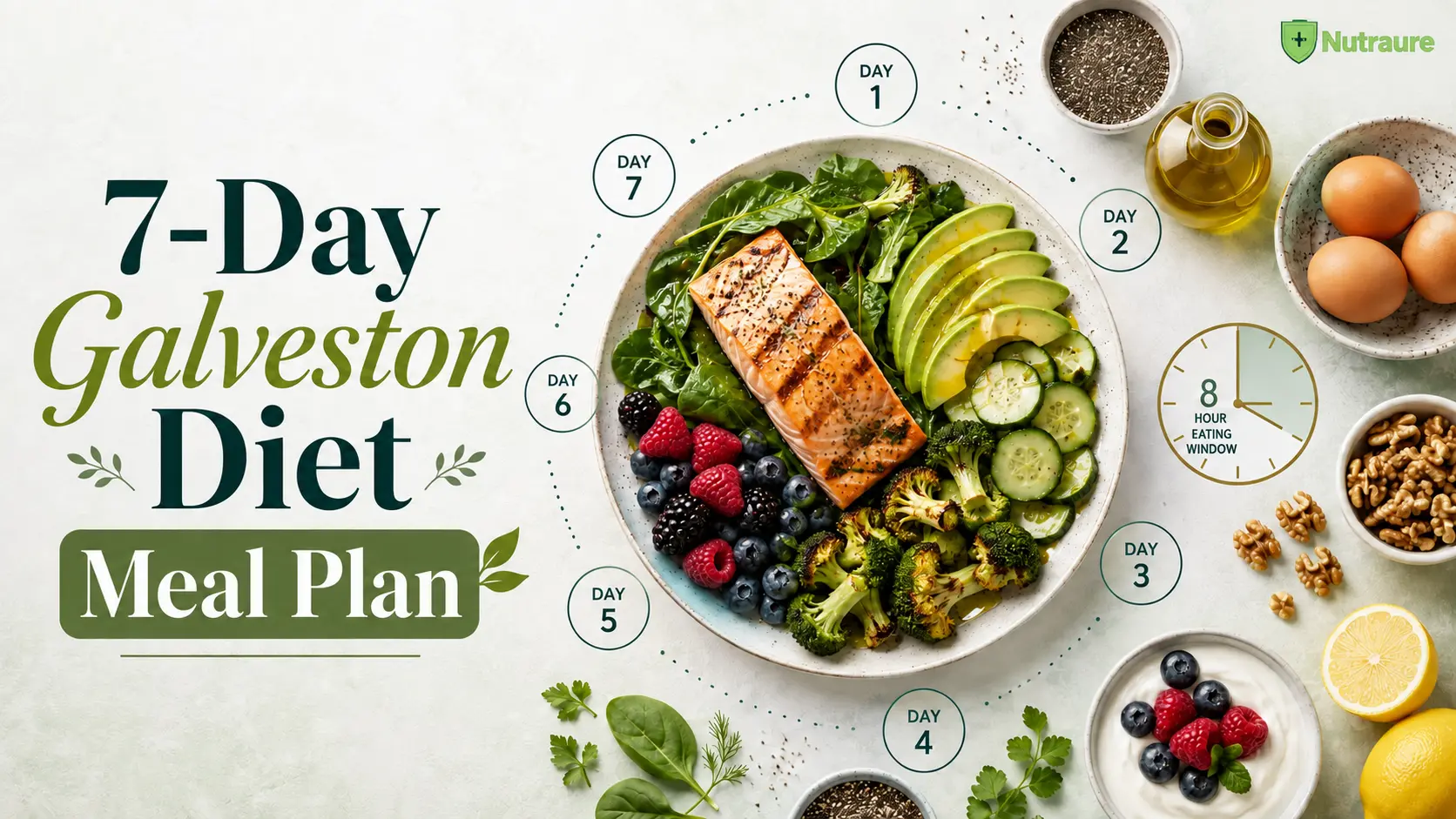
Starting a new eating routine should not mean buying unusual ingredients, calculating every bite, or spending your entire Sunday cooking. This 7-day Galveston diet meal plan turns the program’s central ideas into 21 approachable meals, a practical eating schedule, and one organized grocery list.
The Galveston Diet was developed primarily for women navigating perimenopause, menopause, and midlife changes. It combines meal timing with a greater emphasis on vegetables, protein, healthy fats, and minimally processed foods. Its three branded components are intermittent fasting, anti-inflammatory nutrition, and “Fuel Refocus.”
This article is an independent educational meal-plan example. It is not an official Galveston Diet menu, a personalized prescription, or a promise of weight loss. Menopause affects every woman differently, and changes in hormones, body composition, sleep, health, medication, and activity can all influence nutritional needs.
What Is the Galveston Diet?
The Galveston Diet is a branded wellness and nutrition program created by Dr. Mary Claire Haver, an OB-GYN who focuses on women’s health. Rather than relying only on conventional calorie restriction, the program emphasizes when you eat, the quality of the foods you choose, and the balance of fats, protein, and carbohydrates in your meals.
The plan is marketed mainly to women in perimenopause, menopause, and later midlife. That focus matters because the menopausal transition can affect how the body uses energy and where fat is stored. However, menopause is a normal stage of aging rather than a disease, and no single diet can guarantee that it will eliminate symptoms or produce a particular body-weight result.
Many of the plan’s foods—vegetables, fish, nuts, seeds, olive oil, lean proteins, and minimally processed ingredients—also appear in widely recommended healthy eating patterns. The American Heart Association, for example, recommends dietary patterns that emphasize vegetables, fruit, whole grains, beans, fish, poultry, nuts, and non-tropical vegetable oils while limiting added sugar and highly processed foods.
Readers who want to explore the branded system directly can visit the official Galveston Diet website.
How the Galveston Diet Works
The program is organized around three main ideas. Understanding them makes the weekly menu easier to follow without turning every meal into a complicated set of rules.
1. Intermittent fasting
Intermittent fasting focuses on when you eat. Instead of eating from early morning until late evening, you place your meals inside a defined window.
The 16:8 method is commonly associated with the Galveston Diet. It involves fasting for 16 consecutive hours and eating during an eight-hour window. For example, you might finish dinner at 7:00 p.m. and have your first meal the following day at 11:00 a.m. The official program notes that schedules may be adjusted according to a person’s routine and needs.
Intermittent fasting is not suitable for everyone. Johns Hopkins Medicine advises people to consult a healthcare professional before starting, particularly those who are pregnant or breastfeeding, younger than 18, living with type 1 diabetes, or managing a history of disordered eating.
2. Anti-inflammatory nutrition
The second component emphasizes nutrient-dense, minimally processed foods. In practical terms, that usually means building meals around:
- Leafy greens and colorful vegetables
- Fish, eggs, chicken, turkey, tofu, or other protein sources
- Olive oil, avocado, nuts, and seeds
- Berries and other whole fruits
- Herbs and spices
- Foods with little or no added sugar
The word “anti-inflammatory” is often used loosely online. It is safer to describe this as a whole-food eating pattern rather than suggesting that an individual food can treat inflammation or a medical condition.
3. Fuel Refocus
Fuel Refocus is the Galveston Diet’s term for paying closer attention to the proportions of fats, protein, and carbohydrates in your meals. The program generally shifts attention away from refined carbohydrates and added sugars while placing more emphasis on healthy fats, protein, vegetables, and other minimally processed foods.
Exact macro targets may vary by program phase and individual plan. This article does not assign a rigid ratio because body size, activity, medication, appetite, health goals, and dietary preferences differ from one reader to another.

Before Starting This 7-Day Meal Plan
A seven-day menu is useful only when it fits your actual routine. Before shopping, decide how you will approach the eating window, meal sizes, and preparation.
Choose a realistic eating window.
This sample menu uses an 11:00 a.m. to 7:00 p.m. eating window:
- 11:00 a.m.: First meal
- 3:00 p.m.: Smaller meal
- 6:30 p.m.: Dinner
- 7:00 p.m.: Finish eating
You could instead use 9:00 a.m.–5:00 p.m. or 10:00 a.m.–6:00 p.m. The most practical window is one that works with your health needs, family meals, work schedule, sleep, and medication routine.
Do not force yourself to skip an important family meal simply because a sample schedule says you should. A sustainable routine is more useful than a theoretically perfect schedule that lasts three days.
Adjust the portions
The meals below do not include a fixed calorie total. Appropriate portions depend on factors such as height, weight, activity, appetite, age, muscle mass, medical conditions, and goals. The National Institute on Aging advises speaking with a healthcare professional before intentionally losing or gaining weight, particularly as nutritional needs change with age.
A simple starting structure is:
- Fill a generous part of the plate with non-starchy vegetables.
- Include a meaningful serving of protein.
- Add a moderate portion of olive oil, avocado, nuts, seeds, or another satisfying fat.
- Adjust higher-carbohydrate foods according to your needs and chosen version of the plan.
Know when fasting may not be appropriate
Speak with a qualified clinician before fasting when you:
- Are pregnant or breastfeeding
- Have type 1 diabetes
- Take insulin or medication that can lower blood sugar
- Must take medicine with food
- Have a history of an eating disorder
- Are underweight
- Regularly experience fainting, nausea, dizziness, or severe headaches
- Have another condition affected by meal timing
Johns Hopkins Medicine also recommends seeking medical advice if fasting produces unusual anxiety, headaches, nausea, or other concerning symptoms.
Galveston Diet Food List: What to Eat and Limit
You do not need to label every food as “perfect” or “forbidden.” A more practical approach is to choose nutrient-dense foods regularly and limit foods dominated by added sugar, refined flour, excessive sodium, or heavily processed ingredients.
Protein foods
Include a protein source at each eating occasion when possible:
- Salmon, trout, tuna, cod, sardines, or shrimp
- Eggs
- Chicken or turkey
- Lean beef
- Plain Greek yogurt or cottage cheese
- Tofu, tempeh, beans, chickpeas, or lentils
USDA MyPlate includes seafood, eggs, poultry, lean meat, beans, lentils, nuts, seeds, and soy products within the protein group. It also encourages variety rather than relying on the same protein every day.
Healthy fat sources
Useful options include:
- Extra-virgin olive oil
- Avocado
- Walnuts
- Almonds
- Pumpkin seeds
- Chia seeds
- Ground flaxseed
- Natural peanut or almond butter
- Tahini
These foods are satisfying and nutrient-dense, but that doesn’t mean portion size isn’t important. A large amount of oil, cheese, nuts, and avocado can quickly turn a balanced meal into one that feels heavy or exceeds your individual energy needs.
Vegetables and fruit
Build meals with a variety of:
- Spinach, kale, romaine, or mixed greens
- Broccoli and cauliflower
- Asparagus and green beans
- Bell peppers and tomatoes
- Mushrooms and zucchini
- Cucumber and celery
- Blueberries, raspberries, or strawberries
Vegetable needs differ by age, sex, body size, and activity level. USDA guidance encourages variety across dark-green, red and ******, legume, starchy, and other vegetable groups rather than focusing on only one type.
Foods to limit
Depending on your health needs and preferences, limit:
- Sugar-sweetened drinks
- Candy and frequent desserts
- Sweetened breakfast cereals
- Refined breads and pastries
- Deep-fried fast food
- Highly processed snack foods
- Processed meats
- Sugar-heavy sauces
- Excessive alcohol
“Limit” does not have to mean that one bite ruins the week. It means these foods should not crowd out the protein, vegetables, fiber, and other nutrients your body needs.

7-Day Galveston Diet Meal Plan for Beginners
This sample Galveston diet menu contains three eating occasions per day. Each day includes protein, vegetables, and satisfying fats, with fruit, dairy, or legumes used where appropriate.
The recipes are intentionally simple. Increase, reduce, or replace ingredients according to your hunger, allergies, medical guidance, cultural preferences, and household size.

Day 1: Fresh and Satisfying
Meal 1: Spinach, Egg, and Avocado Plate
Preparation time: 10 minutes
Sauté spinach and chopped tomato in a little olive oil until the spinach wilts. Add two eggs cooked in your preferred style and serve with sliced avocado. Finish with black pepper, fresh herbs, and a squeeze of lemon.
Easy swap: Replace the eggs with tofu scramble.
Make-ahead tip: Wash the spinach and chop the tomato the evening before.
Meal 2: Berry-Walnut Greek Yogurt Bowl
Preparation time: 5 minutes
Add plain, unsweetened Greek yogurt to a bowl. Top it with blueberries or raspberries, chopped walnuts, chia seeds, and cinnamon.
Choose an unsweetened yogurt rather than assuming every product labeled “Greek” is low in added sugar.
Easy swap: Use an unsweetened, calcium-fortified soy yogurt for a dairy-free version.
Meal 3: Lemon Salmon with Roasted Broccoli
Preparation time: 25 minutes
Place a salmon fillet and broccoli florets on a lined baking tray. Drizzle with olive oil and season with lemon, dill, garlic, and pepper. Roast until the salmon is cooked through and the broccoli is tender.
Serve with cauliflower mash or extra roasted vegetables.
Easy swap: Replace fresh salmon with canned salmon patties or baked tofu.
Day 2: Easy Meal-Prep Favorites
Meal 1: Chicken and Avocado Power Salad
Preparation time: 10 minutes
Combine mixed greens, cooked chicken, cucumber, tomato, avocado, and pumpkin seeds. Dress with olive oil, lemon juice, herbs, and a pinch of salt.
This meal works especially well when chicken has already been cooked for the week.
Easy swap: Replace chicken with tofu, boiled eggs, or chickpeas.
Meal 2: Turkey, Cucumber, and Hummus Roll-Ups
Preparation time: 10 minutes
Spread hummus over large lettuce leaves. Add sliced turkey, cucumber strips, and bell pepper, then roll the leaves tightly.
When buying sliced turkey, compare ingredient lists and sodium levels instead of relying only on front-of-package health claims.
Easy swap: Replace turkey with grilled tofu strips or mashed chickpeas.
Meal 3: Turkey Meatballs with Zucchini Noodles
Preparation time: 30 minutes
Combine ground turkey with herbs, garlic, and an egg, then shape it into small meatballs. Bake or pan-cook until done. Serve over lightly sautéed zucchini noodles with a no-added-sugar tomato sauce and mushrooms.
Make-ahead tip: Prepare a double batch of meatballs and freeze half.
Day 3: Omega-3 Focus
Meal 1: Berry-Chia Yogurt Bowl
Preparation time: 5 minutes
Mix plain Greek yogurt with chia seeds. Add raspberries, almonds, cinnamon, and a small amount of unsweetened coconut.
Letting the chia seeds sit in the yogurt for 10–15 minutes creates a thicker texture.
Easy swap: Use cottage cheese or fortified soy yogurt.
Meal 2: Tuna and Avocado Cucumber Boats
Preparation time: 10 minutes
Mix tuna with mashed avocado, chopped celery, lemon juice, and black pepper. Cut a cucumber lengthwise, scoop out part of the center, and fill it with the tuna mixture.
Budget tip: Canned tuna makes this one of the least expensive meals in the plan.
Easy swap: Replace tuna with mashed chickpeas and tahini.
Meal 3: Garlic Chicken with Asparagus and Mushrooms
Preparation time: 25 minutes
Cook sliced chicken in a skillet with olive oil, garlic, and thyme. Add mushrooms and asparagus, then continue cooking until the vegetables are tender and the chicken is cooked through.
Make-ahead tip: Store leftovers for Day 7’s frittata.
Day 4: Colorful Whole Foods
Meal 1: Smoked Salmon, Egg, and Greens Bowl
Preparation time: 10 minutes
Arrange leafy greens, a boiled egg, cucumber, avocado, and a modest serving of smoked salmon in a bowl. Dress with lemon juice, olive oil, dill, and pepper.
Smoked salmon can be high in sodium, so portion size and label comparison may matter for people managing blood pressure or sodium intake.
Easy swap: Use leftover baked salmon or canned salmon.
Meal 2: Celery, Almond Butter, and Seed Plate
Preparation time: 5 minutes
Serve celery sticks with unsweetened almond butter, pumpkin seeds, and a small portion of berries. Add a boiled egg when you need a more substantial protein source.
Easy swap: Use peanut butter, tahini, or hummus.
Meal 3: Beef-Stuffed Bell Peppers
Preparation time: 35 minutes
Brown lean ground beef with chopped tomato, spinach, garlic, and Italian herbs. Mix in cauliflower rice, spoon the filling into halved bell peppers, and bake until the peppers soften.
Easy swap: Replace beef with turkey, lentils, or crumbled tempeh.
Day 5: Mediterranean-Inspired Meals
Meal 1: Kale, Tomato, and Feta Egg Skillet
Preparation time: 15 minutes
Sauté chopped kale and tomato in olive oil. Add beaten eggs and cook gently until set. Sprinkle a small amount of feta on top.
Easy swap: Use tofu scramble and avocado for a dairy-free meal.
Meal 2: Avocado Chicken Lettuce Cups
Preparation time: 10 minutes
Combine cooked chicken with mashed avocado, celery, lime juice, herbs, and black pepper. Spoon the mixture into crisp lettuce leaves.
Make-ahead tip: Prepare the filling in advance, but add lime and avocado close to serving to reduce browning.
Meal 3: Shrimp and Broccoli Skillet
Preparation time: 20 minutes
Cook shrimp with broccoli, bell pepper, garlic, and ginger. Add a small amount of sesame or olive oil and finish with lime juice.
Instead of a sugary bottled stir-fry sauce, use reduced-sodium soy sauce or tamari in a quantity appropriate for your sodium needs.
Easy swap: Replace shrimp with chicken, tofu, or tempeh.
Day 6: Simple Comfort Food
Meal 1: Turkey and Vegetable Breakfast Bowl
Preparation time: 20 minutes
Cook ground turkey with spinach, mushrooms, garlic, and herbs. Add a cooked egg and sliced avocado before serving.
The word “breakfast” here refers to the first meal that breaks your fast. It does not have to be eaten early in the morning.
Easy swap: Replace turkey with tofu, lentils, or leftover chicken.
Meal 2: Raspberry Cottage Cheese Almond Cup
Preparation time: 5 minutes
Top plain cottage cheese with raspberries, almonds, ground flaxseed, and cinnamon.
Check the label when sodium intake matters, as cottage cheese products can vary considerably.
Easy swap: Use plain Greek yogurt or unsweetened fortified soy yogurt.
Meal 3: Baked Cod with Green Beans and Walnut Pesto
Preparation time: 25 minutes
Bake cod with lemon, garlic, and pepper. Serve it with steamed or roasted green beans and a simple pesto made from walnuts, basil, olive oil, lemon, and garlic.
Easy swap: Replace cod with salmon, chicken, tofu, or canned fish cakes.
Day 7: Flexible Weekend Meals
Meal 1: Chicken and Spinach Frittata
Preparation time: 25 minutes
Whisk eggs with herbs and black pepper. Add leftover chicken, spinach, and mushrooms, then cook in an oven-safe skillet until the edges set. Finish it in the oven and serve with avocado.
Make-ahead tip: A frittata is useful for turning small amounts of leftover vegetables and protein into a complete meal.
Meal 2: Beet-Berry Hummus with Crunchy Vegetables
Preparation time: 10 minutes
Blend chickpeas, roasted beet, tahini, lemon juice, garlic, and a few raspberries until smooth. Serve with cucumber and bell pepper sticks.
Legumes provide protein and fiber but contain more carbohydrates than eggs, fish, or non-starchy vegetables. Adjust the portion when following a lower-carbohydrate version of the plan.
Easy swap: Use traditional hummus when you prefer a simpler flavor.
Meal 3: Steak Bites with Zucchini and Herbed Salad
Preparation time: 25 minutes
Cook bite-sized pieces of lean steak in a hot skillet. Add zucchini and cook until lightly browned. Serve with mixed greens, parsley, cucumber, lemon juice, and olive oil.
Easy swap: Replace steak with chicken, mushrooms, tofu, or tempeh.
Optional Galveston Diet Snacks
A snack is not automatically required just because it appears on a diet chart. Use your hunger, meal timing, and personal needs as the guide.
Options include:
- A boiled egg with cucumber
- Plain Greek yogurt
- Bell pepper with hummus
- A small portion of berries with chia seeds
- Olives with walnuts
- Avocado with lemon and pepper
In this plan, an optional snack should usually replace the smaller middle meal rather than becoming an additional fourth eating occasion.
Complete Galveston Diet Grocery List
Check your refrigerator, freezer, and pantry before shopping. Planning meals around ingredients you already own can reduce unnecessary purchases and food waste. USDA MyPlate recommends writing out the week’s meals, considering preparation time, and checking what is already available before going to the store.
Protein and dairy
- Eggs
- Chicken
- Ground turkey
- Sliced turkey
- Salmon
- Tuna
- Cod
- Shrimp
- Lean beef
- Plain Greek yogurt
- Cottage cheese
- Feta or Parmesan
- Tofu or tempeh
Vegetables and herbs
- Avocados
- Spinach
- Kale
- Mixed greens
- Broccoli
- Cauliflower
- Zucchini
- Mushrooms
- Asparagus
- Green beans
- Cucumbers
- Bell peppers
- Tomatoes
- Celery
- Lettuce
- Lemons and limes
- Garlic
- Basil, dill, parsley, and thyme
Fruit
- Blueberries
- Raspberries
- Strawberries
- One or two other seasonal whole fruits, when desired
Pantry ingredients
- Extra-virgin olive oil
- Chia seeds
- Ground flaxseed
- Walnuts
- Almonds
- Pumpkin seeds
- Unsweetened almond or peanut butter
- Tahini
- Chickpeas
- Hummus
- Unsweetened coconut
- No-added-sugar tomato sauce
- Reduced-sodium soy sauce or tamari
- Herbs and spices
One-Hour Galveston Diet Meal-Prep Plan
You do not need to complete every recipe on Sunday. Preparing a few flexible ingredients will remove most of the weekday work.
First 20 minutes
- Preheat the oven.
- Boil several eggs.
- Chop broccoli, cauliflower, zucchini, and bell peppers.
- Wash and dry the leafy greens.
Next 25 minutes
- Roast two trays of vegetables.
- Bake chicken or cook it in a skillet.
- Prepare the turkey meatball mixture.
- Mix an olive oil, lemon, and herb dressing.
Final 15 minutes
- Portion nuts, seeds, and berries.
- Chop celery and cucumber.
- Prepare cauliflower rice or mash.
- Place ingredients in labeled containers.
Refrigerate cooked foods promptly and keep wet dressings separate from greens. Freeze portions that will not be eaten within a safe refrigerated storage period.
Easy Ingredient Swaps
A meal plan becomes far more useful when it can survive allergies, preferences, budget limits, and an imperfect supermarket.
Vegetarian substitutions
- Chicken → tofu, tempeh, eggs, or chickpeas
- Fish → tofu with walnuts or chia seeds
- Turkey meatballs → lentil-mushroom patties
- Beef → tempeh or a bean-and-mushroom mixture
Dairy-free substitutions
- Greek yogurt → unsweetened fortified soy yogurt
- Feta → avocado, olives, or a dairy-free alternative
- Cottage cheese → soy yogurt with seeds
Fortified soy options are generally closer to dairy nutritionally than many other plant-based alternatives, although labels should still be checked for calcium, vitamin D, protein, and added sugar.
Budget substitutions
- Fresh salmon → canned salmon or sardines
- Fresh berries → unsweetened frozen berries
- Avocado → olive oil, nuts, or seeds
- Fresh fish → eggs, canned tuna, chicken, or legumes
- Precut produce → whole seasonal vegetables
Common Galveston Diet Meal-Plan Mistakes
Treating healthy fats as unlimited
Olive oil, nuts, seeds, cheese, and avocado can support a satisfying meal. That does not mean more is always better. Start with moderate portions and adjust based on appetite and individual goals.
Depending on packaged “keto” foods
A product can be low in carbohydrates and still contain a long ingredient list, excessive sodium, or little nutritional value. Build the majority of your meals from recognizable ingredients.
Eating too little protein
A bowl of vegetables alone may not keep you satisfied. Include eggs, fish, poultry, yogurt, tofu, beans, lentils, or another meaningful protein source.
Starting with an aggressive fasting window
Moving directly from regular eating to a long fast may cause headaches, irritability, or intense hunger for some people. A healthcare professional can help determine whether fasting is appropriate and how to introduce it safely.
Ignoring the rest of your routine
Food is only one part of midlife health. The National Institute on Aging also emphasizes physical activity, healthy weight management, calcium, vitamin D, and avoiding or limiting alcohol during and after menopause.
Is the Galveston Diet Healthy and Sustainable?
The plan has several practical strengths. It encourages meal structure, reduces dependence on heavily processed foods, and highlights vegetables, protein, fish, nuts, seeds, and olive oil.
However, the complete branded Galveston Diet is not uniquely superior to other balanced eating patterns. Its principles overlap with other whole-food and Mediterranean-style approaches, while its intermittent-fasting component may be helpful for some people and unsuitable for others.
A sustainable version should:
- Fit your work and family schedule
- Include foods you genuinely enjoy
- Provide adequate energy and nutrients
- Avoid creating fear around ordinary foods
- Allow culturally familiar ingredients
- Be flexible enough for social occasions
- Support rather than replace professional medical care
Readers seeking broader evidence-based information about this stage of life can consult the National Institute on Aging’s menopause guide. Those considering fasting can review Johns Hopkins Medicine’s intermittent fasting guide.
Frequently Asked Questions
What do you eat on the Galveston Diet?
Meals generally emphasize vegetables, protein, healthy fats, berries, nuts, seeds, and minimally processed ingredients. Refined carbohydrates, added sugars, and heavily processed foods are reduced.
What is the best Galveston Diet eating window?
The program commonly promotes a 16:8 schedule, but there is no single eating window that suits everyone. Choose a schedule only after considering your health, medication, sleep, work, and family routine.
Can I eat breakfast on the Galveston Diet?
Yes. Breakfast is simply the meal that breaks your overnight fast. It may happen at 9:00 a.m., 11:00 a.m., or another time that fits your chosen schedule.
Can I drink coffee while fasting?
Plain black coffee and unsweetened tea are commonly used during calorie-free fasting windows. Cream, milk, sugar, and other caloric additions end a strict fast. Coffee may not suit people who experience reflux, anxiety, sleep disruption, or medication interactions.
Is the Galveston Diet the same as keto?
No. The two approaches may overlap in reducing refined carbohydrates and increasing fat intake. Still, the Galveston Diet also specifically includes intermittent fasting and its branded anti-inflammatory and Fuel Refocus components.
Can vegetarians follow this meal plan?
Yes. Eggs, dairy, tofu, tempeh, beans, lentils, chickpeas, nuts, and seeds can replace meat and fish. A registered dietitian can help ensure adequate protein and other nutrients when several food groups are restricted.
How much weight can I lose in seven days?
No responsible meal plan can promise a specific result. Short-term scale changes may reflect water, digestion, sodium intake, and other factors rather than body-fat loss. Focus on whether the routine feels nourishing, manageable, and sustainable.
Can I follow the Galveston Diet without purchasing the program?
You can use general principles such as eating more vegetables and minimally processed foods, reducing added sugar, and choosing a structured meal schedule. The complete branded materials, phase instructions, coaching, and proprietary tools belong to the official program.
Is the Galveston Diet safe for everyone?
No. Intermittent fasting and lower-carbohydrate eating patterns are not appropriate for everyone. People who are pregnant, breastfeeding, underweight, taking blood-sugar medication, or managing an eating-disorder history should seek professional guidance before trying fasting.
Final Thoughts
A useful Galveston diet meal plan should make eating feel simpler, not more stressful. Begin with an eating window that fits your life, prepare a few reusable ingredients, and build meals around vegetables, protein, and satisfying fats.
You do not need to cook 21 completely different recipes every week. Repeat meals you enjoy, swap vegetables with the seasons, and use affordable substitutions when necessary. Consistent habits usually matter more than following a menu perfectly for seven days.