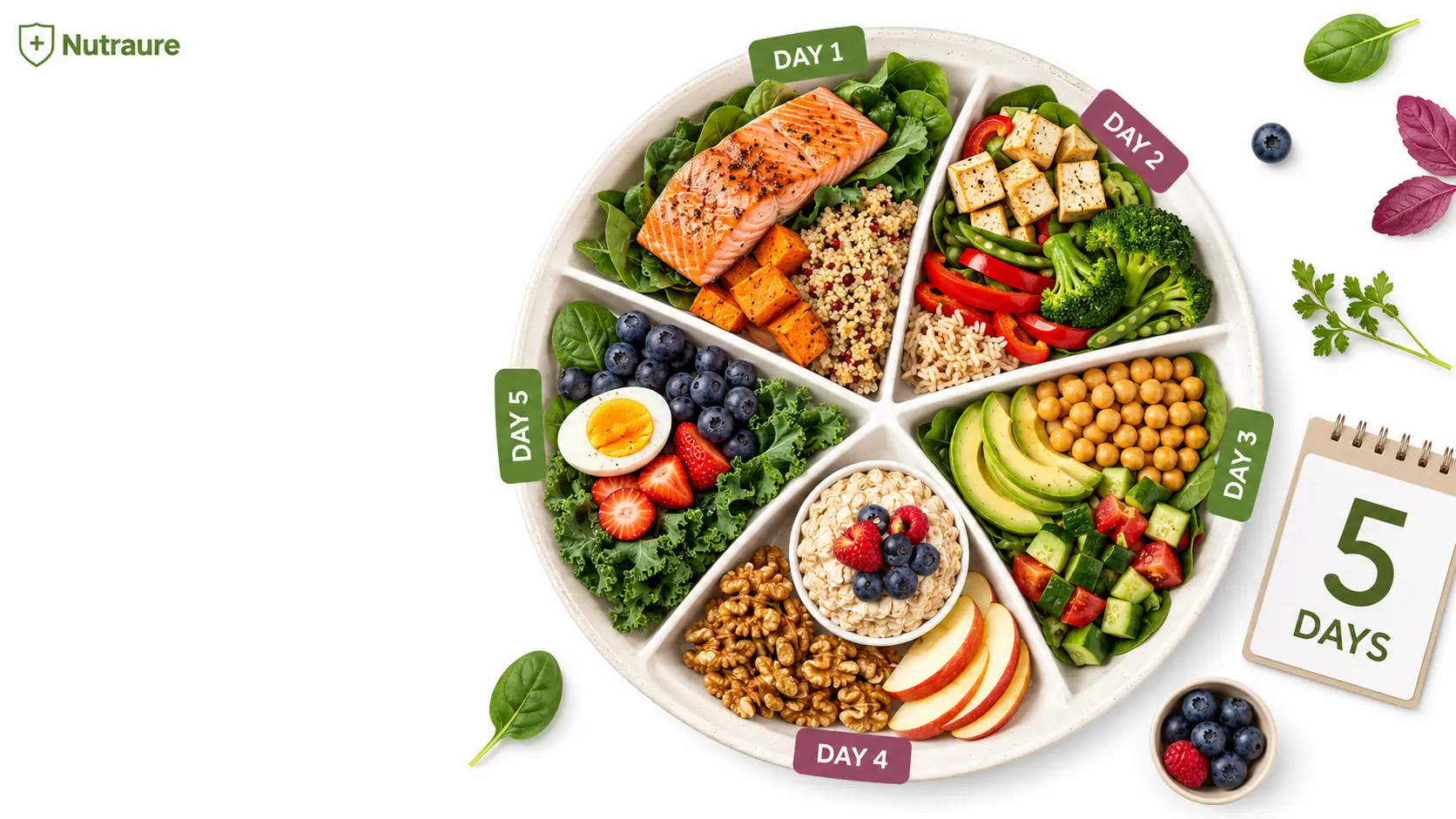
The Menopause Diet 5-Day Plan to Lose Weight is a practical menu built around protein, vegetables, fruit, fiber-rich carbohydrates, and satisfying fats. It is not a crash diet, a detox, or a promise that several pounds of body fat will disappear before the weekend.
What five days can do is give you structure. Instead of reaching 6 p.m. with no dinner plan, you will have ingredients ready and a clear idea of what to eat. That alone can make portions and food choices easier to manage.
Individual results will vary. The aim is to begin a routine that supports gradual weight management without leaving you tired, hungry, or worried that one ordinary meal has “ruined” your progress.
Quick answer: A 5-day menopause diet plan may support menopause weight loss by replacing improvised meals with balanced portions of protein, produce, whole grains, and healthy fats. Five days will not transform body composition, but they can reduce decision fatigue and help you build habits that are realistic enough to continue.
Can a 5-Day Menopause Diet Really Help You Lose Weight?
A five-day plan can help you improve meal structure, portion awareness, and food quality. However, it cannot guarantee a certain number on the scale.
Any quick scale change may partly reflect shifts in water, sodium intake, stored carbohydrate, and the amount of food moving through your digestive system. That is different from losing the same amount of body fat.
The CDC notes that steady weight loss is generally easier to maintain than rapid loss and that nutrition, activity, sleep, stress, medical conditions, hormones, medicines, age, and other factors can all affect body weight.
Judge the first five days by more than the scale. Useful signs of progress include:
- Fewer last-minute food decisions
- More vegetables and protein in your meals
- Better awareness of hunger and fullness
- Less dependence on highly processed snacks
- A few meals you would willingly eat again
Realistic expectation: You are creating a repeatable eating pattern, not trying to force your body through a five-day deadline.
Why Weight Loss Can Feel Different During Menopause
Aging and menopause are not the same thing.
It is easy to blame every midlife body change on estrogen, but the picture is more complicated.
Aging is a major contributor to gradual weight gain. People may become less active, lose some lean tissue, or need less energy than they did earlier in adulthood. Eating the same portions while moving less can therefore produce a different result.
The U.S. Office on Women’s Health explains that reduced activity, changes in eating habits, age-related muscle loss, and lower estrogen levels can all contribute to weight changes after menopause.
Menopause can change where fat is stored.
Menopause may affect body composition even when total body weight changes only slightly. Declining estrogen is associated with a greater tendency to store fat around the abdomen rather than the hips and thighs.
The Menopause Society’s midlife weight guidance distinguishes aging-related weight gain from menopause-related changes in fat distribution. Its guidance describes aging as the primary driver of midlife weight gain while noting that menopause can promote greater abdominal fat storage.
This does not mean that every woman will gain a large amount of Weight, and it does not mean abdominal fat can be removed with a special food or “belly-fat diet.”
Muscle loss can affect daily energy needs.s
Muscle is important for strength, mobility, and daily function. Losing lean tissue over time can reduce the amount of energy your body uses and make previous eating habits less well matched to your current needs.
That is one reason this plan includes a clear protein source at each meal. Resistance exercise is also valuable because it gives the body a reason to maintain strength and lean tissue.
Neither protein nor strength training creates a dramatic overnight change in metabolism. Their value comes from consistent practice.
Sleep and symptoms can influence eating.
Night sweats, hot flashes, anxiety, and disrupted sleep can make meal planning harder. After a poor night, convenience food may feel more appealing, cooking can seem exhausting, and cravings may be harder to manage.
These are biological and practical pressures—not evidence that you lack discipline. The Menopause Society identifies stress, sleep problems, eating changes, and lower activity as contributing factors in midlife weight management.

The Five Principles Behind This Menopause Meal Plan
1. Include a recognizable protein source at every meal
Protein-rich foods include eggs, fish, chicken, plain Greek yogurt, cottage cheese, tofu, tempeh, beans, lentils, and edamame.
A recognizable source is easier to plan around than a vague goal to “eat more protein.” For example, add eggs to breakfast, chickpeas to lunch, and salmon or tofu to dinner.
Your personal protein needs depend on body size, activity, health conditions, age, appetite, and the rest of your diet. Anyone with kidney disease or another condition requiring dietary limits should seek individual advice.
2. Build meals around fiber-rich plants
Vegetables, fruit, beans, lentils, oats, quinoa, and other whole grains add volume, texture, and useful nutrients to meals.
You do not need an elaborate salad at every sitting. Frozen broccoli, canned beans, prewashed greens, and berries kept in the freezer all count.
3. Keep carbohydrates, but choose them thoughtfully
Menopause is not a medical reason to eliminate carbohydrates.
Oats, beans, lentils, fruit, potatoes, quinoa, brown rice, and whole-grain bread can fit comfortably into a menopause weight-loss meal plan. The more helpful change is often improving quality and adjusting portions—not banning an entire food group.
Frequent sugary drinks, large pastries, and oversized portions of refined snacks offer less lasting satisfaction than fiber-rich carbohydrate foods served alongside protein.
4. Add satisfying unsaturated fats
Olive oil, avocado, nuts, seeds, and oily fish can make meals more enjoyable. They are nutritious, but they are also energy-dense, so a measured spoonful or small handful is often enough.
The goal is not to make meals fat-free. A dry bowl of vegetables is rarely satisfying.
5. Remember bone-supporting foods
Bone health deserves attention during and after menopause. Include calcium-containing foods such as milk, yogurt, calcium-set tofu, canned fish with edible bones, kale, or fortified dairy alternatives.
Vitamin D is also important. The Office on Women’s Health menopause guidance recommends paying attention to calcium and vitamin D and discussing supplement needs with a healthcare professional.
Before Starting the Plan
Portions should match your appetite, body size, activity, health needs, and goals. A smaller, less-active person will not necessarily need the same serving as someone taller or who exercises frequently.
Snacks are optional. Eat one when you are physically hungry or when a long gap between meals would otherwise leave you ravenous at dinner.
Drink according to thirst and any advice you have received from your clinician. Do not force excessive water intake.
Medical note: This educational plan is not a substitute for medical nutrition therapy. Ask a doctor or registered dietitian for advice if you have diabetes, kidney or liver disease, digestive disease, food allergies, an eating-disorder history, unexplained weight changes, or medicines affected by food intake.
The Menopause Diet 5-Day Plan to Lose Weight: Complete Menu
| Day | Breakfast | Lunch | Optional snack | Dinner |
|---|---|---|---|---|
| 1 | Yogurt, berry and oat bowl | Quinoa-chickpea salad | ***** and nuts | Salmon, broccoli and sweet potato |
| 2 | Vegetable egg scramble | Lentil vegetable soup and salad | Cottage cheese and fruit | Chicken or tofu stir-fry |
| 3 | Overnight oats | Tuna and white-bean wrap | **** and pumpkin seeds | Turkey-and-bean or vegetable chili |
| 4 | Berry and yogurt smoothie | Mediterranean grain bowl | Hummus and vegetables | Sheet-pan chicken or tempeh |
| 5 | Avocado and egg toast | Leftover power bowl | Yogurt, walnuts and fruit | Whole-wheat pasta with meatballs |

Day 1: Build a Mediterranean-Style Foundation
Daily focus: Colorful produce, straightforward protein, and minimally processed ingredients.
Breakfast: Add plain Greek yogurt or unsweetened fortified soy yogurt to a bowl. Top it with berries, a small portion of oats, chia seeds, and cinnamon.
Lunch: Mix cooked quinoa and chickpeas with cucumber, tomato, leafy greens, parsley, and a lemon–olive oil dressing. Add pepper, garlic, or dried herbs for flavor.
Optional snack: An ***** with a small handful of almonds or a measured spoonful of peanut butter.
Dinner: Bake salmon with lemon and black pepper. Serve it with roasted broccoli and a small sweet potato.
Vegetarian swap: Replace salmon with baked tofu or tempeh.
Dairy-free swap: Use an unsweetened soy yogurt fortified with calcium and vitamin D.
Preparation tip: Cook extra quinoa at lunch. You will use it again on Day 4.
This day feels substantial because protein, fiber-rich carbohydrates, produce, and unsaturated fat appear across the meals. Nothing depends on a tiny “diet portion.”
Day 2: Prioritize Protein and Fiber
Daily focus: Filling meals without cutting out bread, rice, or fruit.
Breakfast: Scramble eggs with mushrooms, peppers, spinach, or leftover broccoli. Serve with one slice of whole-grain toast.
Lunch: Have lentil and vegetable soup with a leafy salad. A canned lower-sodium soup is reasonable on a busy day; add extra frozen vegetables if the serving looks light.
Optional snack: Cottage cheese with berries or sliced peach. Use edamame for a dairy-free option.
Dinner: Stir-fry chicken breast or firm tofu with a frozen vegetable mixture. Add a moderate portion of brown rice and season with garlic, ginger, lime, or a small amount of lower-sodium soy sauce.
Time-saving tip: Frozen stir-fry vegetables and precooked brown rice reduce the entire job to about 15 minutes.
Plant-based swap: Use tofu, tempeh, or shelled edamame instead of chicken.
Simple portion cue: Start with roughly half the plate as non-starchy vegetables, one-quarter as protein, and one-quarter as brown rice or another fiber-rich carbohydrate. Adjust the portions if you remain hungry or need more fuel for an active day.
Day 3: Add More Plant-Based Variety
Daily focus: Beans, seeds, and flexible plant proteins.
Breakfast: Combine oats, ground flaxseed, berries, and plain Greek or soy yogurt the night before. Add milk or fortified soy milk until the texture suits you.
Lunch: Fill a whole-grain wrap with tuna, white beans, greens, chopped celery, and a yogurt-mustard or olive-oil dressing.
Vegetarian lunch swap: Lightly mash chickpeas and white beans with lemon, mustard, pepper, and chopped vegetables.
Optional snack: A **** with a small portion of pumpkin seeds.
Dinner: Make turkey-and-bean chili with tomatoes, onions, peppers, and spices. For a meat-free version, use a mixture of black beans, kidney beans, and lentils.
Batch-cooking tip: Make enough chili for another lunch or freeze individual servings.
Plant-forward eating does not require becoming fully vegetarian. It can simply mean using beans, lentils, tofu, vegetables, and whole grains more often.
Day 4: Support Muscle and Bone Health
Daily focus: Spread protein through the day and include calcium-rich or fortified foods.
Breakfast: Blend plain yogurt or fortified soy milk with berries, spinach, and oats. Add ice or water to adjust the consistency. A spoonful of nut butter can make the smoothie more substantial.
Lunch: Build a Mediterranean grain bowl with leftover quinoa, roasted vegetables, greens, and salmon, tofu, chicken, or beans. Add lemon and a spoonful of yogurt dressing or tahini.
Optional snack: Hummus with cucumber slices and bell pepper strips.
Dinner: Roast chicken or tempeh on a sheet pan with Brussels sprouts and peppers. Serve with quinoa or a small baked potato.
Budget swap: Use beans, lentils, eggs, or canned salmon instead of fresh fish or chicken.
Preparation tip: Roast extra vegetables. They will become the base of tomorrow’s lunch.
No individual meal can prevent osteoporosis or “correct” estrogen levels. This day includes foods that contribute protein, calcium, and other nutrients within the overall eating pattern.
Day 5: Practice a Flexible, Repeatable Routine
Daily focus: Use leftovers and show how the structure can continue beyond Day 5.
Breakfast: Top whole-grain toast with avocado and an egg. Add tomato or fruit on the side. For a plant-based breakfast, make a tofu scramble with spinach and peppers.
Lunch: Turn leftover roasted vegetables, quinoa, greens, and your preferred protein into a power bowl. Add lemon juice, vinegar, herbs, or leftover dressing.
Optional snack: Plain yogurt or fortified soy yogurt with walnuts and fruit.
Dinner: Serve whole-wheat pasta with tomato sauce and turkey, chicken, or lentil meatballs. Add a generous side of sautéed spinach or a leafy salad.
Gluten-free swap: Use bean pasta, brown-rice pasta, or a bowl made with potatoes, vegetables, and protein.
Flexibility tip: Do not buy a completely new set of ingredients for every recipe. Reusing cooked grains, roasted vegetables, dressings, and proteins saves money and reduces waste.
The goal is not to finish a temporary diet. It is to identify meals you can repeat comfortably next week.
Five-Day Shopping List and One-Hour Meal Prep
The quantities you need will depend on the number of people eating and your personal portions. Check your cupboards before shopping.
Protein, dairy, and fortified alternatives
- Eggs
- Plain Greek yogurt or fortified soy yogurt
- Milk or fortified unsweetened soy milk
- Cottage cheese, if used
- Salmon, fresh or canned
- Chicken breast or thighs
- Turkey mince
- Firm tofu or tempeh
- Canned tuna
- Chickpeas
- White beans
- Black or kidney beans
- Lentils
- Hummus
- Edamame
Vegetables and fruit
- Berries, fresh or frozen
- Apples and pears
- Avocado
- Lemons
- Broccoli
- Sweet potatoes
- Spinach or mixed leafy greens
- Tomatoes
- Cucumber
- Bell peppers
- Mushrooms
- Onions
- Celery
- Brussels sprouts
- Frozen stir-fry vegetables
- Any extra seasonal fruit you enjoy
Whole grains and fiber-rich carbohydrates
- Oats
- Quinoa
- Brown rice
- Whole-grain bread
- Whole-grain wraps
- Whole-wheat or bean pasta
- Potatoes or sweet potatoes
Healthy fats and flavorings
- Olive oil
- Almonds or peanut butter
- Walnuts
- Pumpkin seeds
- Chia seeds
- Ground flaxseed
- Mustard
- Vinegar
- Tomato sauce
- Garlic and ginger
- Cinnamon
- Chili powder, cumin, paprika, and dried herbs
The 60-minute preparation sequence
Minutes 0–10: Heat the oven, start the quinoa or brown rice, and wash the vegetables.
Minutes 10–20: Chop broccoli, peppers, onions, and Brussels sprouts. Arrange them on a sheet pan with a small amount of olive oil and seasoning.
Minutes 20–30: Put the vegetables in the oven. Mix a lemon–olive oil dressing. Prepare overnight oats for Day 3.
Minutes 30–40: Rinse canned beans, portion hummus, and prepare snack-size servings of nuts or seeds.
Minutes 40–50: Check the grain and vegetables. Wash greens and cut cucumbers or peppers for easy lunches.
Minutes 50–60: Cool everything before covering it. Store cooked food in labeled containers and keep dressings separate so salads do not become soggy.
Frozen vegetables, frozen berries, canned beans, and canned fish are sensible budget choices. They are also useful when your energy is low or fresh food has spoiled.

Foods to Eat More Often—and Foods to Limit
Foods to emphasize
Build most meals from a mixture of:
- Vegetables and fruit
- Beans and lentils
- Fish, eggs, poultry, tofu, and other protein foods
- Soy foods such as tofu, tempeh, edamame, or fortified soy milk
- Plain yogurt or calcium-fortified alternatives
- Oats and other whole grains
- Nuts and seeds
- Olive oil
USDA MyPlate guidance encourages variety across vegetables, fruit, grains, protein foods, dairy, and fortified soy alternatives rather than reliance on one supposedly perfect food.
Foods and drinks to limit rather than ban
You do not need a “clean food” list or a collection of forbidden ingredients. It may be useful, however, to reduce:
- Sugary drinks
- Frequent or heavy alcohol intake
- Large bags or boxes of highly processed snack foods
- Oversized portions of sweets and pastries
- Restaurant meals that regularly provide far more food than you need
Caffeine, alcohol, spicy food, and hot drinks can worsen hot flashes or night sweats for some people. Others notice no clear effect. The NHS menopause self-care guidance recommends identifying and reducing personal triggers rather than assuming everyone must avoid the same foods.
How to Personalize the Plan
| Original food | Vegetarian alternative | Dairy-free alternative | Budget alternative |
| Salmon | Tofu or tempeh | No change needed | Canned salmon or beans |
| Chicken | Lentils or chickpeas | No change needed | Eggs or beans |
| Greek yogurt | Soy yogurt | Fortified soy yogurt | Store-brand plain yogurt |
| Cottage cheese | Edamame | Edamame | Boiled eggs |
| Turkey meatballs | Lentil meatballs | No change needed | Three-bean chili |
| Quinoa | Brown rice | No change needed | Potatoes or oats |
Vegetarian or vegan
Replace meat and fish with tofu, tempeh, edamame, beans, lentils, and textured soy protein. A fully vegan diet can be nutritious, but nutrients such as vitamin B12, calcium, vitamin D, iodine, iron, and omega-3 fats may require extra planning.
Dairy-free
Choose unsweetened products fortified with calcium and vitamin D. Plant drinks vary widely, so check the label rather than assuming almond, oat, coconut, and soy drinks are nutritionally interchangeable.
Gluten-free
Use certified gluten-free oats, quinoa, potatoes, brown rice, corn tortillas, and gluten-free or bean-based pasta.
Larger or smaller energy needs
Adjust the amount of grains, starchy vegetables, fats, and protein rather than treating one calorie level as correct for every menopausal woman.
You may need more food on a day involving a long walk, strength workout, or physically demanding job. You may prefer a smaller evening portion after a quiet day. Appetite is useful information, although persistent extreme hunger or loss of appetite deserves professional attention.
Beyond Food: Habits That Support Menopause Weight Management
Strength training
Resistance exercise helps maintain strength and lean tissue. Begin with a manageable routine using machines, free weights, resistance bands, or body-weight movements.
Two short sessions each week are more useful than one punishing workout followed by several weeks of soreness. The Office on Women’s Health recommends muscle-strengthening activity on two days per week as part of health during and after menopause.
Walking and general movement
Walking is accessible, inexpensive, and easy to divide into shorter sessions. A ten-minute walk after lunch and dinner may be easier to maintain than waiting for a free hour.
Housework, gardening, cycling, dancing, and active commuting also contribute to overall movement. Exercise supports health even when the scale changes slowly.
Sleep support
Keep your room cool, use lightweight bedding, and try to maintain a fairly regular sleep schedule. Seek medical advice if night sweats, insomnia, snoring, breathing pauses, anxiety, or low mood are regularly disrupting sleep.
The NHS recommends rest, consistent sleep routines, a cool bedroom, exercise, and stress-reduction strategies for menopause symptoms.
Stress management
Stress cannot always be removed, and being told to “relax” is rarely useful. Choose something concrete: a short walk, five minutes of slow breathing, talking to a friend, writing down tomorrow’s tasks, or arranging counseling when stress feels unmanageable.
What to Do After the Five Days
Do not respond to Day 6 by starting another strict plan.
Choose two or three breakfasts you liked and repeat them. Rotate the main protein and vegetables at dinner. Cook enough for tomorrow’s lunch whenever practical. Keep the same basic plate structure and introduce one new recipe each week.
Review your hunger, energy, digestion, sleep, symptoms, and confidence around food. Adjust portions gradually rather than making a dramatic cut because the scale did not move quickly enough.
Consistency is easier when the food is familiar, affordable, and enjoyable.
When to Ask a Doctor or Dietitian for Help
Ask for individualized support if you have:
- Diabetes or frequent low blood sugar
- Kidney, liver, or gastrointestinal disease
- Food allergies or multiple intolerances
- A current or previous eating disorder
- Unexplained or unintentional weight change
- Medicines affected by meal timing or nutrient intake
- Severe hot flashes, night sweats, insomnia, or mood changes
- Persistent fatigue, weakness, pain, or digestive symptoms
A clinician can also check whether thyroid disease, sleep apnea, medication effects, or another medical issue is contributing to symptoms or weight changes.
Frequently Asked Questions About the Menopause Diet
How much Weight can I lose on a five-day menopause diet?
There is no reliable number that applies to everyone. Short-term scale changes can reflect water and digestive contents as well as fat. Meaningful fat loss usually requires habits maintained for longer than five days. Focus first on consistent meals, portions, activity, sleep, and how well the plan fits your life.
What is the best diet for menopause belly fat?
No food plan can selectively remove fat from the abdomen. A sustainable eating pattern, appropriate portions, regular activity, and strength training can support overall Weight and health. Menopause may change fat distribution, but “belly-fat-burning” foods and hormone-reset diets are not credible solutions.
What is the best breakfast for menopause weight loss?
A useful breakfast combines protein, fiber, and produce. Examples include Greek or soy yogurt with berries and oats, eggs with vegetables and whole-grain toast, or overnight oats made with yogurt and seeds. The best choice is one that keeps you reasonably satisfied and fits your morning routine.
How much protein should a menopausal woman eat?
Protein needs vary with body weight, age, activity, overall food intake, and medical history. Rather than relying on one target from the internet, begin by including a protein source at each meal. A registered dietitian can calculate a suitable amount, particularly if you exercise heavily or have kidney disease.
Should I stop eating carbohydrates during menopause?
No. Carbohydrates include beans, fruit, oats, potatoes, lentils, whole grains, and many other nutritious foods. It is usually more helpful to choose fiber-rich options and sensible portions while reducing frequent sugary drinks, refined sweets, and oversized snack portions.
Is intermittent fasting good for menopause weight loss?
It is optional, not necessary. Some people find a defined eating window convenient, while others become dizzy, irritable, overly hungry, or prone to overeating later. Fasting may also conflict with diabetes medicines, other prescriptions, exercise recovery, or an eating-disorder history. Discuss it with a clinician when those concerns apply.
Can vegetarians follow this five-day menopause plan?
Yes. Replace fish, chicken, turkey, and tuna with tofu, tempeh, lentils, beans, edamame, or other suitable plant proteins. Use fortified foods where needed, and seek dietetic advice if a fully plant-based diet leaves you uncertain about vitamin B12, calcium, vitamin D, iron, iodine, or omega-3 intake.
Can I continue this diet for longer than five days?
Yes. The overall framework—protein, plants, fiber-rich carbohydrates, and satisfying fats—is suitable for continued use. Rotate foods to improve variety, change portions according to your needs, and avoid eating the same limited menu for months.
Does HRT cause weight gain or help with weight loss?
Hormone therapy should not be prescribed as a weight-loss treatment. It is used primarily to treat symptoms such as hot flashes and vaginal dryness. Treating disruptive symptoms may indirectly make sleep, activity, and meal planning easier, but any body-composition effect is generally modest. Discuss benefits and risks with a qualified clinician.
Can I follow the plan if I have diabetes or high cholesterol?
Possibly, but the portions and food choices may need adjustment. Diabetes medicines can make meal timing and carbohydrate distribution important. High cholesterol, kidney disease, and other conditions can also change the most appropriate protein, fat, sodium, or fiber choices. Ask a dietitian or clinician to personalize the plan.
Final Takeaway
The menopause diet 5-day plan to lose Weight works best as the beginning of a repeatable routine, not as a promise of overnight transformation.
Menopause can affect body composition, sleep, symptoms, and fat distribution, but it does not make healthy weight management impossible. Severe restriction is unnecessary. Regular meals, useful preparation, realistic portions, movement, and adequate rest matter more than dietary perfection.
Choose the breakfasts, lunches, and dinners that suit your life. Repeat the successful ones next week, replace the meals you did not enjoy, and adjust portions to your appetite and health needs. A plan you can continue is far more valuable than five flawless days you never want to repeat.