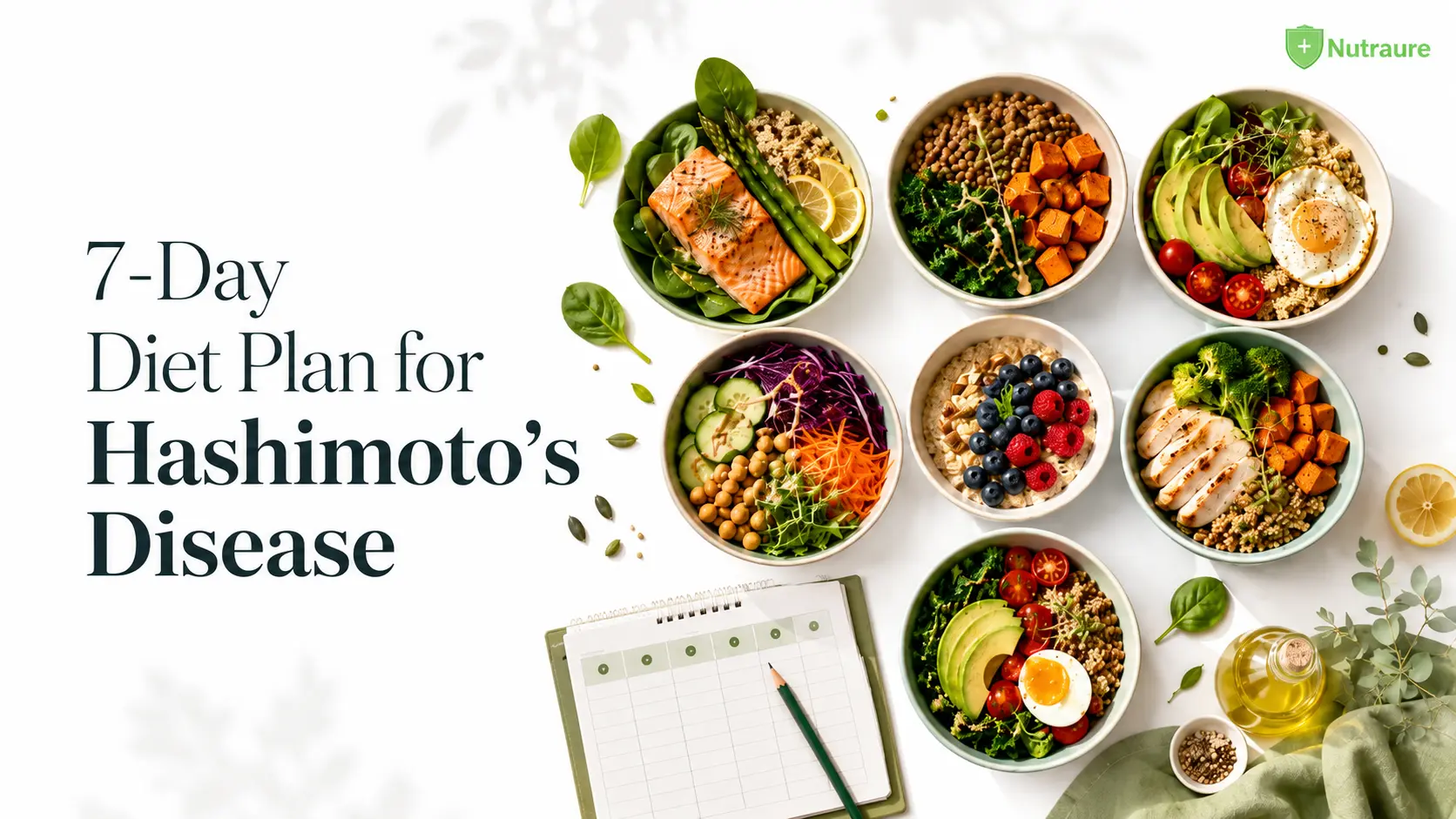
Living with Hashimoto’s can make everyday food decisions feel more complicated than they should. When fatigue is already taking up much of your energy, planning balanced breakfasts, preparing lunches, and deciding what to cook for dinner can become another exhausting task.
This 7-day diet plan for Hashimoto’s disease is designed to make that process easier. It uses familiar, nutrient-dense foods and repeats ingredients throughout the week, so you do not have to cook every meal from scratch.
The plan emphasizes:
- Protein at each main meal
- Fiber-rich carbohydrates
- Colorful vegetables and fruit
- Healthy fats
- Simple meals for low-energy days
- Flexible gluten-free, dairy-free,e and vegetarian substitutions
This is not a cure for Hashimoto’s, and it does not replace thyroid medication or medical care. Hashimoto’s disease is an autoimmune condition in which the immune system attacks the thyroid. Over time, this may reduce thyroid hormone production and cause hypothyroidism. The National Institute of Diabetes and Digestive and Kidney Diseases explains that levothyroxine is the recommended treatment when thyroid hormone replacement is needed.
Think of this meal plan as a practical starting point—not a rigid set of rules.
Medical note: This article provides general nutrition information for adults. Your medication instructions, diagnosed food allergies, medical conditions and advice from your healthcare team should always take priority.
The Hashimoto’s Meal Plan at a Glance
This plan follows a balanced, Mediterranean-style pattern built around vegetables, fruit, fish, poultry, eggs, beans, lentils, whole grains, nuts, seeds, and olive oil.
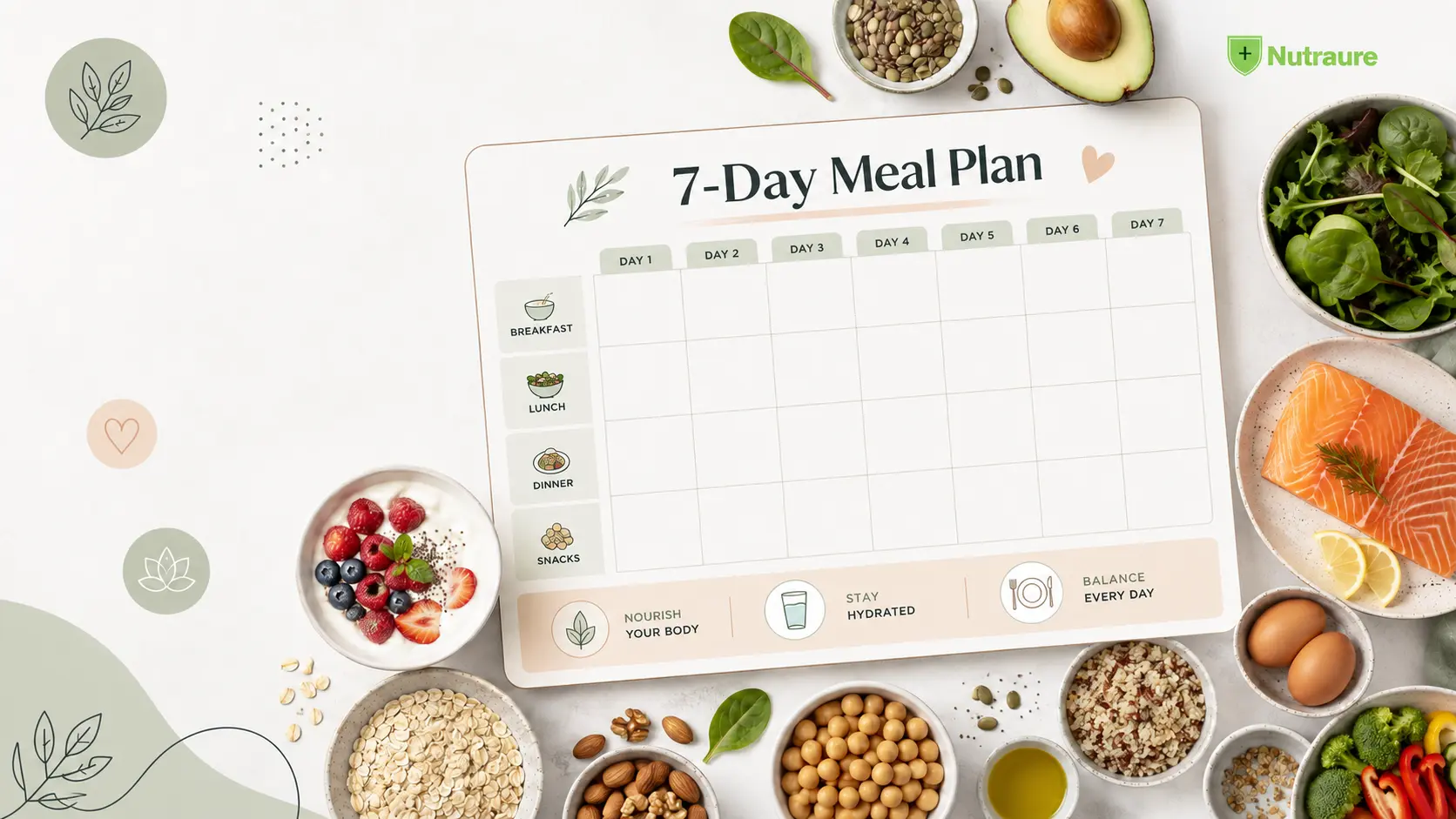
Each day includes:
- Breakfast
- Lunch
- Dinner
- An optional snack
- A preparation or substitution tip
Snacks are optional because hunger and energy needs vary. Portion sizes should also be adjusted according to your appetite, activity level, body size, health goals, and medical needs.
You do not need to follow each day perfectly. Move meals around, repeat the ones you enjoy, and use leftovers whenever possible.
Who Is This Plan For?
This plan may be useful for adults who:
- Have Hashimoto’s disease or hypothyroidism
- Want a simple thyroid-friendly meal plan
- Feel overwhelmed by complicated elimination diets
- Need practical meals for tired or busy days
- Want balanced food ideas without unnecessary restrictions
It is not an individualized medical nutrition prescription. People who are pregnant, breastfeeding, managing celiac disease, following a vegan diet, or living with several medical conditions should seek personalized advice from a registered dietitian or doctor.
What Diet Can—and Cannot—Do for Hashimoto’s
Food cannot cure Hashimoto’s or restore a damaged thyroid. It can, however, help you meet your nutritional needs and create a more consistent eating routine.
A well-planned diet may support:
- Stable meal patterns
- Adequate protein and energy intake
- Digestive regularity
- Heart and metabolic health
- Healthy iron, vitamin and mineral intake
- More manageable grocery shopping and cooking
These benefits matter because fatigue can make people skip meals, depend heavily on packaged snacks, or eat whatever requires the least preparation.
Balanced meals will not correct an inadequate thyroid medication dose. If your fatigue, constipation, cold sensitivity, mood changes, or unexplained weight changes are getting worse, speak with your healthcare provider instead of trying to fix the problem through stricter food rules.
Why Food Does Not Replace Thyroid Treatment
When Hashimoto’s causes hypothyroidism, the thyroid may no longer make enough hormone for the body’s needs. Levothyroxine replaces the hormone the thyroid is unable to produce.
The correct dose is determined through medical evaluation and blood testing. Do not stop taking prescribed thyroid medication, reduce the dose, or switch to an unregulated “thyroid support” supplement based on dietary advice.
The NIDDK advises people with hypothyroidism not to stop taking thyroid medicine without speaking to their doctor.
Before Breakfast: Time Food Around Levothyroxine
A nutritious breakfast is useful only when it fits safely around your medication schedule.
Levothyroxine absorption can be affected by food, caffeinated drinks, supplements,s and certain medications. The exact directions depend on your prescription and health history, so follow the instructions provided by your doctor, pharmacist, and medication label.
A Simple Morning Routine
A typical morning may look like this:
- Take levothyroxine with plain water as prescribed.
- Wait for the period recommended by your healthcare professional.
- Eat breakfast and have coffee or tea after that waiting period.
- Take calcium, iron, and other potentially interacting products at the separately recommended time.
Many clinical instructions recommend taking levothyroxine on an empty stomach, commonly 30 to 60 minutes before breakfast. Your personal directions may differ.
Consistency is important. Taking medication in the same way each day helps your healthcare team interpret thyroid blood-test results and adjust the dose when necessary.

Calcium, Iron, Soy and Other Interactions
Calcium and iron supplements can reduce levothyroxine absorption when taken too close to the medication. Antacids, some other medicines, soy products, and high-fiber foods may also affect absorption in certain situations.
That does not mean you must remove these foods from your Diet. Timing and consistency are usually more useful considerations than creating a long list of forbidden foods.
Ask your doctor or pharmacist:
- How long you should wait before breakfast
- When you can drink coffee
- How far apart to take calcium or iron
- Whether soy affects your medication routine
- What to do when you miss a dose
Important: Instructions from your prescriber and medication label come before the general timing example in this article.
How to Build Meals for Steadier Energy
There is no single food that can “boost” the thyroid or guarantee more energy. A better strategy is to build balanced meals that are filling, practical, and nutritionally varied.

Include Protein at Each Main Meal
Protein makes a meal more satisfying and supplies the amino acids the body needs throughout the day.
Practical protein choices include:
- Eggs
- Salmon, sardines, trout and tuna
- Chicken or turkey
- Greek yogurt or cottage cheese, when tolerated
- Lentils, chickpeas and beans
- Tofu or tempeh
- Nuts and seeds
You do not need a large serving of meat at every meal. A lentil soup, bean bowl or tofu stir-fry can also provide useful protein.
A breakfast of plain toast may leave some people hungry soon afterward. Adding eggs, yogurt, nut butter or seeds creates a more complete meal.
Choose Fiber-Rich Carbohydrates
Carbohydrates are not automatically inflammatory or harmful to people with Hashimoto’s.
Fiber-rich choices include:
- Oats
- Brown rice
- Quinoa
- Buckwheat
- Potatoes and sweet potatoes
- Beans and lentils
- Whole-grain bread
- Fruit
These foods provide energy, fiber, and a range of vitamins and minerals. The best choice depends on your digestion, food preferences, and any diagnosed condition such as celiac disease.
Add Colorful Produce
Try to include at least one vegetable or fruit with most meals. Different colors provide different nutrients and plant compounds.
Useful options include:
- Berries
- Leafy greens
- Bell peppers
- Carrots
- Tomatoes
- Broccoli
- Green beans
- Apples
- Pears
- Citrus fruit
Frozen vegetables and berries are practical alternatives to fresh produce. They require little preparation, last longer,r and can reduce food waste.
Include Healthy Fats
Healthy fats improve flavor and make meals more satisfying.
Consider:
- Extra-virgin olive oil
- Avocado
- Walnuts
- Almonds
- Chia seeds
- Ground flaxseed
- Pumpkin seeds
- Oily fish
You do not need to add all of these to every meal. A spoonful of seeds in oatmeal, olive oil on vegetables or avocado in a lunch bowl is enough to create variety.
Foods to Eat With Hashimoto’s Disease
A Hashimoto’s disease diet does not require rare powders, specialty drinks or expensive “thyroid detox” products. Ordinary foods can form the foundation of the plan.
| Food group | Examples | Easy ways to use them |
|---|---|---|
| Fish | Salmon, sardines, trout, tuna | Bake, grill or use canned fish |
| Poultry | Chicken and turkey | Batch-cook for bowls and wraps |
| Eggs | Boiled, scrambled or baked | Use for breakfast or quick lunches |
| Plant protein | Lentils, beans and chickpeas | Add to soups, salads and curries |
| Dairy, if tolerated | Yogurt and cottage cheese | Pair with fruit, oats or seeds |
| Whole grains | Oats, quinoa and brown rice | Prepare several portions at once |
| Vegetables | Greens, peppers, carrots, broccoli | Use fresh, frozen or pre-cut |
| Healthy fats | Olive oil, avocado, nuts and seeds | Add to bowls, salads and snacks |
Nutrients That Deserve Attention
Several nutrients are involved in normal thyroid function or may be low in some people with thyroid disease. These include:
- Iodine
- Selenium
- Iron
- Zinc
- Vitamin D
- Vitamin B12
This does not mean everyone with Hashimoto’s needs supplements. A blood test, dietary assessment and professional recommendation are more reliable than guessing.
Food-first sources include:
- Selenium: fish, eggs, poultry and some nuts
- Iron: meat, lentils, beans and fortified grains
- Zinc: meat, shellfish, beans, seeds and dairy
- Vitamin B12: fish, eggs, meat, dairy and fortified plant products
- Vitamin D: oily fish, eggs and fortified foods
Vitamin D is also made in the skin through sunlight exposure, although production varies with location, season, skin tone, clothing and lifestyle.
Foods to Limit or Personalize
Long lists of “toxic” foods make Hashimoto’s eating plans harder than necessary. A better approach is to limit foods that crowd out nutritious meals and personalize foods that may affect medication, allergies or digestive symptoms.
Ultra-Processed Foods and Added Sugar
You do not have to remove every processed food. Canned beans, frozen vegetables, yogurt and whole-grain bread are processed, yet they can still be nutritious and convenient.
Consider reducing foods such as:
- Sugary soft drinks
- Frequent pastries and sweets
- Deep-fried fast food
- Highly processed meats
- Packaged snacks that regularly replace meals
- Products marketed as detoxes or thyroid cures
Enjoying dessert or takeaway occasionally does not ruin the plan. Your overall eating pattern matters more than a single meal.
Gluten Is Not Automatically Forbidden
People with celiac disease must follow a strict gluten-free diet. Someone with a diagnosed wheat allergy or another confirmed gluten-related condition may also require specific restrictions.
The evidence is far less certain for people who have Hashimoto’s without celiac disease—a 2025 systematic review identified only three eligible studies involving 110 participants. The researchers rated the evidence as very uncertain and did not find significant effects on TSH, free T3, or free T4.
For that reason, this article does not recommend a gluten-free diet for every person with Hashimoto’s.
Before removing gluten:
- Ask whether celiac testing is appropriate
- Avoid beginning a strict gluten-free diet before testing unless advised
- Consider whether the restriction is realistic
- Plan replacements to protect fiber and nutrient intake
- Work with a dietitian when possible
Dairy Is a Personal Choice
Dairy does not need to be removed simply because someone has Hashimoto’s.
You may need to limit or avoid it when you have:
- A milk allergy
- Lactose intolerance
- Another diagnosed digestive condition
- Symptoms that have been carefully assessed with a professional
When choosing nondairy milk or yogurt, compare the label. Some products contain little protein and may not be fortified with calcium, vitamin D or vitamin B12.
Soy May Require Timing, Not Elimination
Soy foods such as tofu, tempeh and edamame can provide protein, iron and other nutrients.
The main concern for many people taking levothyroxine is absorption and consistency—not that soy “damages” the thyroid. Ask your pharmacist how to time soy foods around your medication.
Cooked Cruciferous Vegetables Can Fit
Broccoli, cauliflower, cabbage, Brussels sprouts and kale are sometimes described online as foods everyone with hypothyroidism must avoid.
That advice is unnecessarily broad. Normal servings, particularly when cooked, can fit into a varied diet. These vegetables provide fiber, vitamin C, folate and other useful nutrients.
Be Careful With Excess Iodine
The thyroid needs iodine, but more is not always better.
People with autoimmune thyroid disease can be especially sensitive to excessive iodine. High intakes may contribute to thyroid dysfunction in susceptible individuals. The NIH Office of Dietary Supplements advises that responses to excess iodine vary and notes that people with autoimmune thyroid disease may experience adverse effects at intakes tolerated by the general population.
Avoid experimenting with:
- Kelp tablets
- Seaweed powders
- High-dose iodine drops
- Multiple iodine-containing supplements
- “Thyroid support” blends with unclear quantities
Pregnancy changes iodine requirements, so pregnant or breastfeeding readers should seek individual medical guidance rather than avoiding iodine.
Your 7-Day Diet Plan for Hashimoto’s Disease
This plan uses overlapping ingredients to reduce preparation time and food waste.
Adjust portions to suit your hunger and nutritional needs. Snacks are optional. Choose gluten-free products only when medically necessary or personally preferred, and select dairy or nondairy products according to tolerance.

Day 1: Start With Familiar, Balanced Meals
Breakfast: Vegetable omelet with avocado and berries
Cook two eggs with spinach, bell pepper and tomato. Serve with sliced avocado and a handful of berries.
Lunch: Salmon and quinoa bowl
Combine cooked quinoa, mixed greens, cucumber, tomato,o and cooked or canned salmon. Dress with olive oil, lemon juice and black pepper.
Dinner: Herb chicken with sweet potato and broccoli
Roast chicken, sweet potato wedges, and broccoli on one or two sheet pans. Season with olive oil, garlic, ic and dried herbs.
Optional snack: ***** slices with peanut or almond butter
Preparation tip: Cook extra chicken and vegetables for tomorrow’s lunch.
Vegetarian swap: Replace the chicken with seasoned chickpeas or tofu.
Day 2: Let Leftovers Do the Work
Breakfast: Overnight oats with chia and berries
Combine oats, chia seeds, milk or a fortified nondairy drink, and berries. Add plain yogurt if tolerated.
Use certified gluten-free oats if you have celiac disease or need to avoid gluten.
Lunch: Leftover chicken and roasted-vegetable bowl
Add leftover chicken, sweet potato and broccoli to greens or quinoa. Finish with olive oil and lemon.
Dinner: Lentil and vegetable soup
Cook lentils with carrots, celery, onion, tomatoes and low-sodium stock. Serve with a side salad or slice of whole-grain bread.
Optional snack: Carrots, cucumber and hummus
Low-energy option: Use canned lentil soup with a reasonable sodium level and add frozen vegetables.
Day 3: Add Omega-3-Rich Fish
Breakfast: Egg and spinach breakfast bowl
Serve scrambled eggs over sautéed spinach with leftover quinoa or roasted sweet potato.
Lunch: Tuna and white-bean salad
Mix tuna, white beans, cucumber, tomato, parsley, olive oil,l and lemon juice.
Dinner: Baked salmon with brown rice and green beans
Bake salmon with lemon and herbs. Serve it with brown rice and steamed or roasted green beans.
Optional snack: Plain yogurt with walnuts and fruit
Vegetarian swap: Replace the fish with baked tofu, lentil patties, es or a bean-based burger.
Preparation tip: Cook extra brown rice for Day 4.
Day 4: Make the Day More Plant-Forward
Breakfast: Chia pudding with fruit and pumpkin seeds
Mix chia seeds with milk or a fortified nondairy alternative and refrigerate overnight. Top with fruit and pumpkin seeds.
Lunch: Chickpea and quinoa bowl
Combine chickpeas, quinoa, roasted vegetables, greens and a lemon-tahini dressing.
Dinner: Turkey meatballs or lentil balls with tomato sauce
Serve turkey meatballs or lentil-based balls with tomato sauce, vegetables and whole-grain or brown-rice pasta.
Optional snack: **** with a small handful of nuts
Digestive tip: Increase beans and lentils gradually when you are not accustomed to eating much fiber. Rinsing canned beans may also improve taste and reduce some sodium.
Day 5: Keep Cooking to a Minimum
Some days call for shortcuts. A convenient meal is better than skipping lunch and becoming ravenous later.
Breakfast: Quick yogurt bowl
Top plain Greek yogurt or fortified nondairy yogurt with oats, berries and seeds.
Lunch: Canned salmon or chickpea wrap
Mix canned salmon or mashed chickpeas with yogurt or hummus, cucumber and herbs. Place the mixture in a whole-grain wrap.
Dinner: Sheet-pan chicken or tofu with frozen vegetables
Place chicken pieces or tofu on a tray with frozen mixed vegetables. Add olive oil and seasoning, then roast until safely cooked.
Optional snack: A hard-boiled egg with fruit
Emergency meal: Rotisserie chicken, microwave brown rice and frozen vegetables
For a vegetarian alternative, use canned beans or pre-cooked lentils instead of chicken.
Day 6: Choose Family-Friendly Comfort Food
Breakfast: Oatmeal with berries and nut butter
Cook oats with milk or water. Add cinnamon, berries, and peanut or almond butter.
Lunch: Turkey and avocado sandwich
Use whole-grain bread and add lettuce, tomato, and cucumber. Use a corn tortilla, gluten-free bread, or a lettuce wrap when needed.
Dinner: Turkey and bean chili
Cook lean ground turkey with beans, tomatoes, peppers, onions and spices. Serve with avocado and optional yogurt.
Optional snack: Cottage cheese and fruit or a fortified nondairy alternative
Family tip: Put toppings such as avocado, herbs, yogurt and grated cheese on the table so each person can customize the meal.
Day 7: Reuse, Reflect and Reset
Breakfast: Leftover-vegetable egg scramble
Warm any remaining vegetables and add beaten eggs. Serve with fruit.
Lunch: Leftover soup or chili with salad
Use remaining lentil soup or turkey chili and add a simple green salad.
Dinner: Mediterranean fish or chickpea tray
Bake fish or chickpeas with potatoes, tomatoes, peppers, onion, garlic, herbs,s and olive oil.
Optional snack: Berries and walnuts
At the end of the day, note how the plan worked in real life:
- Which meals were satisfying?
- Which meals required too much preparation?
- Did you regularly become hungry between meals?
- Which ingredients went unused?
- Which two breakfasts would you happily repeat?
Do not diagnose a food sensitivity based on one tired day or one episode of bloating. Look for patterns and discuss persistent symptoms with a qualified professional.
Hashimoto’s Diet Shopping List
Quantities will depend on household size and portion needs.
Protein
- Eggs
- Salmon, trout, sardines or tuna
- Chicken or turkey
- Lentils
- Chickpeas
- White or kidney beans
- Tofu or tempeh
- Plain yogurt or fortified nondairy yogurt
- Cottage cheese, when tolerated
- Nut or seed butter
Vegetables
- Spinach or mixed greens
- Broccoli
- Bell peppers
- Carrots
- Cucumbers
- Tomatoes
- Green beans
- Sweet potatoes
- Potatoes
- Celery
- Avocados
- Onions
- Garlic
- Frozen mixed vegetables
Fruit
- Berries
- Apples
- Pears
- Lemons
- Seasonal fruit of your choice
Grains and Pantry Foods
- Oats
- Quinoa
- Brown rice
- Whole-grain or gluten-free bread
- Whole-grain or gluten-free wraps
- Whole-grain or brown-rice pasta
- Low-sodium canned beans
- Canned tomatoes
- Low-sodium stock
- Olive oil
- Chia seeds
- Pumpkin seeds
- Walnuts or almonds
- Herbs and spices
Buying convenience foods is not a failure. Frozen produce, pre-cut vegetables, canned fish, canned beans, ns and microwave grains can make balanced eating possible on difficult days.
A 60-Minute Hashimoto’s Meal-Prep Routine
You do not need to prepare seven complete days of food on Sunday. Focus on ingredients that can be combined in several ways.
1. Cook One Grain
Prepare a pot of quinoa or brown rice. Cool and refrigerate it promptly in suitable containers.
Use it in:
- Salmon bowls
- Chicken bowls
- Breakfast bowls
- Chickpea lunches
- Side dishes
2. Roast Two Trays of Vegetables
Use vegetables with similar cooking times, such as:
- Broccoli
- Carrots
- Bell peppers
- Sweet potatoes
- Onions
Season simply so the vegetables work with different sauces and proteins.
3. Prepare One Main Protein
Bake chicken, fish, or tofu, or make a pot of lentils.
Do not prepare an entire week of seafood in advance. Follow food-safety guidance and freeze portions when appropriate.
4. Make One Dressing
Shake together olive oil, lemon juice, mustard, herbs and black pepper.
Use it on salads, grain bowls and roasted vegetables.
5. Reduce Small Daily Decisions
Before finishing, you can:
- Wash fruit
- Prepare overnight oats
- Hard-boil eggs
- Portion nuts
- Freeze soup
- Label leftovers
- Keep one no-cook meal available
The goal is not an impressive refrigerator full of identical containers. The goal is to make tomorrow’s meal easier.
How to Personalize the Plan
Gluten-Free Version
For diagnosed celiac disease or another medical reason to avoid gluten, use:
- Quinoa
- Rice
- Buckwheat
- Certified gluten-free oats
- Corn tortillas
- Gluten-free bread or pasta
Check sauces, stock, seasoning blends,s and shared cooking equipment when cross-contact is a concern.
Dairy-Free Version
Replace dairy products with alternatives that fit the meal.
Compare labels for:
- Protein
- Calcium
- Vitamin D
- Vitamin B12
- Added sugar
Soy milk often contains more protein than almond, coconut or oat drinks, although the best product depends on your needs and medication instructions.
Vegetarian Version
Replace fish, chicken and turkey with:
- Lentils
- Chickpeas
- Beans
- Tofu
- Tempeh
- Eggs
- Dairy products, when included
Vegetarian meals still need an intentional protein source. A plate of pasta and vegetables may not be as satisfying as pasta served with lentil balls, beans, nuts, or tofu.
Weight-Management Version
This meal plan may support weight management, but it does not guarantee weight loss.
Body weight is influenced by:
- Thyroid hormone status
- Total energy intake
- Activity
- Sleep
- Medication
- Age
- Other health conditions
Rather than following an aggressive low-calorie diet, adjust portions with help from a registered dietitian. Persistent or unexpected weight changes should be medically assessed.
Five Common Hashimoto’s Diet Mistakes
1. Removing Too Many Foods at Once
Eliminating gluten, dairy, soy, eggs, grains,s and nightshade vegetables at the same time can leave you with an unnecessarily narrow diet.
It also becomes difficult to determine whether any individual change helped.
2. Taking High-Dose Supplements Without Testing
Iodine, selenium, and other nutrients can be harmful in excessive amounts. Supplements may also overlap, causing you to consume more than you realize.
3. Ignoring Medication Timing
A nutrient-dense breakfast can still interfere with medication absorption when it is eaten at the wrong time for your prescription.
4. Eating Too Little to Force Weight Loss
Severe restriction may leave you hungrier, more tired, and less able to maintain a diet. It can also make it harder to meet protein, fiber, iron, and vitamin needs.
5. Expecting Results in Seven Days
One week can help you establish a routine, identify useful meals, and simplify shopping. It cannot cure a chronic autoimmune disease or prove that a particular food is responsible for every symptom.
When to Speak With a Doctor or Dietitian
Seek individualized guidance when you:
- Are pregnant or breastfeeding
- Have celiac disease
- Have another autoimmune condition
- Experience severe or worsening fatigue
- Have unexplained weight changes
- Have persistent digestive symptoms
- Have a history of disordered eating
- Want to begin an elimination diet
- Take several supplements
- Follow a vegan diet
- Are unsure how to time food around medication
Your healthcare provider can also assess whether symptoms may relate to thyroid hormone levels, anemia, vitamin deficiencies, sleep problems,s or another medical issue.
Frequently Asked Questions
What is the Diet for Hashimoto’s disease?
There is no single diet that works for everyone. A balanced pattern based on vegetables, fruit, adequate protein, fiber-rich carbohydrates and healthy fats is a practical place to begin. Medical conditions, medication schedules and individual food tolerance should guide further changes.
Can a seven-day diet plan cure Hashimoto’s?
No. A meal plan can make nutritious eating more manageable, but it cannot cure the autoimmune condition or replace prescribed thyroid medication.
Does everyone with Hashimoto’s need to avoid gluten?
No. People with celiac disease need a strict gluten-free diet. Current evidence does not establish a gluten-free diet as standard treatment for every person with non-celiac Hashimoto’s.
Is dairy bad for Hashimoto’s disease?
Not for everyone. Dairy may need to be avoided because of a milk allergy or adjusted for lactose intolerance. Otherwise, foods such as yogurt may provide protein, calcium, and other nutrients.
Can I eat broccoli, cabbage and cauliflower?
These foods can generally be included in normal portions, especially when cooked. There is no need to remove nutritious cruciferous vegetables automatically because you have Hashimoto’s.
Can people with Hashimoto’s eat soy?
Soy can be part of a balanced diet. People taking levothyroxine should ask their doctor or pharmacist about timing because soy may affect medication absorption in some circumstances.
What foods interfere with levothyroxine?
Food, coffee, calcium, iron, antacids, soy, and some other products may affect absorption. The practical solution depends on your prescription, so follow the medication label and ask a pharmacist for a personalized schedule.
Is this Hashimoto’s meal plan suitable for weight loss?
It provides a balanced foundation, but weight loss depends on portion size, total energy needs, activity, thyroid treatment,t and other factors. It should not be marketed as a guaranteed weight-loss plan.
Should I take iodine or selenium supplements?
Not automatically. Some people may need supplementation, while others may already consume enough. Excess iodine can be harmful to susceptible people, including some individuals with autoimmune thyroid disease.
Start With One Manageable Week
A useful 7-day diet plan for Hashimoto’s disease should reduce stress rather than create more rules.
Begin with the meals that feel realistic. Choose two breakfasts you can repeat, prepare one grain and one protein in advance, and keep a low-effort dinner available for difficult days.
You do not need perfect ingredients or seven entirely different menus. You need a routine that works alongside your medication, your health needs, ds and your actual energy level.
Save the shopping list, move the days around, and repeat the meals that make your week easier.