

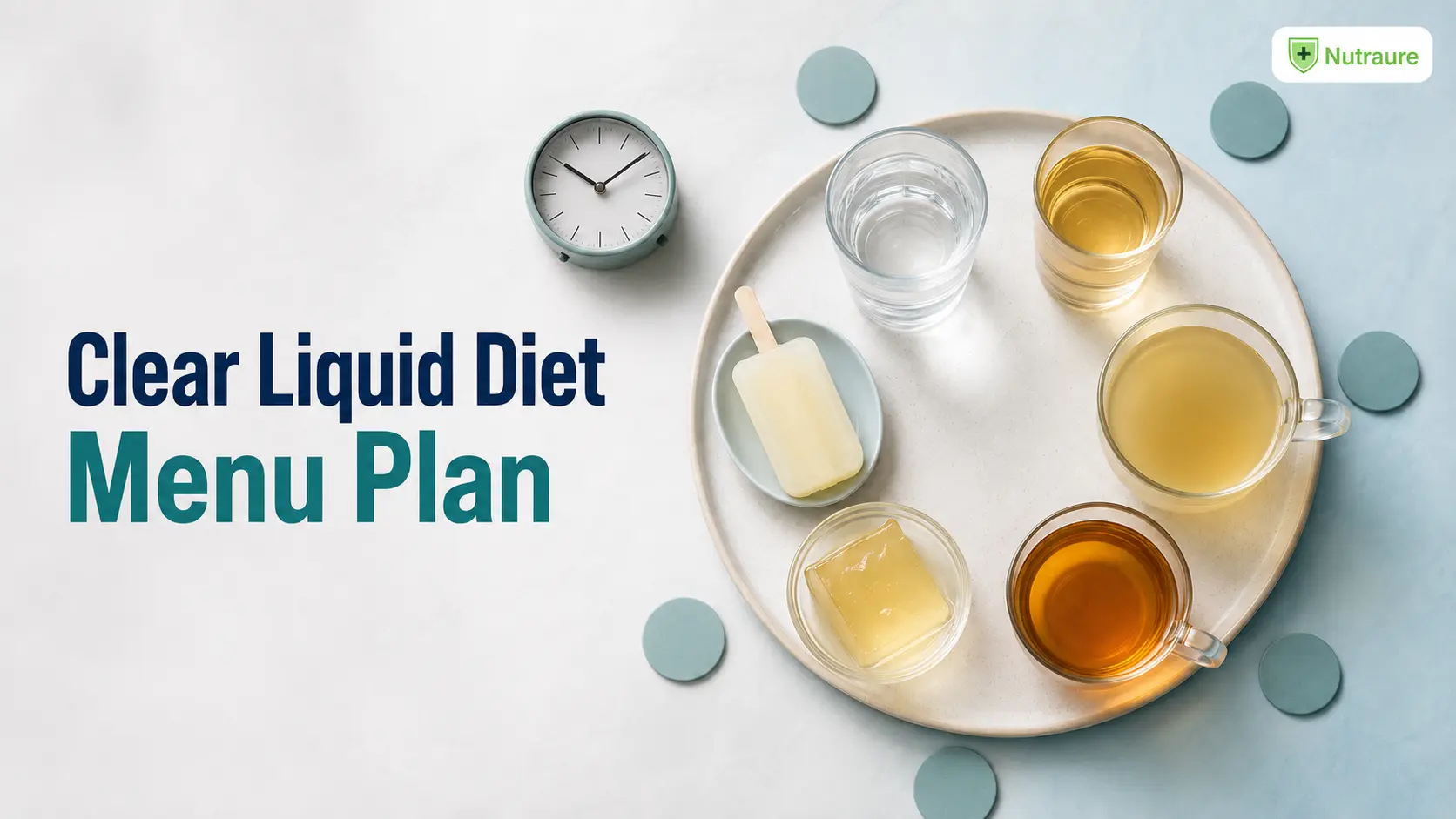
A day without solid food can feel more difficult when you do not know what to drink, how often to have it, or which products actually count as clear liquids. A little planning can make the experience less confusing.
This clear liquid diet menu plan provides a simple breakfast-to-evening framework, a list of commonly allowed foods and drinks, and seven practical ways to make hunger and flavor fatigue more manageable. It is intended for adults who have been told to follow a clear liquid diet before a procedure, after certain surgeries, or for another short-term medical reason.
Important: This is a general example, not a personalized prescription. Follow the written instructions from your healthcare team. Allowed products, colors, medications, fluid amounts, bowel-preparation timing, and the time you must stop drinking can vary.
Clear Liquid Diet Menu Plan at a Glance
A clear liquid diet typically includes transparent or see-through liquids that leave little material in the digestive tract. Common examples include water, pulp-free ***** or white grape juice, strained fat-free broth, plain gelatin, certain ice pops, and tea or coffee without milk or creamer.
Here is the basic pattern used in this one-day plan:
- Morning: Water, plain tea or black coffee, pulp-free juice, and gelatin
- Mid-morning: An approved electrolyte drink or pulp-free ice pop
- Lunch: Warm strained broth, water, and a clear sweet option
- Afternoon: Tea, gelatin, or another approved clear drink
- Dinner: Clear broth, pulp-free juice, and water
- Evening: Only the liquids and amounts permitted before your cutoff time
The word “clear” does not always mean colorless. A dark liquid may still be transparent, but it may not be permitted for your particular procedure. Always compare the label and color with the instructions you received.
What Is a Clear Liquid Diet?
A clear liquid diet is a temporary medical diet made up of liquids and foods that become transparent liquid at room temperature. It is designed to supply fluid and a limited amount of energy while leaving very little residue in the stomach and intestines.
According to the Mayo Clinic’s clear liquid diet guidance, healthcare professionals may prescribe the diet before a colonoscopy, before or after certain surgeries, or for short periods during digestive problems such as vomiting or diarrhea. The exact reason matters because the rules are not identical in every situation.
How clear liquids affect digestion
Water, filtered juice, broth, and similar liquids require less digestive work than solid meals and leave few food particles behind. This can help keep the digestive tract clear for an examination or allow it to rest during a medically supervised recovery.
Clear liquids can provide water, sugar, sodium, potassium, and some energy, depending on the products selected. They do not provide a balanced amount of protein, fiber, healthy fat, vitamins, minerals, or calories. For that reason, this diet should not be treated as a detox program or a long-term eating plan.
Why it is not a weight-loss diet
The scale may change temporarily when someone consumes less food and has less material in the digestive tract. That does not make a clear liquid diet a safe or sustainable fat-loss method. Extending it without medical supervision can lead to weakness, low energy, poor blood-sugar control, and nutritional deficiencies.
The Cleveland Clinic’s overview of clear liquid diets also describes the diet as a short-term medical tool rather than a weight-loss strategy.
Clear Liquid Diet Foods: What Is Commonly Allowed?
The following list covers foods and drinks that are often included in a clear liquid diet. It is not a universal approval list. A product that is acceptable after an illness, for example, may still be prohibited before a colonoscopy or surgery.
| Category | Common examples | What to check |
|---|---|---|
| Water | Plain, carbonated, or approved flavored water | Color, added pulp, and procedure rules |
| Pulp-free juice | ***** juice, white grape juice, pulp-free lemonade | No pulp, cloudiness, or prohibited dye |
| Broth | Clear chicken, beef, or vegetable broth; bouillon; consommé | Strained, free of solids, and low in visible fat |
| Hot drinks | Plain tea or black coffee | No milk, cream, or dairy-free creamer |
| Electrolyte drinks | Provider-approved clear sports or rehydration drinks | Color, sugar, sodium, and individual restrictions |
| Gelatin | Plain gelatin without fruit or toppings | Approved color and no solid pieces |
| Frozen options | Pulp-free, dairy-free ice pops or fruit ice | No fruit, seeds, cream, or prohibited color |
| Candy | Clear hard candy when specifically allowed | Color and procedure-day rules |
| Nutrition beverages | Transparent nutritional drinks | Use only if your care team approves the product |
Foods and drinks usually left off the menu
Thin-looking does not necessarily mean clear. Products usually excluded include:
- Milk, cream, and dairy-free milk alternatives
- Smoothies, shakes, and protein shakes that are not transparent
- ******, grapefruit, tomato, and prune juice
- Any juice containing pulp
- Cream soup or cloudy soup
- Broth containing noodles, rice, vegetables, meat, herbs, or other particles
- Yogurt, pudding, custard, and applesauce
- Ice cream and creamy frozen desserts
- Alcohol
- Solid food of any kind
The MedlinePlus clear liquid diet instructions provide a similar distinction between transparent liquids and foods containing dairy, pulp, or solid material.

The color rule before a colonoscopy
Many colonoscopy instructions prohibit red and purple liquids or gelatin because the dye may interfere with what the clinician sees. Some facilities also restrict blue or ****** products. Do not assume that every yellow, green, brown, or clear product is automatically acceptable.
Check the instruction sheet from your endoscopy center before shopping. When two sources disagree, use the instructions from the team performing your procedure.
Try the see-through test—but do not rely on it alone
Hold a glass of the liquid in front of a light. If you can see through it and it contains no pulp or particles, it may meet the basic definition of a clear liquid. That simple test is only a starting point. Color restrictions, fat, dairy ingredients, medication interactions, and fasting rules can still make a transparent product unsuitable.
One-Day Clear Liquid Diet Menu Plan
This sample menu is a planning framework, not a required fluid schedule. Adjust it to your healthcare provider’s instructions, any bowel-preparation medicine you were prescribed, and any medical fluid restriction.
| Time of day | Sample menu | Simple alternative |
| Early morning | Water and plain tea or black coffee | Warm water or an approved clear beverage |
| Breakfast | Pulp-free ***** juice, light-colored gelatin, and water | White grape juice in place of ***** juice |
| Mid-morning | Approved electrolyte drink and a pulp-free ice pop | Plain tea and gelatin |
| Lunch | Warm strained broth, pulp-free juice, and water | Bouillon or consommé that meets your instructions |
| Afternoon | Tea, gelatin, or an approved ice pop | Water and a permitted hard candy |
| Dinner | Clear strained broth, ***** or white grape juice, and water | Caffeine-free tea with an approved clear sweet option |
| Evening | Only permitted liquids before the stated cutoff | Follow the care team’s exact schedule |
Early morning hydration
Begin with a familiar approved drink, such as water or plain tea. If coffee is allowed, drink it black. Milk, cream, and nondairy creamers make coffee unsuitable for a standard clear liquid diet.
Starting with something familiar can make the day feel more normal. It also gives you time to confirm that your supplies match the written food, color, and timing rules before bowel preparation or fasting begins.
Clear liquid diet breakfast
Breakfast might include pulp-free ***** juice, plain gelatin in an approved color, water, and tea or black coffee. Combining a drink with something eaten from a spoon may feel more like a regular breakfast than drinking several beverages in a row.
If you normally avoid sugar or have diabetes, do not automatically replace every item with a sugar-free version. Your clinician may want a specific balance of carbohydrate-containing and sugar-free liquids, along with changes to blood-glucose monitoring or medication. Ask for individualized instructions.
Mid-morning clear-liquid snack
For variety, choose a provider-approved electrolyte drink and a pulp-free, dairy-free ice pop. If you have already had several sweet products, switch to plain tea or warm broth instead.
An ice pop can slow the pace of consumption and provide a temperature change, but it still needs to meet the ingredient and color rules. Products containing fruit pieces, seeds, yogurt, or cream are not clear liquids.
Clear liquid diet lunch
Warm, clear broth is one of the most useful savory choices in a menu dominated by sweet drinks. Strain homemade broth carefully, skim visible fat, and remove every herb or food particle. With packaged broth, inspect the liquid after heating and check your instructions rather than relying only on the product name.
Pair the broth with water and a permitted juice, gelatin, or electrolyte drink. If sodium is restricted because of a heart, kidney, or other health condition, use only the broth and electrolyte products approved by your healthcare professional.
Afternoon snack and hydration
By afternoon, flavor fatigue may be as noticeable as hunger. Instead of repeating the same juice, rotate among approved options. Plain tea, gelatin, an ice pop, or water at a different temperature can provide a change without adding solid food.
Clear hard candy is included on some food lists, but not every procedure allows candy, mints, or gum. Check before using it, especially close to a surgical or procedure cutoff.
Clear liquid diet dinner
Dinner can follow the same simple structure as lunch: one warm savory option, one approved source of carbohydrate or electrolytes, and water. For example, use clear chicken or vegetable broth with white grape juice and plain gelatin.
This is not intended to resemble a nutritionally complete dinner. The goal is to follow the prescribed restriction while making the available choices more organized and tolerable.
Evening intake and the final cutoff
Evening instructions vary considerably. Someone preparing for a colonoscopy may need to coordinate clear liquids with bowel-preparation medicine. Someone preparing for anesthesia may receive a different stop-drinking time. A person recovering from an illness may not have a procedure cutoff at all.
Do not copy a fasting time from a general article. Write the cutoff supplied by your healthcare team at the top of your menu and set an alarm if needed.

7 Practical Hunger-Saving Tips for a Clear Liquid Diet
No clear liquid can make this restrictive diet as filling as a balanced solid meal. The following strategies may make a prescribed clear-liquid day easier, but they are not guaranteed appetite suppressants.
1. Plan regular opportunities for approved liquids
Waiting until you feel extremely hungry or thirsty can make the day harder. Create a simple schedule using only the fluids, amounts, and times your care team permits. A plan also reduces the temptation to grab an unsuitable product when you are tired or distracted.
If you have been given a fluid limit, do not use a general “drink more” rule. Your prescribed limit comes first.
2. Alternate sweet and savory flavors
Juice, gelatin, electrolyte drinks, and ice pops can start to taste overly sweet when used repeatedly. Rotate them with broth, plain tea, black coffee if allowed, or water.
Try thinking in pairs:
| When you are tired of sweet flavors | When you are tired of savory flavors |
| Warm clear broth | Pulp-free ***** or white grape juice |
| Plain tea | Approved gelatin |
| Water | Pulp-free ice pop |
Variety does not add nutrients by itself, but it can reduce monotony and make the plan easier to follow.
3. Make warm, strained broth feel like a meal
Serve broth in a bowl or favorite mug and sit down for it at your usual lunch or dinner time. The warmth, savory flavor, and familiar routine can feel more meal-like than another cold drink.
Check that the broth is truly clear and free from noodles, meat, vegetables, seasoning pieces, and excess visible fat. Bone broth is not automatically acceptable; some products are cloudy or contain particles.
4. Use permitted calorie-containing liquids
Unless your clinician has told you otherwise, an approved juice, gelatin, or transparent nutrition drink may provide more energy than water alone. This can be useful during a short period when solid food is not allowed.
More sugar is not always better, however. People with diabetes need a plan that balances blood glucose, medication, and the need for carbohydrate. People with dumping syndrome or other conditions may also need different choices. Do not make medication or insulin changes based on a blog menu.
5. Include approved electrolytes when appropriate
Electrolyte drinks can supply sodium, potassium, carbohydrate, and fluid, depending on the product. They are not necessary or appropriate for everyone, and the word “electrolyte” does not automatically make a product suitable for a procedure.
Choose a transparent product in an allowed color, and check the label. Anyone with kidney disease, heart disease, a fluid restriction, or a medically prescribed sodium or potassium limit should use only clinician-approved products.
6. Change the temperature and texture
Rotate warm broth or tea with chilled water, gelatin, and ice pops. Temperature and texture changes can break up the feeling of drinking the same thing all day.
Gelatin and ice pops may also take longer to consume than a glass of juice. That can create a more deliberate snack break, even though these options are still part of a restrictive liquid diet.
7. Prepare before the diet begins
Check every label, make gelatin, strain broth, chill drinks, and write down your cutoff before the clear-liquid day starts. Keep the approved items together so another household member does not accidentally use them.
If possible, avoid cooking a large solid meal for someone else while you are fasting. Plan a quiet activity away from food cues, and keep your medical instruction sheet visible. Preparation will not remove hunger, but it can prevent avoidable mistakes.

Clear Liquid Diet Shopping List
Use this checklist only after comparing it with the instructions from your healthcare team.
Hydration
- Plain water
- Approved sparkling or flavored water
- Provider-approved electrolyte drinks
Savory choices
- Clear chicken, beef, or vegetable broth
- Bouillon or consommé
- Plain tea
Sweet choices
- Pulp-free ***** juice
- Pulp-free white grape juice
- Pulp-free lemonade if allowed
- Plain gelatin in an approved color
- Dairy-free, pulp-free ice pops
- Clear hard candy if permitted
Preparation supplies
- Fine-mesh strainer for broth
- Clear cups or glasses
- Small containers for portions
- Marker or note card for the fasting cutoff
Before buying anything, inspect the product for pulp, dairy ingredients, solid pieces, visible fat, prohibited dye, and any ingredient excluded by your medical instructions.
Colonoscopy, Surgery, and Illness Plans Are Different
“Clear liquid diet” is a broad term. The purpose of the diet determines which details matter most.
Before a colonoscopy
The clear-liquid day is often one part of a larger bowel-preparation plan. You may also receive instructions about low-fiber foods on earlier days, prescription or over-the-counter preparation medicine, divided doses, permitted colors, and the final time for liquids.
Following the complete plan matters. An inadequately prepared bowel can reduce visibility and may lead to a delayed or repeated procedure.
Before surgery or anesthesia
Surgical fasting instructions focus partly on reducing the risk of stomach contents entering the airway during anesthesia. The allowed liquids and stop-drinking time depend on the procedure, facility, type of anesthesia, and individual risk factors.
Do not assume that colonoscopy instructions and surgery instructions are interchangeable. Contact the surgical team if the written directions are missing or unclear.
During illness or recovery
A healthcare professional may recommend clear liquids for a short period after digestive surgery or during severe nausea, vomiting, or diarrhea. The priorities may include tolerating fluids and avoiding dehydration rather than clearing the bowel.
Seek medical advice if you cannot keep liquids down, symptoms are worsening, or you develop marked weakness, confusion, very dark urine, fainting, or other concerning symptoms.
Safety, Diabetes, and Medication Questions
Because a clear liquid diet supplies limited nutrition, use it only for the duration recommended by your healthcare professional. Different medical centers publish different maximum durations, which is why a general article should not choose a universal number for every reader.
If you have diabetes
Ask the clinician who manages your diabetes for specific instructions before starting. Important questions include:
- How often should I check my blood glucose?
- Which carbohydrate-containing liquids should I use?
- When should I choose a sugar-free option?
- Should the timing or dose of insulin or another medicine change?
- What should I do if my glucose becomes too high or too low?
Never skip, reduce, or add medication based only on an online menu.
Ask for individualized guidance if you have:
- Kidney or heart disease
- A prescribed fluid, sodium, or potassium restriction
- Pregnancy
- Difficulty swallowing
- A history of poor bowel preparation
- Gastroparesis or delayed stomach emptying
- Prescription medications affected by fasting
- Ongoing vomiting or diarrhea
Children should follow pediatric instructions rather than an adult sample menu.
What to Eat After a Clear Liquid Diet
The next step depends on why the diet was prescribed. Your healthcare team may recommend a full-liquid diet, a soft diet, a low-fiber diet, or a return to regular food. Do not assume that a heavy meal is appropriate immediately after fasting, bowel preparation, anesthesia, or digestive illness.
Clear liquid diet versus full liquid diet
| Clear liquid diet | Full liquid diet |
| Primarily transparent liquids | Includes transparent and opaque liquids |
| Usually provides limited calories and protein | Can provide more calories and protein |
| May include water, broth, pulp-free juice, and gelatin | May also include milk, yogurt, pudding, and creamy strained soup |
| Often used for specific short-term medical purposes | Often used as a transition when solid food is not yet suitable |
Only move to the next stage when your care team says it is appropriate.
Frequently Asked Questions
What counts as a clear liquid?
A clear liquid is generally transparent at room temperature and contains no pulp or solid particles. Procedure-specific instructions can narrow that definition.
Can I drink coffee on a clear liquid diet?
Plain black coffee is included on many clear-liquid lists. Milk, cream, and nondairy creamer are not clear liquids. Your provider may restrict caffeine or coffee for other reasons.
Can I eat gelatin?
Plain gelatin without fruit, toppings, or solid pieces is commonly allowed. Use only colors permitted by your procedure instructions.
Is chicken broth considered a clear liquid?
Clear, strained chicken broth without meat, vegetables, noodles, herbs, or visible fat is commonly included. Check your specific instructions.
Is bone broth allowed?
It depends on the product. Some bone broths are clear and strained, while others are cloudy, fatty, or contain particles. Ask your healthcare team when the label is unclear.
Can I drink ****** juice?
Standard ****** juice is not transparent and contains pulp, so it is generally excluded from a clear liquid diet.
What colors should I avoid before a colonoscopy?
Red and purple are commonly restricted. Some centers also prohibit blue or ******. Follow the color list provided by your endoscopy center.
Are ice pops allowed?
They may be allowed when they contain no dairy, pulp, seeds, or fruit pieces and are an approved color.
How long can I stay on a clear liquid diet?
Stay on it only for the period prescribed. It does not provide complete nutrition and is not intended for unsupervised long-term use.
Can I use a clear liquid diet to lose weight?
No. It is a short-term medical diet, not a balanced or sustainable weight-loss program.
Final Takeaway
A useful clear liquid diet menu plan does more than list permitted drinks. It organizes the day, balances sweet and savory flavors, provides safe substitutions, and keeps the medical cutoff visible.
Plan, vary temperature and texture, and use approved calorie- or electrolyte-containing liquids when appropriate. Most importantly, treat this menu as a framework. Your healthcare team’s instructions about products, colors, medications, fluid amounts, bowel preparation, and fasting times always come first.
Print the menu and shopping list, then compare every item with the directions supplied for your procedure or medical condition.






Yes, absolutely…