Planning meals can feel surprisingly difficult when you have been told to reduce potassium. Foods you once considered automatic healthy choices—such as bananas, potatoes, tomatoes, beans, and avocado—may suddenly require closer attention. At the same time, you still need meals that are filling, practical, and enjoyable.
This 7-day meal plan for low potassium diet needs gives you 21 straightforward breakfast, lunch, and dinner ideas. You will also find a low-potassium food list, grocery guide, easy substitutions, meal-preparation tips, snack ideas, and answers to common questions.
This plan is a general starting point rather than a medical prescription. Not everyone with chronic kidney disease needs to restrict potassium, and some people may even need more potassium depending on their kidney function, medications, dialysis treatment, and laboratory results. The National Institute of Diabetes and Digestive and Kidney Diseases recommends working with a healthcare professional or kidney dietitian to determine the right potassium target for you. Meals below as a flexible framework. Adjust portions, protein choices, fluids, sodium, phosphorus, and carbohydrates according to your personal care plan.
What Is a Low Potassium Diet and Who May Need One?
A low-potassium diet limits or carefully portions foods that contribute larger amounts of potassium. It does not mean eliminating potassium.
What does “low potassium diet” mean?
Potassium is an essential mineral and electrolyte. It helps your nerves and muscles work properly, including the muscles involved in maintaining a regular heartbeat. Your body needs potassium, but the amount in your blood must remain within a healthy range. Kidneys help remove excess potassium from the blood. When kidney function declines, potassium may build up. However, kidney disease can also be associated with potassium levels that are too low, so dietary restrictions should be based on blood tests rather than diagnosis alone.
A potassium-restricted diet therefore focuses on:
- Choosing foods that contain less potassium per serving
- Controlling the portions of foods that contain more potassium
- Avoiding unnecessary potassium additives
- Spreading fruit, vegetables, and protein choices across the day
- Following an individualized potassium target
Who may be advised to limit potassium?
A doctor or registered dietitian may recommend a lower-potassium eating plan when blood tests show that potassium is elevated or likely to become elevated.
This may apply to some people with advanced chronic kidney disease, kidney failure, or certain medical conditions. Some medications can also affect blood potassium levels. However, a person with early kidney disease may not need the same restrictions as someone receiving hemodialysis.
People receiving peritoneal dialysis can sometimes lose more potassium and may be advised to eat more potassium-rich foods instead. That is one reason a generic “renal diet” cannot safely represent every person with kidney disease. Meal planning matters
A low potassium meal plan removes much of the daily guesswork. Instead of trying to decide whether every individual food is acceptable, you begin with a simple structure.
Planning can help you:
- Buy the right ingredients
- Control serving sizes
- Reduce dependence on processed meals
- Notice potassium-containing additives
- Avoid unintentionally combining several high-potassium foods in one meal
- Prepare food that suits your schedule, budget, and cooking ability
A useful plan should still include foods you genuinely enjoy. The goal is not to create a joyless list of restrictions. It is to build meals that fit your health needs without making every meal feel complicated.
Low Potassium Diet Basics Before You Start
Before following any sample menu for a low potassium diet, keep these five principles in mind.
Potassium limits are not the same for everyone.
There is no single daily potassium target that is appropriate for every person with kidney disease.
Your recommended intake may depend on:
- Your latest blood potassium result
- Your stage of kidney disease
- Whether you receive dialysis
- The type of dialysis you receive
- Your medications and supplements
- Your blood sugar levels
- Your bowel habits
- Your appetite and nutritional status
- Your other medical conditions
Ask your healthcare professional two direct questions: “What is my current potassium level?” and “What daily potassium range should I follow?”
Lower-potassium foods still contain potassium.m
Potassium is naturally present in many foods, including fruits, vegetables, grains, meat, dairy products, beans, and beverages. The phrase “low potassium” usually describes the amount in a particular serving, not the complete absence of potassium.
Common lower-potassium choices in typical portions include apples, berries, grapes, pineapple, cabbage, cauliflower, cucumber, lettuce, onions, peppers, green beans, white rice, pasta, and many bread products. Lower-potassium foods may need closer portion control.l
Foods commonly higher in potassium include bananas, oranges and ****** juice, avocados, potatoes, tomatoes and tomato products, cooked spinach, dried fruit, beans, lentils, bran products, and coconut water. Foods are not automatically “bad.” Some may fit in carefully controlled portions when your kidney dietitian approves them. The correct decision depends on the rest of your meal and your individual potassium allowance.
Portion size can change the entire meal.
A large helping of a lower-potassium food may provide more potassium than a small serving of a higher-potassium food. Both NIDDK and the National Kidney Foundation emphasize that serving size matters when managing potassium. For example, one modest serving of grapes may fit your plan, while eating several cups throughout the afternoon may not. Avoid treating the lower-potassium list as an unlimited-food list.
Watch for potassium additives.
Potassium is not found only in fresh produce. It may be added to packaged foods, low-sodium products, drink mixes, processed meats, sauces, and salt substitutes.
Check ingredient lists for terms such as:
- Potassium chloride
- Potassium salt
- Potassium phosphate
- Potassium sorbate
- Potassium citrate
The FDA permits “potassium salt” to be used as an alternate name for potassium chloride on ingredient lists. Potassium chloride is also commonly used to replace some sodium in reduced-sodium products. Assume a product is suitable simply because it says “low sodium.” Read both the Nutrition Facts panel and the ingredient list.
Low Potassium Food List: What to Eat More Often and What to Limit
The following foods can help you build easy low potassium meals. The examples are based on commonly used serving sizes, but actual potassium levels vary by food, brand, portion, preparation method, and recipe.
For a more detailed reference, see the American Kidney Fund Potassium Food Guide.
Lower-potassium fruits
Possible choices include:
- Apples and unsweetened applesauce
- Blueberries
- Strawberries
- Raspberries
- Cranberries
- Grapes
- Pears
- Pineapple
- Peaches in suitable portions
- Canned fruit that has been drained
Choose fruit packed in water or juice rather than heavy syrup when possible. Drain canned fruit and discard the liquid. NIDDK notes that the liquid from canned fruits and vegetables can contain potassium. Low-potassium vegetables
Common choices include:
- Green or red cabbage
- Cauliflower
- Cucumber
- Lettuce
- Onions
- Bell peppers
- Radishes
- Green beans
- Eggplant
- Yellow squash
- Raw mushrooms in appropriate portions
- Water chestnuts
Fresh and frozen vegetables without sauces make it easier to control sodium and additives. Canned vegetables can also be used when approved, but choose no-salt-added options and drain them well.
Grains, starches, and side dishes
Depending on your broader nutrition plan, practical options may include:
- White rice
- Pasta or noodles
- Couscous
- Cream of rice
- White or sourdough bread
- Pita bread
- Flour tortillas
- Plain crackers
- Unsalted rice cakes
- Lower-sodium breakfast cereals
Whole grains are nutritious, but bran products and some whole-grain foods can contain more potassium and phosphorus than refined alternatives. Do not automatically remove all whole grains; ask your dietitian which choices and portions fit your overall plan.
Protein choices
Protein foods also contribute potassium, so the serving size matters. Possible choices include:
- Eggs or egg whites
- Fresh chicken
- Fresh turkey
- White fish
- Tuna packed in water
- Lean beef
- Pork
- Tofu in a dietitian-approved portion
Choose fresh, unprocessed meat more often than deli meat, sausages, cured meat, or heavily seasoned frozen products. Processed meats may contain significant sodium and phosphorus or potassium additives.
Protein needs differ considerably between people who are not receiving dialysis and those who are. A kidney dietitian can help determine how much protein you need at each meal. To limit more carefully
Depending on your prescribed potassium target, foods that may require smaller portions or substitutions include:
- Bananas
- Avocados
- Oranges and ****** juice
- Cantaloupe
- Dried fruit
- Prunes and prune juice
- Potatoes and sweet potatoes
- Tomatoes, tomato sauce, and tomato juice
- Cooked spinach
- Winter squash
- Beans and lentils
- Bran cereal and granola
- Milk and yogurt
- Chocolate
- Nuts and nut butters
- Coconut water
- Vegetable juices
- Salt substitutes containing potassium

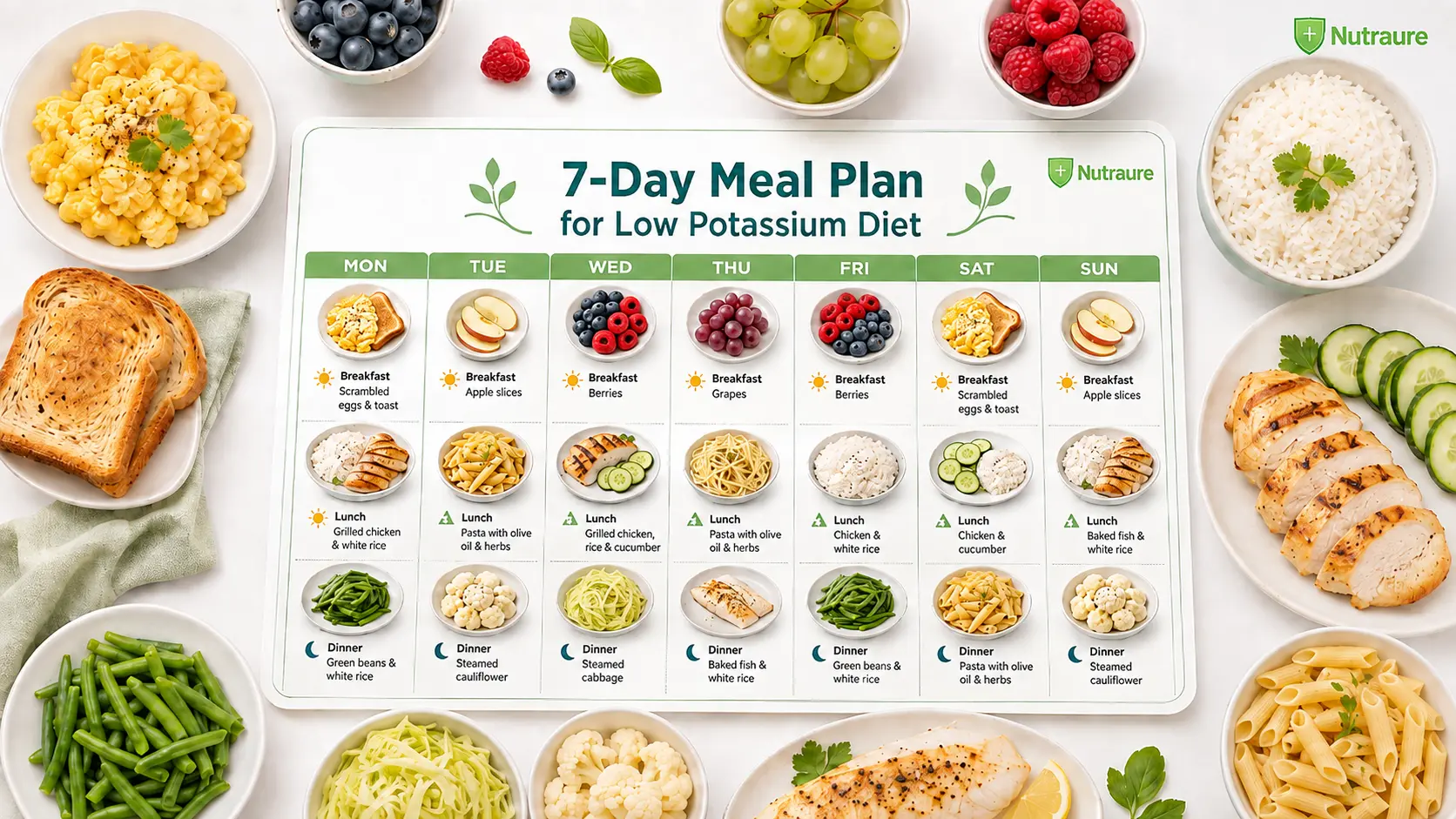
7-Day Meal Plan for Low Potassium Diet
The following seven-day plan includes three easy meals per day. It is designed as a practical meal-planning example, not as a calculated medical diet.
The potassium content of each meal will change according to portions, brands, recipes, and ingredient substitutions. Packaged breads, wraps, cereals, sauces, meat products, and plant-based alternatives should always be checked for potassium, sodium, and phosphorus additives.
The National Kidney Foundation’s newer meal-planning guidance also stresses that a kidney-friendly plate should reflect your laboratory results, treatment, culture, budget, cooking skills, and access to food. 1
Breakfast: Scrambled eggs, toast, and *****
Prepare one or two eggs with onion and black pepper. Serve them with one slice of white or sourdough toast and a modest portion of fresh *****.
For more flavor, use garlic powder, parsley, chives, or paprika instead of a potassium-based salt substitute.
Lunch: Homemade chicken salad wrap
Combine freshly cooked chicken with mayonnaise or plain olive-oil dressing, chopped celery, lettuce, and cucumber. Spoon the mixture into a flour tortilla.
Use home-cooked chicken when possible. Deli chicken and processed sandwich fillings may contain more sodium and potassium additives.
Dinner: Grilled chicken with rice and green beans
Serve a moderate portion of grilled chicken with white rice and steamed green beans. Season the chicken with lemon, garlic, pepper, and dried herbs.
Check with your healthcare team before using large amounts of citrus if you have been given another dietary restriction.
Day 2
Breakfast: Cream of rice with blueberries
Prepare cream of rice with water or a dietitian-approved milk substitute. Add blueberries, cinnamon, and a small amount of sugar or honey when appropriate for your blood sugar plan.
Some milk alternatives contain potassium phosphate or potassium citrate, so compare ingredient lists rather than choosing by product category alone.
Lunch: Fresh turkey sandwich with grapes
Use sliced home-roasted turkey rather than processed deli turkey. Add lettuce and cucumber to two slices of suitable bread. Serve with a modest portion of grapes.
Mustard, mayonnaise, and bottled dressings vary in sodium and additives. Use a small amount and compare labels.
Dinner: Baked fish with pasta and cauliflower
Bake a white fish fillet with garlic, pepper, parsley, and olive oil. Serve with plain pasta and roasted or steamed cauliflower.
Avoid using tomato-based pasta sauce unless your dietitian has included the portion in your meal plan. A light garlic-and-herb dressing is a simple alternative.
Day 3
Breakfast: Toast with strawberries and egg whites
Serve toast with a thin layer of unsalted butter or fruit spread, a portion of strawberries, and scrambled egg whites.
Fruit spreads can be high in added sugar, so use a small amount if you are also managing diabetes.
Lunch: Egg salad sandwich with cucumber
Mix chopped boiled egg with mayonnaise, black pepper, and diced celery. Serve on bread with lettuce and cucumber slices.
For a lighter version, replace part of the mayonnaise with olive oil and vinegar rather than yogurt, which may provide more potassium and phosphorus.
Dinner: Beef and cabbage rice bowl
Cook a modest portion of lean beef with shredded cabbage, onions, and bell peppers. Serve over white rice.
Flavor the bowl with garlic, ginger, rice vinegar, and a small amount of lower-sodium sauce that does not contain potassium chloride. Standard soy sauce can be very high in sodium.
Day 4
Breakfast: Small pancakes with berries
Prepare a small serving of pancakes using a recipe that fits your potassium, phosphorus, sodium, and carbohydrate goals. Top them with berries and cinnamon instead of banana slices.
Packaged pancake mixes may contain phosphate additives, so check the ingredient list for words containing “phos.”
Lunch: Tuna pasta salad
Mix drained tuna packed in water with cooked pasta, lettuce, cucumber, celery, and a simple olive-oil dressing.
Choose lower-sodium tuna when available, and drain it well. Confirm your protein portion with your dietitian if you are limiting protein.
Dinner: Roasted chicken with couscous and green beans
Season fresh chicken with rosemary, thyme, black pepper, and garlic. Serve with couscous and green beans.
Avoid pre-marinated chicken unless you have checked the label. Marinades and enhanced poultry can contain sodium, phosphorus, and potassium ingredients.
Day 5
Breakfast: Cream of rice with ****
Prepare cream of rice and top it with sliced **** and cinnamon. Add a boiled egg or egg white if your protein plan allows it.
This simple breakfast is useful on busy mornings because it requires few ingredients and can be prepared quickly.
Lunch: Turkey lettuce wrap with crackers and *****
Fill lettuce leaves with freshly cooked turkey, cucumber, and shredded cabbage. Serve with lower-sodium crackers and ***** slices.
If the lettuce wraps do not feel filling enough, use a flour tortilla or add an approved portion of rice.
Dinner: Herb-baked fish with rice and cabbage
Bake fish with parsley, garlic, pepper, and olive oil. Serve it with white rice and sautéed cabbage.
Use vinegar, fresh herbs, or a small squeeze of lemon to brighten the flavor without relying on salt-heavy seasoning packets.
Day 6
Breakfast: Egg and onion toast
Top toast with a cooked egg, sautéed onion, and black pepper. Serve with grapes or a small portion of berries.
This combination provides a familiar breakfast without depending on avocado, tomato, or a large dairy serving.
Lunch: Chicken pasta bowl
Combine cooked pasta with fresh chicken, cucumber, lettuce, cabbage, and an olive-oil-and-vinegar dressing.
Prepare extra chicken at dinner earlier in the week so the lunch takes only a few minutes to assemble.
Dinner: Lean beef patty with rice and cauliflower
Serve a small homemade beef patty with rice and steamed cauliflower. Season the patty with onion, garlic, pepper, and herbs.
Avoid commercial seasoning blends containing large amounts of salt or potassium chloride. Do not automatically use “lite salt,” because it commonly includes potassium.
Day 7
Breakfast: Onion omelet with toast and berries
Prepare a small omelet with eggs or egg whites, onion, and bell pepper. Serve it with toast and a portion of berries.
Cheese may contribute potassium, phosphorus, and sodium, so add it only when it fits your prescribed plan.
Lunch: Chicken and cucumber sandwich
Fill suitable bread with home-cooked chicken, lettuce, and cucumber. Add a small amount of mayonnaise, pepper, and herbs.
Serve with pineapple pieces or ***** slices rather than potato chips or dried fruit.
Dinner: Turkey cutlets with pasta and green beans
Grill or bake fresh turkey cutlets and serve them with pasta and green beans. Add olive oil, garlic, and parsley for a simple sauce.
Fresh turkey is generally a better starting point than breaded, frozen, cured, or pre-seasoned turkey products because you have more control over the ingredients.
Optional low potassium snack ideas
Snacks still contribute to your daily potassium total, so portion them rather than eating directly from a large package.
Possible choices include:
- ***** slices
- Grapes
- Berries
- Pineapple
- Unsweetened applesauce
- Plain or lower-sodium crackers
- Unsalted rice cakes
- Air-popped popcorn without potassium-based salt substitutes
- Toast with a small amount of fruit spread
- A boiled egg, when appropriate for your protein plan
- Cucumber slices with a suitable dip
- Small portions of gelatin or fruit ice
Yogurt is often promoted as a convenient healthy snack, but it can be relatively high in potassium and phosphorus. Include it only after checking the label, portion, and your dietitian’s advice.

Grocery List for a 7-Day Low Potassium Meal Plan
Use this list as a starting point and adjust the quantities to your household size, appetite, protein prescription, and planned portions.
Produce
- Apples
- Grapes
- Blueberries
- Strawberries
- Pears
- Pineapple
- Lettuce
- Cucumbers
- Green or red cabbage
- Cauliflower
- Green beans
- Onions
- Bell peppers
- Celery
- Garlic
- Lemons, if approved
- Fresh herbs
Protein
- Eggs or liquid egg whites
- Fresh chicken
- Fresh turkey
- White fish
- Lower-sodium tuna packed in water
- Lean beef
Look for products without added broth, brine, potassium chloride, or phosphate additives. Fresh meat is not automatically additive-free, so read the package carefully.
Grains and pantry staples
- White rice
- Pasta
- Couscous
- Cream of rice
- Suitable bread
- Flour tortillas
- Plain crackers
- Unsalted rice cakes
- Olive oil
- Vinegar
- Black pepper
- Cinnamon
- Garlic powder
- Onion powder
- Paprika
- Dried herbs
Simple shopping tips
Start with a written list and plan several meals that use the same ingredients. For example, one cabbage can be used in a stir-fry, pasta bowl, lettuce wrap, and dinner side.
On packaged foods, check:
- The serving size
- The potassium amount
- The sodium amount
- The ingredient list
- The number of servings you will actually eat
The FDA requires potassium to appear on the updated Nutrition Facts label for most packaged foods. However, the listed serving size reflects what people typically consume; it is not a personalized recommendation. Food Swaps for a Low Potassium Diet
You do not need to reinvent every recipe. A few repeatable substitutions can make familiar meals easier to manage.
Fruit swaps
Instead of:
- Banana, choose *****, berries, grapes, ****, or pineapple
- ****** juice, choose an approved portion of *****, grape, or cranberry juice
- Dried fruit, choose fresh berries or grapes
- Avocado toast, choose egg-and-onion toast
Juice contains less fiber than whole fruit and can add sugar quickly, so whole fruit is usually the more satisfying everyday choice when appropriate.
Vegetable swaps
Instead of:
- A tomato-heavy salad, use lettuce, cucumber, cabbage, onion, and bell pepper
- Cooked spinach, try cabbage or green beans
- Tomato pasta sauce, use garlic, herbs, olive oil, and a small amount of vinegar
- A large serving of winter squash; use cauliflower or yellow squash
Side-dish swaps
Instead of:
- A baked potato, use rice, pasta, couscous, or bread
- Potato chips, use unsalted crackers, rice cakes, or air-popped popcorn
- Bran cereal, choose cream of rice or another dietitian-approved cereal
Some people can include potatoes after using potassium-reducing preparation methods or by eating a small calculated portion. Do not assume that soaking or boiling removes all potassium.
Snack swaps
Instead of:
- Trail mix, choose berries with plain crackers
- Peanut butter and banana, choose toast with fruit spread
- Yogurt with granola, choose applesauce with a suitable cereal
- Coconut water, choose a beverage approved within your fluid plan
Meal Prep Tips to Make a Low Potassium Diet Easier
Meal preparation does not need to take over your weekend. Focus on a few components that can be used in different combinations.
Cook simple proteins in batches.
Bake or grill fresh chicken or turkey with neutral seasonings. Refrigerate the cooked portions safely and use them in sandwiches, wraps, salads, rice bowls, and pasta dishes.
Do not prepare an entire week of refrigerated meat at once unless you plan to freeze part of it. Follow standard food-safety guidance for storing leftovers.
Prepare vegetables in advance.e
Wash and chop cabbage, lettuce, cucumber, onions, and peppers. Store them separately so they stay crisp and can be used in several meals.
Keeping prepared vegetables visible makes it easier to assemble lunch without reaching for a packaged convenience meal.
Repeat ingredients, not identical meals.
Using the same ingredient does not mean eating the same dish repeatedly. Cooked chicken can become:
- A chicken salad wrap
- A rice bowl
- A pasta salad
- A sandwich
- A lettuce wrap
This approach saves money and reduces waste while keeping the week varied.
Read labels before meal-prep day.
Do not wait until you are cooking to discover that your bread, sauce, meat, or seasoning contains potassium chloride. Compare products while shopping and save photos of suitable labels for future trips.
Keep an emergency meal available.
Store a few simple foods for days when you cannot cook, such as rice, tuna packed in water, unsalted crackers, drained canned fruit, and frozen vegetables without sauce.
The exact emergency meal should reflect your sodium, potassium, phosphorus, protein, and fluid limits.

Common Mistakes to Avoid on a Low Potassium Diet
Assuming every nutritious food fits automatically
Bananas, beans, avocado, tomatoes, potatoes, nuts, and whole grains can all provide valuable nutrients. They can also contribute considerable potassium in certain portions.
“Healthy” and “appropriate for my current laboratory results” are not always the same thing.
Cutting out too many foods
Over-restriction can make it difficult to eat enough calories, fiber, vitamins, and variety. Do not remove entire food groups without guidance.
The National Kidney Foundation advises that many people with CKD can continue eating a variety of fruits, vegetables, grains, and protein foods. Their laboratory results and individual needs should guide the changes. Gettingg about portion size
Two or three portions eaten together can change a lower-potassium choice into a potassium-heavy meal. Measure your usual serving at least once so you know what it looks like on your plate.
Depending too heavily on processed foods
Processed meals, deli meats, sauces, seasoning packets, and reduced-sodium products may contain potassium, sodium, or phosphorus additives.
Cooking from basic ingredients gives you greater control, although labels should still be checked.
Following a generic renal diet
A person receiving dialysis may need different amounts of protein, potassium, phosphorus, sodium, and fluid than someone with earlier-stage kidney disease.
Use this low potassium meal plan as a conversation starter with your healthcare team—not as a replacement for an individualized plan.
FAQs About a 7-Day Meal Plan for Low Potassium Diet
What foods are low in potassium?
Common lower-potassium choices in typical portions include apples, berries, grapes, pineapple, cabbage, cauliflower, cucumber, lettuce, onions, peppers, green beans, rice, pasta, and many bread products.
The potassium content depends on the serving size and preparation method. Use an official potassium food guide or ask a renal dietitian for a list matched to your personal target.
What should I avoid on a low potassium diet?
Foods frequently higher in potassium include bananas, avocados, oranges, potatoes, tomatoes, dried fruit, cooked spinach, beans, lentils, milk, yogurt, coconut water, and some salt substitutes.
You may not need to eliminate every one of these foods. Your dietitian may recommend a smaller portion, a different preparation method, or less frequent use.
Can I eat potatoes on a low potassium diet?
Possibly, but potatoes are naturally high in potassium. Cutting potatoes into small pieces and boiling them in a large amount of water can reduce some potassium. NIDDK describes boiling and leaching as preparation methods that can lower potassium in certain vegetables. These methods do not make potatoes potassium-free. Ask your dietitian whether potatoes fit your plan and what portion is appropriate.
Are bananas too high in potassium?
Bananas are commonly classified as a higher-potassium fruit, but the appropriate portion depends on your potassium target and the rest of your diet.
For a simpler everyday substitution, choose an *****, berries, grapes, ****, or pineapple in a suitable portion.
Is a low potassium diet the same as a renal diet?
No. “Renal diet” is a broad term for eating patterns adapted to kidney function and treatment. A person’s plan may address sodium, protein, phosphorus, potassium, carbohydrates, calories, and fluids.
Not everyone with kidney disease needs to restrict every one of these. Some people do not need a potassium restriction at all.
What are easy low potassium breakfasts?
Simple ideas include:
- Eggs with toast and *****
- Cream of rice with berries
- Egg-white omelet with onion and bell pepper
- Toast with strawberries
- Small pancakes with berries
- Lower-potassium cereal with a dietitian-approved beverage
Always check packaged cereals, breads, baking mixes, and milk alternatives for potassium and phosphorus additives.
What snacks can I eat on a low potassium diet?
Possible snacks include ***** slices, grapes, berries, pineapple, applesauce, plain crackers, rice cakes, popcorn, cucumber slices, toast, or a boiled egg.
Your snack should also fit your sodium, protein, phosphorus, carbohydrate, calorie, and fluid needs.
Can I follow a vegetarian low potassium meal plan?
Yes, but it may require more careful planning because beans, lentils, nuts, seeds, dairy products, and some meat alternatives can provide significant potassium or phosphorus.
A kidney dietitian can help you select plant proteins, portions, preparation methods, and meal combinations that meet your protein needs without exceeding your potassium target.
How do I make a low potassium meal plan easier to follow?
Choose a small group of approved foods you enjoy and use them in different combinations. Plan your meals before shopping, prepare ingredients in batches, keep suitable staples available, and save labels from products that work for you.
For additional recipe ideas, browse the American Kidney Fund Kidney Kitchen and filter recipes according to your nutrition needs.
Should I talk to a dietitian before changing my diet?
Yes, particularly when you have kidney disease, abnormal potassium results, diabetes, heart disease, poor appetite, recent weight loss, or dialysis treatment.
A registered dietitian with kidney experience can use your laboratory results and treatment plan to recommend appropriate potassium, protein, sodium, phosphorus, calorie, and fluid targets. You can also review the NIDDK healthy-eating guidance for adults with CKD before your appointment.
Final Thoughts on Following a 7-Day Meal Plan for Low Potassium Diet
Following a potassium restriction can feel limiting at first, but a clear weekly structure makes it more manageable. Instead of focusing only on what you cannot eat, build your meals around suitable fruits, vegetables, grains, proteins, herbs, and simple homemade dressings.
This 7-day meal plan for a low-potassium diet provides 21 easy meals you can adapt to your tastes and schedule. Save the plan, create a grocery list, and mark the meals that feel realistic for your household.
Most importantly, personalize it. Potassium requirements can change with your laboratory results, medications, kidney function, and treatment. Review the plan with your doctor or renal dietitian before using it as your regular eating routine.