Eating more sounds simple until you try to do it consistently.
You may finish a large breakfast, feel full for hours, and then realize by evening that you are still hundreds of calories behind your target. On other days, you may reach 3,000 calories through fast food and snacks but fall short on protein, fiber, fruit, and vegetables.
A successful 3000 calories diet plan needs more than a high number on a tracking app. It should provide enough energy to support your training while still delivering protein, carbohydrates, healthy fats, vitamins, minerals, and foods you can comfortably digest.
However, 3,000 calories is not automatically the right intake for everyone. Whether it creates a calorie surplus depends on your body size, age, activity level, training volume, and current maintenance intake. Research also shows that the precise surplus needed to maximize muscle growth without unnecessary fat gain remains uncertain. It gives you a complete seven-day framework, estimated calories and protein, meal-preparation advice, food substitutions, and practical ways to adjust the plan.
Personal note: I have helped someone follow a similar higher-calorie eating plan. I have not included a specific weight or muscle-gain result because that would require their exact food records, starting measurements, training program, and progress data.
What Is a 3000 Calories Diet Plan?
A 3,000-calorie diet is an eating plan designed to provide approximately 3,000 calories over an entire day. Those calories may be divided among three large meals, several smaller meals, or a mixture of meals and snacks.
The number of meals is less important than your total food intake, food quality, comfort, and ability to remain consistent. Eating more frequently does not create a special metabolic advantage, but additional snacks can make a high-calorie target easier to reach when large meals feel uncomfortable. The eating plan should include:
- Protein-rich foods at several meals
- Carbohydrates that support training and recovery
- Energy-dense fats that make calories easier to reach
- Fruit and vegetables for fiber and micronutrients
- Enough fluids to support normal hydration
- Portions that can be adjusted as progress changes
The current Dietary Guidelines for Americans emphasize eating patterns built primarily around nutrient-dense foods, including protein foods, vegetables, fruit, healthy fats, dairy, and whole grains, while reducing reliance on highly processed foods. Benefit From a 3,000-Calorie Meal Plan?
A 3000 calorie meal plan for muscle gain may be useful for an active person whose estimated maintenance intake is below 3,000 calories. It may also suit athletes with demanding schedules, people who have difficulty maintaining their weight, or individuals intentionally trying to gain weight under professional guidance.
The crucial question is not simply, “Is 3,000 calories a lot?” It is:
Does 3,000 calories place you in an appropriate surplus for your body and activity level?
For someone maintaining their weight at 2,650 calories, a 3,000-calorie intake would create a moderate estimated surplus. For someone maintaining at 2,000 calories, it would create a much larger surplus and could lead to faster fat gain. For a highly active athlete maintaining at more than 3,000 calories, the same plan might not produce weight gain at all.
Sports-nutrition recommendations often begin with an estimated increase of roughly 300–500 calories per day, but reviews note that the evidence behind a single ideal surplus or guaranteed weekly gain is limited. Responses differ considerably between individuals. d Use Extra Caution?
Do not adopt a high-calorie diet without personalized guidance when you have:
- Diabetes or problems managing blood glucose
- Kidney, liver, digestive, or cardiovascular disease
- Food allergies or significant intolerances
- A history of an eating disorder
- Unexplained weight loss or appetite changes
- A medical condition that affects nutrient or energy needs
Pregnant or breastfeeding readers, teenagers, older adults with health conditions, and people taking medications that affect appetite or metabolism should also seek individualized advice.
This meal plan is educational. It is not a diagnosis or a substitute for care from a registered dietitian or qualified healthcare professional.
How to Know Whether You Need 3,000 Calories
Begin by estimating your current maintenance intake—the average amount that keeps your body weight relatively stable.
Online calculators can offer a starting estimate, but your own trend is often more useful. Track your normal food intake and morning body weight under similar conditions for at least one or two weeks. Daily weight can fluctuate because of water, sodium, carbohydrate intake, digestion, and training, so compare weekly averages rather than reacting to one measurement.
If your average weight is stable, your current average calorie intake is probably close to maintenance. You can then increase food gradually and monitor the result.
A prolonged energy deficit can make lean-mass gains from resistance training more difficult, although strength may still improve. This is why someone trying to build muscle should avoid repeatedly under-eating relative to their needs. r Current Intake May Be Too Low
Possible signs include:
- Your average weight continues to fall
- Your gym performance has stalled alongside poor recovery
- You regularly feel hungry soon after meals
- You struggle to maintain your weight during demanding training
- You repeatedly miss your intended calorie target
These signs are not proof that you need exactly 3,000 calories. Poor sleep, stress, illness, an unsuitable training program, and other health issues can cause similar problems.
Ideal Macros for a 3000 Calories Diet Plan
There is no universal macro split that every person must follow. Your body weight, food preferences, training style, digestion, and medical needs all matter.
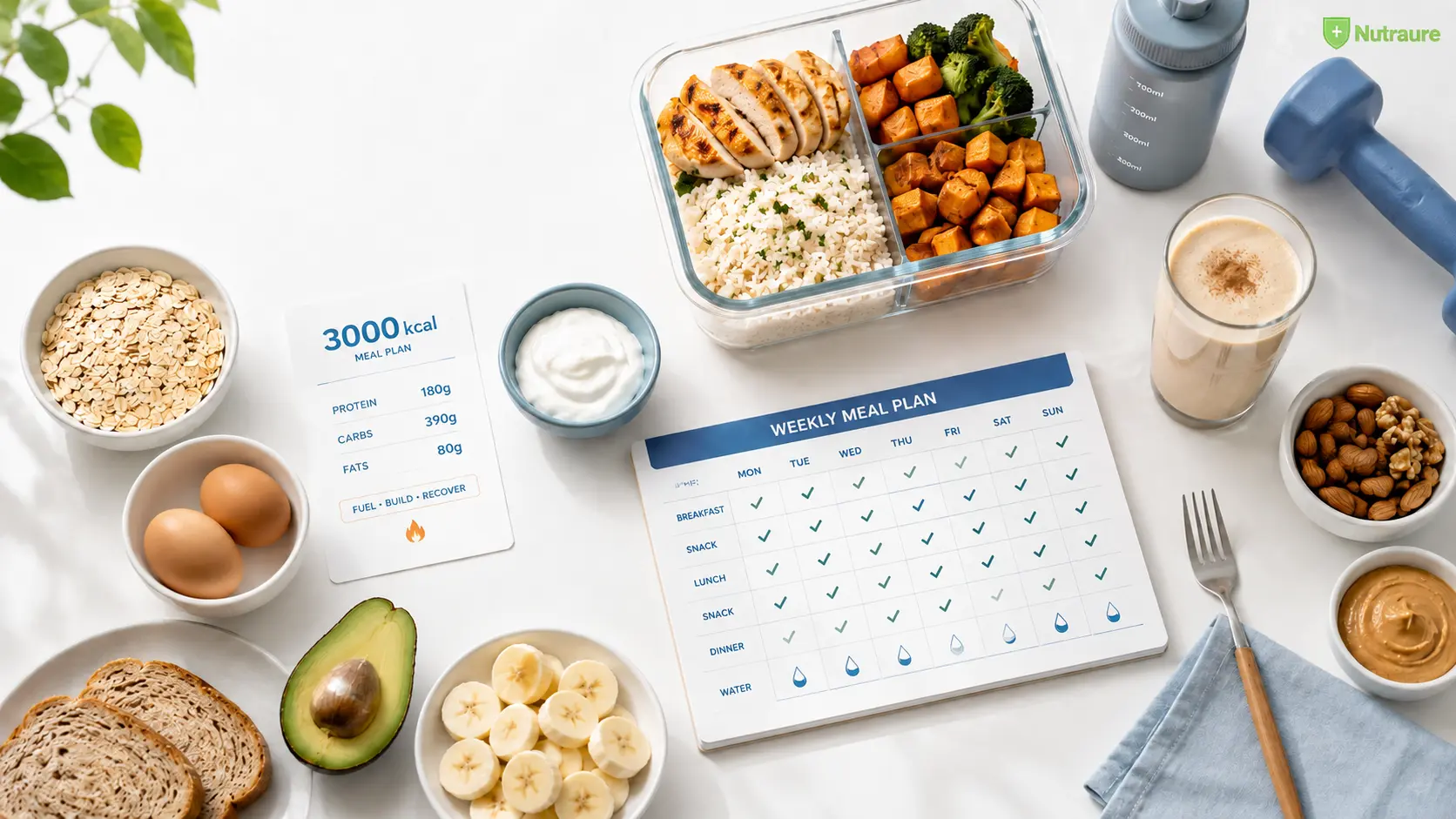
A practical example for 3,000 calories is:
| Macronutrient | Daily amount | Calories |
|---|---|---|
| Protein | 180 grams | 720 |
| Carbohydrates | 390 grams | 1,560 |
| Fat | 80 grams | 720 |
| Total | — | 3,000 |
This is an example, not a prescription.
Protein for Muscle Growth
The International Society of Sports Nutrition states that approximately 1.4–2.0 grams of protein per kilogram of body weight per day is sufficient for most exercising individuals. A large meta-analysis found that the average additional muscle-building benefit of protein supplementation leveled off at a total intake of roughly 1.6 grams per kilogram per day, although individual needs vary.
- A 60-kilogram person at 1.6 g/kg would consume about 96 grams
- A 75-kilogram person would consume about 120 grams
- A 90-kilogram person would consume about 144 grams
You do not need 180 or 200 grams simply because you are eating 3,000 calories. Set protein according to body weight and training needs, then use carbohydrates and fats to complete the remaining calories.
Protein can be spread across several meals. One evidence-based proposal is approximately 0.4 grams per kilogram per meal across at least four meals, but this should be treated as a practical framework rather than an inflexible rule. Rates for Training Energy
Carbohydrates can supply a large share of a muscle-gain diet because they are practical energy sources and help replenish glycogen used during training.
Research on resistance exercise does not support one exact carbohydrate target for everyone. The benefit depends on total training volume, session length, previous food intake, and how depleted the person is. Higher-volume sessions are more likely to benefit from adequate carbohydrate availability than short, low-volume workouts. Hydratee sources include:
- Oats
- Rice
- Potatoes and sweet potatoes
- Whole-grain bread
- Pasta
- Beans and lentils
- Bananas and other fruit
- Milk and yogurt
- Quinoa and other grains
Fats for Calorie Density
Fat provides nine calories per gram, making it useful when you need additional energy without dramatically increasing meal volume.
Choose a mixture of foods such as nuts, seeds, nut butter, avocado, olive oil, dairy, eggs, and oily fish. These foods can help raise calories, but portions still matter. Adding large amounts of oil or nut butter without measuring them can push a moderate surplus much higher than intended.

Best Foods for a Healthy 3,000-Calorie Diet
The easiest way to build this plan is to combine a protein source, a carbohydrate source, fruit or vegetables, and an energy-dense addition at most main meals.
High-Protein Foods
- Eggs
- Chicken or turkey
- Fish
- Lean beef
- Milk
- Greek yogurt
- Cottage cheese
- Paneer
- Tofu and tempeh
- Lentils and beans
- Soy milk
- Whey or plant protein powder when useful
Protein supplements are optional. Whole foods can provide all the protein many people need, while a shake may be helpful when appetite, convenience, or scheduling makes solid food difficult.
Calorie-Dense Carbohydrate Foods
- Oats with milk
- Rice with beans, meat, tofu, or paneer
- Potatoes with eggs, fish, yogurt, or cheese
- Pasta with meat, lentil, or tofu-based sauce
- Bread, wraps, bagels, or chapati
- Granola and dried fruit
- Bananas, mangoes, dates, and raisins
Easy Calorie Boosters
Small additions can raise a meal by 100–300 calories without making it feel twice as large:
- Nut butter added to oats or toast
- Olive oil mixed into rice, pasta, or vegetables
- Nuts added to yogurt
- Cheese added to sandwiches or eggs
- Milk used instead of water in porridge or smoothies
- Avocado added to wraps or bowls
- Dried fruit mixed with cereal or trail mix
Foods to Limit During a Muscle-Gain Phase
Muscle gain does not require a completely “clean” diet, and one processed meal will not ruin your progress. The problem begins when highly processed, low-fiber foods replace most of the foods that provide protein, vitamins, minerals, and other nutrients.
The current dietary guidance favors nutrient-dense foods and recommends limiting heavy reliance on foods rich in refined carbohydrates, added sugars, excess sodium, and less healthful fats. Build most of your calories around:
- Sugary drinks
- Frequent fried takeaways
- Sweets replacing complete meals
- Large quantities of alcohol
- Snacks that provide calories but little protein or fiber
- “Mass-gain” products with unclear serving sizes or unsupported promises
A flexible approach works better than labeling every food as good or bad. Keep most meals nutritionally balanced while leaving room for foods you genuinely enjoy.
7-Day 3000 Calories Diet Plan
The following plan provides approximately 3,000 calories per day. Calories and protein are estimates because brands, recipes, cooking oils, and portion sizes vary.
Weigh or measure calorie-dense ingredients during the first week, especially oil, rice, oats, nuts, nut butter, cheese, and sauces. Use your product labels or a reliable nutrition database to verify the final totals.
You can replace animal foods with tofu, tempeh, paneer, soy products, lentils, beans, or suitable dairy alternatives.
Day 1
Breakfast — approximately 690 calories and 34 g protein
Oats cooked with whole milk, one banana, peanut butter, and two eggs.
Morning snack — approximately 430 calories and 24 g protein
Greek yogurt with granola, berries, and walnuts.
Lunch — approximately 720 calories and 48 g protein
Chicken-and-rice bowl with mixed vegetables and olive oil.
Afternoon snack — approximately 430 calories and 25 g protein
Smoothie made with milk, banana, oats, yogurt, and cinnamon.
Dinner — approximately 600 calories and 42 g protein
Salmon, roasted potatoes, vegetables, and a measured serving of olive oil.
Evening snack — approximately 180 calories and 16 g protein
Cottage cheese with one slice of toast.
Estimated total: 3,050 calories and 189 g protein
Day 2
Breakfast — approximately 650 calories and 35 g protein
Egg-and-cheese bagel with fruit and a glass of milk.
Morning snack — approximately 400 calories and 15 g protein
Trail mix with milk or fortified soy milk.
Lunch — approximately 750 calories and 45 g protein
Lean beef or soy-mince pasta with tomato sauce and grated cheese.
Afternoon snack — approximately 420 calories and 25 g protein
Greek yogurt smoothie with banana, oats, and berries.
Dinner — approximately 620 calories and 40 g protein
Chicken curry with rice and a side of vegetables.
Evening snack — approximately 180 calories and 5 g protein
Banana with a small serving of peanut butter.
Estimated total: 3,020 calories and 165 g protein
Day 3
Breakfast — approximately 680 calories and 34 g protein
French toast made with eggs and milk, served with yogurt, fruit, and nut butter.
Morning snack — approximately 380 calories and 28 g protein
Tuna sandwich with salad. Use mashed chickpeas or tofu for a vegetarian option.
Lunch — approximately 720 calories and 45 g protein
Turkey, chicken, or tofu burrito bowl with rice, beans, vegetables, cheese, and salsa.
Afternoon snack — approximately 450 calories and 30 g protein
Milk-based protein smoothie with banana and oats.
Dinner — approximately 610 calories and 32 g protein
Tofu stir-fry with noodles, mixed vegetables, and sesame seeds.
Evening snack — approximately 160 calories and 7 g protein
A small bowl of cereal with milk.
Estimated total: 3,000 calories and 176 g protein
Day 4: Vegetarian Plan
Breakfast — approximately 700 calories and 38 g protein
Oats with milk or soy milk, yogurt, banana, seeds, and optional protein powder.
Morning snack — approximately 350 calories and 20 g protein
Paneer or tofu sandwich with tomato and cucumber.
Lunch — approximately 740 calories and 30 g protein
Rajma with rice, yogurt, vegetables, and a measured amount of oil.
Afternoon snack — approximately 430 calories and 20 g protein
Smoothie with milk or soy milk, banana, peanut butter, and oats.
Dinner — approximately 600 calories and 32 g protein
Tofu noodles with vegetables, edamame, and sesame dressing.
Evening snack — approximately 180 calories and 10 g protein
Yogurt with a small serving of nuts.
Estimated total: 3,000 calories and 150 g protein
Day 5
Breakfast — approximately 650 calories and 32 g protein
Breakfast wrap with eggs, potatoes, cheese, vegetables, and fruit.
Morning snack — approximately 420 calories and 22 g protein
Greek yogurt with granola, dried fruit, and pumpkin seeds.
Lunch — approximately 730 calories and 45 g protein
Chicken or tofu wrap with hummus, cheese, salad, and roasted potatoes.
Afternoon snack — approximately 450 calories and 25 g protein
Peanut butter and banana sandwich with milk.
Dinner — approximately 590 calories and 38 g protein
White fish, rice, vegetables, and avocado.
Evening snack — approximately 160 calories and 9 g protein
Warm milk or soy milk with a small oat bar.
Estimated total: 3,000 calories and 171 g protein
Day 6
Breakfast — approximately 690 calories and 35 g protein
Overnight oats with milk, yogurt, berries, chia seeds, and nut butter.
Morning snack — approximately 400 calories and 18 g protein
Cheese and whole-grain crackers with fruit.
Lunch — approximately 700 calories and 42 g protein
Chicken, paneer, or tofu rice bowl with vegetables and yogurt sauce.
Afternoon snack — approximately 430 calories and 25 g protein
Fruit smoothie with milk, yogurt, and oats.
Dinner — approximately 620 calories and 40 g protein
Lean beef, lentil, or soy chili with rice and cheese.
Evening snack — approximately 160 calories and 10 g protein
Cottage cheese or yogurt with fruit.
Estimated total: 3,000 calories and 170 g protein
Day 7
Breakfast — approximately 670 calories and 32 g protein
Pancakes made with oats, eggs, and milk, topped with yogurt, fruit, and peanut butter.
Morning snack — approximately 390 calories and 20 g protein
Egg sandwich with fruit. Replace eggs with tofu scramble when needed.
Lunch — approximately 730 calories and 45 g protein
Chicken, tuna, paneer, or chickpea pasta salad with olive-oil dressing.
Afternoon snack — approximately 430 calories and 24 g protein
Yogurt bowl with granola, banana, nuts, and honey.
Dinner — approximately 610 calories and 38 g protein
Chicken, fish, tofu, or paneer with mashed potatoes and vegetables.
Evening snack — approximately 170 calories and 10 g protein
Milk, soy milk, or yogurt with a small serving of cereal.
Estimated total: 3,000 calories and 169 g protein

How to Customize the Meal Plan
You do not have to eat every listed food. Use the plan as a structure and make equivalent substitutions.
Protein Swaps
- Chicken ↔ turkey, fish, lean meat, tofu, paneer or tempeh
- Greek yogurt ↔ cottage cheese, soy yogurt or strained curd
- Whey protein ↔ soy, pea or blended plant protein
- Eggs ↔ tofu scramble, paneer or beans
Carbohydrate Swaps
- Rice ↔ pasta, quinoa, couscous, potatoes or bread
- Oats ↔ whole-grain cereal, muesli or toast
- Bagel ↔ bread, wrap, chapati or English muffin
- Banana ↔ mango, grapes, dates or other preferred fruit
Allergy-Friendly Adjustments
For a nut allergy, replace peanut butter and nuts with seeds, seed butter, avocado, olive oil, cheese, or another safe calorie-dense food.
For lactose intolerance, use lactose-free milk, fortified soy milk, lactose-free yogurt, or another suitable alternative. Check that the replacement provides enough calories and protein rather than assuming all plant drinks are nutritionally equivalent.
How to Meal Prep a 3000 Calorie Diet Plan
A high-calorie diet often fails because food is not available when hunger and time are limited.
Start with a simple weekly system.
Prepare Two Main Proteins
Cook two or three days’ worth of chicken, fish, tofu, paneer, lentils, beans, or another preferred protein. Store and reheat food according to safe food-handling practices.
Prepare Two Carbohydrate Bases
Cook rice, pasta, potatoes, quinoa, or another staple in batches. This allows you to create a complete bowl or plate within minutes.
Portion High-Calorie Ingredients
Measure nuts, granola, cheese, oil, nut butter, and dried fruit. These foods are useful, but estimating their portions can lead to large calorie differences.
Keep Emergency Meals Available
Useful quick combinations include:
- Milk, banana, oats, and yogurt smoothie
- Peanut butter and banana sandwich
- Yogurt, granola, fruit, and nuts
- Eggs with toast and cheese
- Rice with canned tuna or beans
- Paneer or tofu wrap
- Cereal with milk and fruit
Use Liquid Calories Carefully
A smoothie can make a high-calorie intake easier when solid meals are uncomfortable. Evidence reviews of intentional weight gain identify liquid meals and energy-dense foods as practical strategies. However, they do not guarantee that the gained weight will be lean tissue—every drink is a source of added sugar. A balanced smoothie can include milk or soy milk, yogurt, fruit, oats, and nut or seed butter.
Pre-Workout and Post-Workout Meals
You do not need a perfect anabolic window. Your overall daily intake, protein intake, training quality, and consistency are more important than eating at one exact minute.
Protein consumed near resistance exercise can support the muscle-protein response, while carbohydrates may be particularly helpful around long or high-volume sessions. Nutrient-timing guidance still needs to be adapted to the athlete, session, and recovery period. ut Ideas
Eat a comfortable meal one to three hours before training:
- Oats, yogurt, and banana
- Rice with chicken or tofu
- Eggs with toast and fruit
- Yogurt with granola
- A banana smoothie with milk and oats
Avoid unusually large amounts of fat or fiber immediately before training when they cause bloating or discomfort.
Post-Workout Ideas
Choose a normal meal containing protein and carbohydrates:
- Chicken-and-rice bowl
- Tofu noodles
- Eggs, toast, and fruit
- Yogurt, oats, and berries
- Fish with potatoes
- Protein smoothie followed by a complete meal
Common 3000-Calorie Diet Mistakes
Treating 3,000 Calories as a Universal Number
The same intake can represent a deficit, maintenance, or a surplus for different people. Adjust it according to your results rather than following the number mindlessly.
Increasing Calories Too Aggressively
A larger surplus may make the scale rise faster, but it does not guarantee faster muscle growth. Reviews have not established one precise surplus that maximizes muscle gain while minimizing fat accumulation. o Little Protein
Calories support the energy demands of training and tissue growth, but adequate protein remains important. More protein is not endlessly better, so use a body-weight-based target instead of selecting an unnecessarily high number. Mostly on Junk Food
Fast food and sweets make calories easy to reach but can displace fruit, vegetables, whole grains, protein-rich foods, and other nutrient-dense choices.
Forgetting Progressive Resistance Training
A calorie surplus alone does not direct every gained kilogram toward muscle. Resistance exercise provides the training stimulus. A systematic review found that many resistance-training approaches improve strength and hypertrophy compared with no exercise, with multi-set programs ranking well for hypertrophy. The Plan After One Weigh-In
Body weight changes from day to day. Review a weekly average under similar weighing conditions before making a calorie adjustment.
Ignoring Digestion
A sudden jump in food volume can cause bloating, discomfort, or irregular bowel habits. Increase portions gradually, spread meals according to comfort, and include fluids and fiber-containing foods.

How to Track Your Progress
Track outcomes that relate to your actual goal:
- Weekly average body weight
- Waist and other body measurements
- Strength and repetition performance
- Training recovery
- Hunger and fullness
- Digestion
- Energy during the day
- How consistently you follow the plan
Keep your training program reasonably stable while assessing the diet. Otherwise, it becomes difficult to know whether a change came from food, training volume, sleep, or another factor.
When to Add Calories
Consider adding a small amount—such as an extra snack or a larger portion—when your weekly average weight is not moving for several weeks,s and you are following the plan consistently.
When to Reduce Calories
Consider reducing the plan when weight is increasing much faster than intended, waist measurements are rising rapidly, meals feel excessively uncomfortable, or a healthcare professional advises an adjustment.
Because research has not identified one perfect rate of intentional muscle gain for every athlete, use gradual changes and evaluate body composition, performance, and well-being together. Evidence-Based Resources
For additional reading, see the current Dietary Guidelines for Americans, the protein and resistance-training meta-analysis, and the review of intentional weight-gain recommendations. Asked Questions
Is a 3000-calorie diet plan good for muscle gain?
It can be, but only when 3,000 calories creates an appropriate surplus, and you combine it with progressive resistance training and adequate protein. The number itself does not guarantee muscle growth. Will I gain n weight by eating 3,000 calories a day?
You will generally gain weight when your average calorie intake remains above your average expenditure. However, 3,000 calories may be below maintenance for a highly active person and well above maintenance for someone smaller or less active.
How much protein should I eat on a 3,000-calorie diet?
Most exercising adults can begin within the evidence-supported range of approximately 1.4–2.0 grams per kilogram of body weight per day. Your calorie target does not determine your protein requirement by itself. How much protein is necessary?
Not for everyone. A 60-kilogram and a 100-kilogram person should not automatically use the same target. Research suggests that average benefits may level off around 1.6 g/kg per day for many resistance-trained adults, although individual circumstances vary. How many meals should I eat?
Use the number that helps you reach your target comfortably. Four to six eating occasions may be practical, but eating more frequently does not appear to create a special metabolic advantage when total calories are equal. Do others follow this plan?
Yes, when 3,000 calories fits the beginner’s estimated needs. A smaller person with low activity may need much less, while a large and highly active beginner may need a similar amount or more.
Can I follow a vegetarian 3000 calorie meal plan?
Yes. Use tofu, tempeh, paneer, soy milk, Greek yogurt, lentils, beans, peas, nuts, seeds, and an optional plant protein powder. Pay attention to total protein rather than relying on one food.
What should I do when I cannot eat enough?
Increase calories gradually, use smaller meals, add energy-dense ingredients, and consider a balanced smoothie. Persistent loss of appetite, unexplained weight loss, nausea, pain, or difficulty swallowing should be discussed with a healthcare professional.
Can I use this plan without strength training?
You can use a high-calorie diet for medically supervised weight gain or other needs, but it should not be presented as a muscle-gain blueprint without resistance training. Calories alone do not provide a complete muscle-building stimulus. Should I follow the plan?
Follow it only while it remains appropriate for your goal, progress, digestion, and health. Review your trend every few weeks and change portions rather than assuming you must remain at exactly 3,000 calories indefinitely.
Final Thoughts
The best 3000 calories diet plan is not the one with the most complicated recipes or the highest protein number. It is the one that matches your energy needs, supports your training, includes mostly nutrient-dense foods, and can be adjusted using real progress data.
Start with the seven-day framework, verify portions with your own food labels, and monitor weekly averages. Increase or reduce calories gradually based on your results.
Most importantly, treat 3,000 calories as a starting framework—not a universal muscle-gain formula.