

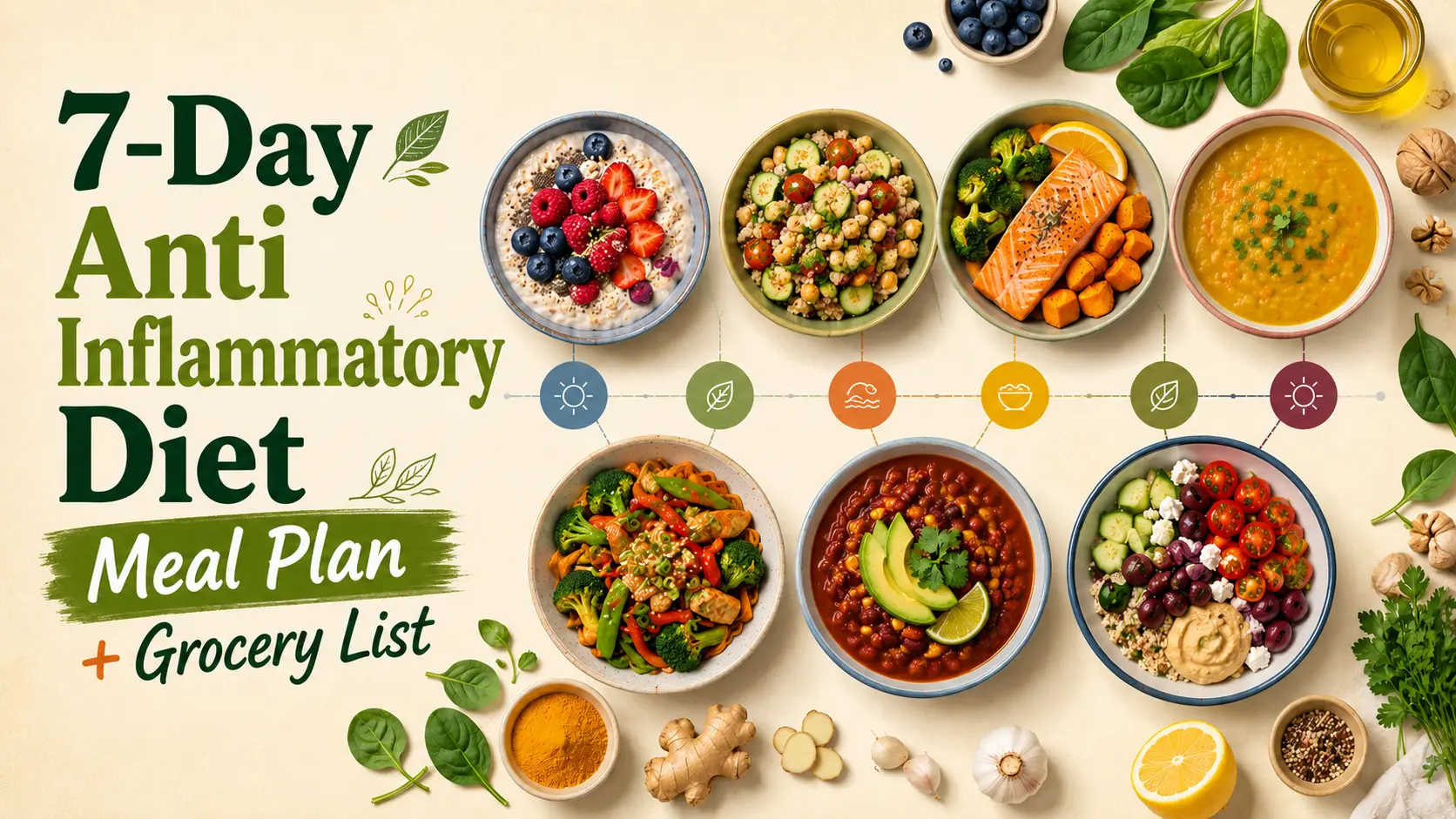
This anti-inflammatory diet meal plan is for anyone who wants to eat more vegetables, whole grains, and minimally processed foods without buying expensive powders or cooking a completely different meal every day.
You will get seven days of breakfast, lunch, dinner, and snack ideas, along with a practical grocery list and a one-hour preparation routine. The meals deliberately reuse ingredients, so you can spend less, waste less food, and avoid starting from scratch each evening.
This plan is not a detox, medical treatment, or promise to eliminate inflammation in one week. Think of it as a realistic starting point for building a balanced eating routine you can continue.
Medical note: This article provides general food and meal-planning information. It is not a substitute for individual medical or nutrition advice. Speak with a qualified healthcare professional before making major dietary changes when you have a medical condition, take medication, are pregnant or breastfeeding, or have a history of disordered eating.
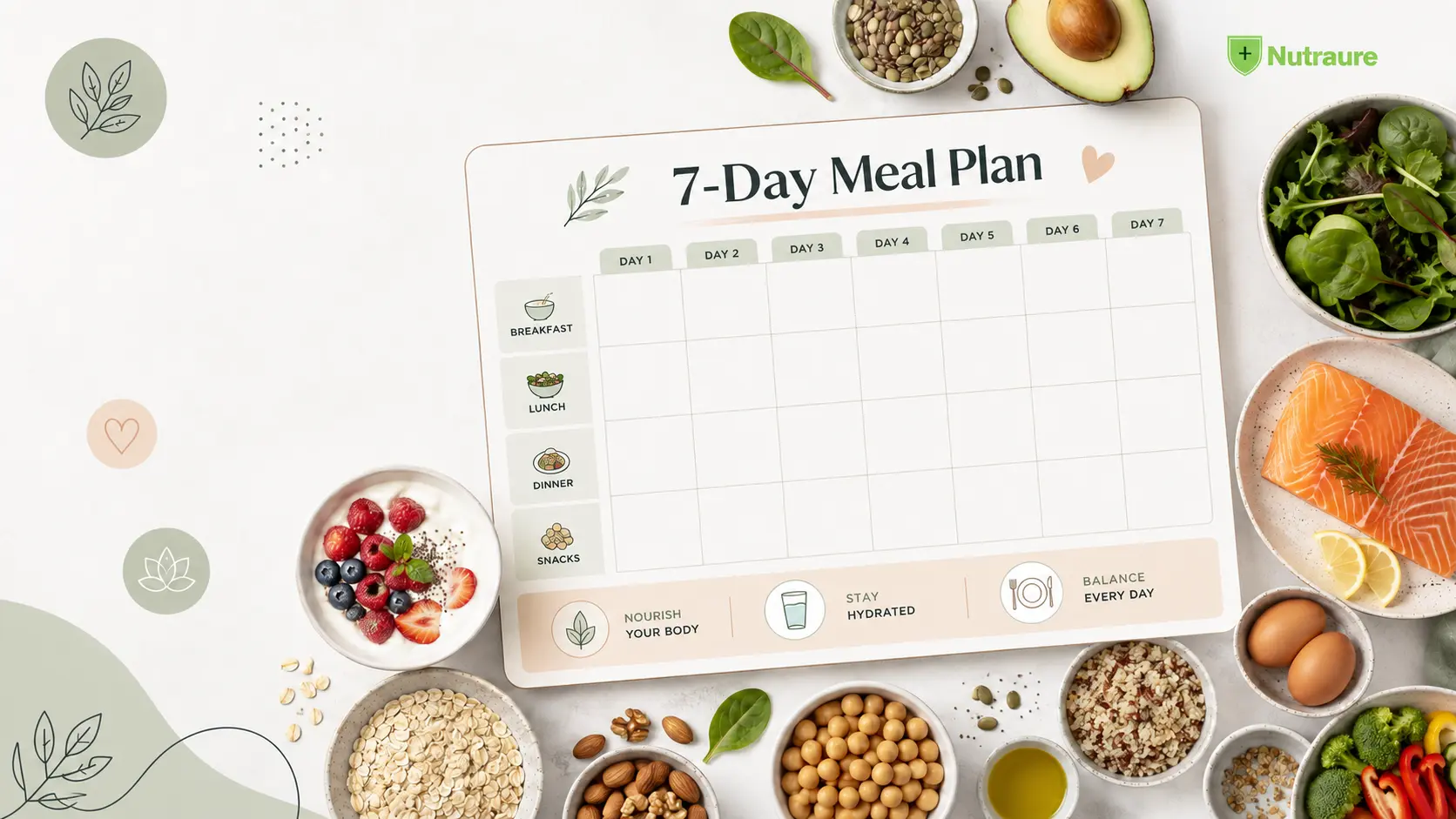
7-Day Meal Plan at a Glance
| Day | Breakfast | Lunch | Snack | Dinner |
|---|---|---|---|---|
| 1 | Berry overnight oats | Chickpea quinoa bowl | ***** and walnuts | Lemon-herb salmon |
| 2 | Spinach egg scramble | Leftover salmon bowl | Yogurt and berries | Turmeric lentil soup |
| 3 | Berry-flax smoothie | Leftover lentil soup | Hummus and vegetables | Chicken vegetable stir-fry |
| 4 | Cinnamon **** oatmeal | Leftover stir-fry bowl | ****** and seeds | Sheet-pan cod and vegetables |
| 5 | Avocado egg toast | Tuna or white bean wraps | Fruit and dark chocolate | Turkey and black bean chili |
| 6 | Yogurt chia parfait | Leftover chili and slaw | **** and seed butter | Tomato-spinach whole-grain pasta |
| 7 | Banana-oat pancakes | Leftover mezze bowl | Edamame or chickpeas | Mediterranean chicken or tofu |

What Is an Anti-Inflammatory Diet?
An anti-inflammatory diet is not a rigid branded program. It is a broad eating pattern built around vegetables, fruit, legumes, whole grains, fish, nuts, seeds and unsaturated fats, with fewer heavily processed foods, sugary drinks and processed meats.
Inflammation itself is not always harmful. A temporary inflammatory response helps the body react to an injury or infection. The concern is persistent systemic inflammation, which researchers associate with the development or progression of several long-term health conditions. Diet is one possible influence, alongside physical activity, smoking, sleep, psychological stress, environmental exposure and existing medical conditions.
The meals in this plan resemble a Mediterranean-style eating pattern. The American Heart Association’s Mediterranean diet guidance emphasizes vegetables, fruit, whole grains, beans, nuts, seeds, olive oil and minimally processed foods. It includes fish, eggs, poultry and dairy in moderate amounts while limiting added sugars, refined carbohydrates and heavily processed meats.
No individual ingredient should be treated as medicine. Salmon, berries, turmeric and olive oil can all contribute useful nutrients, but none of them can cure a disease or compensate for an otherwise unbalanced diet.
How Food Fits Into the Bigger Picture
Food is one part of long-term health. Regular movement, sufficient sleep, stress management, avoiding tobacco, maintaining social connections, and following appropriate medical treatment also matter.
That is worth remembering when a social-media post claims one smoothie or supplement can “erase” inflammation. Human health is more complicated than that. A consistent eating pattern is more meaningful than a single supposedly perfect food.
How This 7-Day Anti-Inflammatory Meal Plan Works
The plan uses a simple structure rather than strict calorie targets. You can adjust portions according to your appetite, activity level, body size, health needs, and guidance from your healthcare professional.
The Simple Plate Formula
For most lunches and dinners, use this visual formula:
- Half the plate: vegetables, salad or a combination of vegetables and fruit.
- One quarter: fish, beans, lentils, tofu, eggs, poultry or another protein.
- One quarter: brown rice, quinoa, oats, whole-grain pasta or a starchy vegetable.
- A small amount of healthy fat: extra-virgin olive oil, avocado, nuts or seeds.
- Flavor: herbs, citrus, garlic, ginger, cinnamon, cumin, paprika or turmeric.
This is a flexible meal-building guide, not a clinical prescription. A bowl, wrap, soup or stir-fry may not look divided into precise quarters, but it can still contain the same basic components.

Why Ingredients Repeat During the Week
A practical meal plan should make your week easier, not create seven nights of extra work. That is why quinoa, rice, lentils, roasted vegetables, greens, berries and a few dressings appear several times.
Repeating ingredients helps you:
- Use produce before it spoils.
- Buy larger, better-value packages.
- Prepare several meals at once.
- Turn leftovers into a meal that feels different.
- Reduce weekday cooking and washing up.
- Avoid buying specialty ingredients for one recipe.
You are not failing at variety when you eat lentil soup twice. You are using your time and food sensibly.
Anti-Inflammatory Foods to Eat More Often—and Foods to Limit
A useful anti-inflammatory diet plan focuses more on the overall pattern than on labeling individual foods as either “good” or “bad.”
Foods to Build Meals Around
Colorful vegetables: Use spinach, kale, broccoli, peppers, carrots, tomatoes, mushrooms, cabbage and Brussels sprouts. Fresh, frozen and lower-sodium canned vegetables can all be useful.
Whole fruit: Berries, oranges, apples, pears, cherries and bananas make convenient breakfasts and snacks. Whole fruit also adds texture and fiber that juice does not provide in the same way.
Legumes: Lentils, chickpeas, black beans, white beans and edamame provide plant protein and dietary fibre. Canned beans are perfectly practical; rinse them when you want to reduce some of the sodium.
Whole grains: Oats, quinoa, brown rice, barley and whole-grain bread or pasta can make meals more filling. Choose gluten-free grains and certified products when medically required.
Healthy fats: Extra-virgin olive oil, avocado, walnuts, chia seeds, flaxseed and pumpkin seeds add flavor and can replace some sources of saturated fat.
Protein sources: Salmon, sardines, cod, chicken, eggs, yogurt, tofu and legumes can all fit. The best choice will depend on your budget, preferences and dietary requirements.
Herbs and seasonings: Garlic, ginger, turmeric, cinnamon, cumin, parsley, basil, coriander and lemon make simple foods more enjoyable. Use them for flavor rather than treating them as stand-alone medical treatments.
Foods and Drinks to Choose Less Often
You do not need a long list of forbidden foods. Instead, reduce how often the following items dominate your diet:
- Sugar-sweetened soft drinks and energy drinks.
- Heavily sweetened coffee drinks.
- Frequent pastries, sweets and sugary breakfast cereals.
- Refined grains that regularly replace higher-fiber options.
- Deep-fried fast food.
- Processed meats such as bacon, sausages and some deli meats.
- Highly processed meals high in sodium, added sugar or saturated fat.
- Large quantities of alcohol.
The American Heart Association similarly recommends a dietary pattern centered on vegetables, fruit, whole grains and legumes while limiting sugary drinks, refined carbohydrates, saturated fat and heavily processed foods.
Gluten and Dairy Are Not Automatically Inflammatory
A general anti-inflammatory meal plan does not require everyone to remove gluten, milk, cheese or yogurt.
A person with diagnosed coeliac disease must avoid gluten. Someone with a milk allergy, lactose intolerance or another confirmed condition may also need specific changes. Those situations are different from removing entire food groups because of a broad claim made online.
People who suspect coeliac disease should speak with a clinician before going gluten-free. The National Institute of Diabetes and Digestive and Kidney Diseases explains that starting a gluten-free diet before testing can affect diagnostic results.
Plain yogurt and moderate amounts of other dairy products can fit a Mediterranean-style eating pattern. Unsweetened soy yogurt and fortified plant milk are useful alternatives for people who avoid dairy.
Before You Begin: Your 60-Minute Preparation Plan
You do not need to prepare every meal on Sunday. The goal is to cook a few foundations that make weekday meals quicker.
Cook the Weekly Foundations
Minutes 0–10: Start the grains
Cook a batch of quinoa, brown rice, or a combination of both. For two adults, about 2 cups of dry grain across the week is a reasonable starting point, although appetite and serving size vary.
Minutes 10–20: Prepare the lentils
Simmer green or brown lentils in water or lower-sodium broth. Red lentils cook faster and work well in soup, but they soften more than green lentils.
Minutes 20–30: Fill two sheet pans
Add chopped broccoli, peppers, carrots, Brussels sprouts, mushrooms, onions or sweet potatoes. Toss lightly with olive oil, pepper and your preferred herbs.
Minutes 30–40: Mix a simple dressing
Whisk together extra-virgin olive oil, lemon juice, a little mustard, garlic and black pepper. Keep it in a sealed jar so you can shake it before serving.
Minutes 40–50: Prepare breakfast and snacks
Make two portions of overnight oats or chia cups. Wash fruit, slice sturdy vegetables and portion nuts or seeds.
Minutes 50–60: Cool, label and store
Move cooked food into shallow containers so it cools efficiently. Label containers with the preparation date and freeze portions that will not be used soon.

Food-Safety and Storage Notes
Keep your refrigerator at 40°F, or 4°C, or below. Federal food-safety guidance lists most cooked meat or poultry leftovers, soups,s and stews at three to four refrigerated days. Freeze extra portions rather than keeping an entire seven-day batch in the refrigerator. Check the FoodSafety.gov cold storage chart for food-specific guidance.
Keep salad dressing separate from leafy greens, refrigerate perishable foods promptly, ly and reheat leftovers thoroughly. Discard food when its safety is uncertain rather than relying only on smell or appearance.
Adjust Portions to Your Needs
This plan does not prescribe one calorie level. Energy and nutrient needs vary with age, body size, activity, health conditions, medication, pregnancy and personal goals.
Add more grain, protein, vegetables or healthy fat when meals do not keep you satisfied. Reduce portions when they consistently feel too large. People managing diabetes, kidney disease, digestive disorders or other medical conditions may need more specific adjustments.
Your 7-Day Anti-Inflammatory Diet Meal Plan
Meals can be rearranged, repeated or replaced with culturally familiar foods that follow the same pattern. Seasonal vegetables are welcome, and frozen produce can make the week considerably easier.
Day 1—Build Colorful Foundation
Breakfast: Berry, chia and walnut overnight oats
Combine rolled oats, blueberries or mixed berries, chia seeds, cinnamon, chopped walnuts and unsweetened milk. Refrigerate overnight. Add a spoonful of plain yogurt in the morning if you prefer a creamier texture.
Lunch: Mediterranean chickpea quinoa bowl
Fill a bowl with quinoa, chickpeas, cucumber, tomatoes, leafy greens and parsley. Finish it with lemon–olive oil dressing. Olives or a small amount of feta can be added for extra flavor.
Snack: An ***** with walnuts or unsweetened nut butter.
Dinner: Lemon-herb salmon
Bake salmon with lemon, garlic and herbs. Serve it with broccoli and roasted sweet potato.
Cook once, use twice: Prepare additional salmon, quinoa and broccoli for tomorrow’s lunch.
Why this day works: It combines whole grains, legumes, vegetables, fruit and an omega-3-rich fish without requiring several separate recipes. The ingredients are ordinary enough to find in most supermarkets.
Vegetarian swap: Replace salmon with lemon-herb tofu or chickpeas.
Day 2—Use Leftovers Without Repeating the Same Plate
Breakfast: Spinach and mushroom egg scramble
Cook mushrooms and spinach in a lightly oiled pan, then add eggs. Serve with whole-grain toast and sliced tomatoes.
Lunch: Leftover salmon power bowl
Place yesterday’s quinoa, broccoli and flaked salmon over greens. Add avocado, cucumber and lemon dressing. The ingredients are familiar, but the cold bowl feels different from the previous night’s dinner.
Snack: Plain Greek yogurt with berries and cinnamon. Use unsweetened soy yogurt for a dairy-free option.
Dinner: Turmeric lentil and vegetable soup
Simmer lentils with carrots, tomatoes, spinach or kale, garlic, cumin and a small amount of turmeric. Serve with a simple kale salad or whole-grain bread.
Cook once, use twice: Make enough soup for Day 3 lunch. Freeze any portion that will not be eaten within the recommended storage window.
Nut-free swap: Replace walnuts with pumpkin or sunflower seeds.
Herbs and spices make vegetables and legumes more enjoyable. They are not included as concentrated treatments, and larger supplement doses may not have the same safety profile as ordinary culinary use.
Day 3—Prioritize Fiber and Convenient Cooking
Breakfast: Berry, spinach and flax smoothie
Blend berries, spinach, ground flaxseed, plain yogurt or kefir, and unsweetened milk. Add oats when you want a more substantial breakfast.
A smoothie does not need powders or a long ingredient list. Frozen berries and frozen spinach work well and reduce preparation time.
Lunch: Reheat the leftover turmeric lentil soup and serve it with whole-grain toast.
Snack: Hummus with sliced peppers, carrots and cucumber.
Dinner: Ginger-garlic chicken and vegetable stir-fry
Cook chicken strips with broccoli, peppers, mushrooms and snap peas. Add garlic, ginger and a lower-sodium sauce, then serve with brown rice.
Plant-based swap: Use tofu, tempeh or shelled edamame instead of chicken.
Cook once, use twice: Prepare extra stir-fry and rice for Day 4 lunch.
When buying yogurt or plant milk, compare the nutrition labels. Look for an unsweetened product, and consider protein and fortification rather than assuming every alternative is nutritionally identical.
Day 4—Combine Whole Grains, Vegetables and Lean Protein
Breakfast: Cinnamon **** oatmeal
Cook oats with diced **** and cinnamon. Top with walnuts, pumpkin seeds or ground flaxseed.
Lunch: Reheat the leftover ginger-garlic stir-fry and brown rice. Add fresh greens or shredded cabbage for a crisp texture.
Snack: An ****** with almonds, pumpkin seeds or roasted chickpeas.
Dinner: Sheet-pan cod with Brussels sprouts and quinoa
Place cod and halved Brussels sprouts on a sheet pan. Season with lemon, pepper, garlic and herbs, then roast until the fish is cooked and the vegetables are browned. Serve with quinoa.
Vegetarian swap: Use seasoned white beans or crispy chickpeas instead of cod.
Lower-cost swap: Replace fresh cod with canned salmon, sardines, beans or lentils, depending on local prices.
Build Your Own Sheet-Pan Dinner
Choose:
- One protein: fish, chicken, tofu, beans or chickpeas.
- Two vegetables: broccoli, peppers, sprouts, carrots or courgette.
- One cooked grain: quinoa, rice or barley.
- One flavor mixture: lemon-herb, garlic-paprika or ginger-lime.
Once you understand the formula, you can use it throughout the year with seasonal ingredients.
Day 5—Make Familiar Comfort Food More Balanced
Breakfast: Avocado and egg toast
Top whole-grain toast with mashed avocado and a cooked egg. Serve with berries, an ******, or another piece of fruit.
Lunch: White bean and tuna lettuce cups
Mix tuna and white beans with lemon, parsley, black pepper and a small spoonful of plain yogurt or olive oil. Spoon the mixture into lettuce leaves or a whole-grain wrap.
Plant-based swap: Mash chickpeas or white beans with lemon and herbs instead of using tuna.
Snack: Fruit with walnuts or pumpkin seeds. One or two small pieces of dark chocolate can also fit without turning the snack into a health claim.
Dinner: Turkey and black bean chili
Cook lean ground turkey with black beans, tomatoes, peppers, onions, garlic, cumin and paprika. Top with avocado and coriander.
Vegetarian swap: Make a three-bean and lentil chili.
Cook once, use twice: Save enough chili for tomorrow’s lunch and freeze one additional portion for a busy week.
A balanced eating pattern can include chocolate, avocado or other enjoyable foods. None of them needs to be advertised as a fat burner, cure or metabolic shortcut.
Day 6—Keep Weekend Meals Flexible
Breakfast: Yogurt, chia and berry parfait
Layer plain Greek yogurt or unsweetened soy yogurt with berries, chia seeds and rolled oats. Add cinnamon or a few chopped nuts.
Lunch: Serve leftover turkey or bean chili with a simple cabbage slaw dressed with lime and olive oil.
Snack: A **** with peanut, almond or sunflower-seed butter.
Dinner: Tomato and spinach whole-grain pasta
Cook whole-grain pasta and toss it with tomatoes, spinach, mushrooms, garlic and extra-virgin olive oil.
Add one protein:
- White beans.
- Lentils.
- Grilled chicken.
- Tofu.
- Salmon or sardines.
Finish the pasta with lemon, parsley, basil or crushed red pepper. These ingredients add freshness, so the meal does not depend only on extra salt for flavor.
Time-saving note: No-salt-added canned tomatoes, prewashed spinach and frozen vegetables are useful shortcuts. A convenient meal can still be built around minimally processed ingredients.
Day 7—Finish With a Mediterranean-Style Family Meal
Breakfast: Banana-oat pancakes
Blend or mash banana with oats and eggs. Cook small pancakes and top them with berries and plain yogurt. For an egg-free version, use a tested plant-based pancake recipe rather than guessing at the liquid ratio.
Lunch: Leftover mezze bowl
Use the remaining hummus, vegetables, quinoa, greens and chickpeas. Add olives and lemon dressing when available.
Snack: Edamame, roasted chickpeas or a small box of fruit and seeds.
Dinner: Mediterranean baked chicken or tofu
Bake chicken or tofu with tomatoes, spinach, garlic, herbs and a small amount of olives. Serve with brown rice.
End-of-week strategy: Look through the refrigerator before buying more food. Remaining greens can go into soup, ripe fruit can be frozen for smoothies,s and cooked grains can become a quick lunch bowl.
Ask yourself:
- Which breakfast was easiest?
- Which lunch traveled well?
- Which meal did your household actually enjoy?
- What ingredient was left over?
- Which two dishes would you repeat next week?
Long-term consistency matters more than making seven completely different, picture-perfect meals.
Complete Anti-Inflammatory Grocery List
The following anti-inflammatory grocery list is a flexible starting point for two adults for seven days. Exact quantities depend on appetite, serving size,e and whether both people eat every listed meal.
Produce
- 4–5 cups berries, fresh or frozen.
- 4 apples.
- 3 pears.
- 3 bananas.
- 4 oranges.
- 3 avocados.
- 2 large containers leafy greens.
- 1 small head kale or extra spinach.
- 2 heads broccoli or 2 frozen bags.
- 1 bag Brussels sprouts.
- 3 medium sweet potatoes.
- 5 bell peppers.
- 5 carrots.
- 2 cucumbers.
- 6–8 tomatoes or 2 containers of cherry tomatoes.
- 450–600 g mushrooms.
- 1 small cabbage or bag of slaw.
- 2 onions.
- 2 bulbs garlic.
- 1 piece fresh ginger.
- 5 lemons and 2 limes.
- Parsley, basil or coriander as preferred.
Proteins and Refrigerated Foods
- 4 salmon fillets.
- 2 cod or other fish fillets.
- 450–600 g chicken.
- 450 g lean ground turkey or extra beans.
- 10–12 eggs.
- 900 g plain Greek or unsweetened soy yogurt.
- 400–450 g tofu or tempeh.
- 1 container hummus.
- 2 cans tuna, salmon or sardines.
Grains, Legumes and Pantry Staples
- 500 g rolled oats.
- 400–500 g quinoa.
- 500 g brown rice.
- 1 loaf whole-grain bread.
- 1 packet whole-grain wraps.
- 1 packet whole-grain pasta.
- 500 g dry lentils or 3–4 cans.
- 4 cans chickpeas.
- 2 cans white beans.
- 2 cans black or mixed beans.
- 3 cans no-salt-added tomatoes.
- Extra-virgin olive oil.
- Chia seeds.
- Ground flaxseed.
- Walnuts, almonds or pumpkin seeds.
- Unsweetened nut or seed butter.
- Cinnamon, cumin, turmeric, paprika and black pepper.
- Lower-sodium broth and stir-fry sauce.
Before shopping, cross out anything already in your pantry. It is usually better to make one practical substitution than buy a new spice or grain for a single meal.
Easy Substitutions for Different Needs
Vegetarian or Vegan
Replace fish, chicken, and turkey with tofu, tempeh, beans, lentils, chickpeas, or edamame.
Replace eggs with tofu scramble or a tested chickpea-flour scramble.
Use unsweetened fortified soy yogurt and soy milk when you want plant-based options with more protein than many other alternatives.
Gluten-Free
Choose certified gluten-free oats, bread, wraps and pasta.
Rice, quinoa and potatoes are naturally gluten-free, but sauces, stocks, spice mixes and packaged foods may require label checking when cross-contact is medically important.
People who suspect coeliac disease should seek testing before removing gluten, because a gluten-free diet can affect the accuracy of diagnostic tests. The NIDDK coeliac disease guidance explains the usual testing process.
Dairy-Free
Replace dairy yogurt with unsweetened soy yogurt.
Use fortified soy, oat or almond milk according to allergies, taste and protein requirements.
Avoid assuming that “dairy-free” automatically means lower in added sugar. Compare labels.
Nut-Free
Use pumpkin seeds, sunflower seeds, chia seeds or sunflower-seed butter instead of walnuts, almonds and nut butter.
Check hummus and other packaged products when sesame is also an allergen.
Budget-Friendly
- Buy frozen berries instead of fresh out of season.
- Choose frozen spinach, broccoli and stir-fry vegetables.
- Replace some fresh fish meals with canned fish, lentils or beans.
- Use brown rice instead of quinoa.
- Buy whole vegetables instead of pre-cut packages.
- Choose store-brand oats, beans and canned tomatoes.
- Use dried herbs when fresh herbs are expensive.
- Skip products marketed as cleanses, detox teas or wellness powders.
Beans, oats, lentils, cabbage, carrots and frozen vegetables often provide more meals for the money than specialty “anti-inflammatory” products.
Common Anti-Inflammatory Diet Mistakes
Treating It Like a Seven-Day Detox
Your liver, kidneys, lungs and digestive system already perform essential waste-processing functions. This meal plan is about practicing a sustainable eating pattern, not cleansing the body or fixing a medical condition in one week.
Eliminating Too Many Foods
Removing gluten, dairy, eggs, legumes, grains and nightshade vegetables at the same time can make eating unnecessarily restrictive. It can also make it difficult to identify which food, if any, was causing a genuine problem.
Use medically necessary exclusions, not fear-based ones.
Depending on Supplements
Food amounts of turmeric, ginger, and other seasonings are different from concentrated capsules or extracts. Supplements can cause side effects or interact with medicines.
Speak with a pharmacist or qualified clinician before taking a concentrated supplement, particularly when you use anticoagulants or other prescription medications.
Making Every Meal Completely Different
Reusing cooked grains, vegetables, beans and proteins is good planning. A sustainable meal plan should leave room for leftovers, easy nights, and repeated favorites.
What Should You Do After the Seven Days?
Repeat the meals that were easiest and most enjoyable. There is no need to replace the entire menu every Monday.
Rotate vegetables according to price and season. Keep two reliable freezer meals for busy evenings. Add one new recipe each week rather than changing everything at once.
Continue using the plate formula as a guide, and adjust it to your culture and household. Brown rice can become barley, quinoa can become millet, salmon can become sardines, and chickpeas can become any familiar local bean.
A food-and-symptom record may help some people notice patterns, but it should not create anxiety or encourage increasingly restrictive eating. Significant or persistent symptoms deserve professional assessment.
Frequently Asked Questions
Can an Anti-Inflammatory Diet Reduce Inflammation in Seven Days?
One week is enough to begin changing shopping, cooking, and meal habits. It is not enough to promise that chronic inflammation or a health condition will disappear.
Research on diet and long-term health generally examines broader patterns followed over time, not a seven-day cure. Persistent systemic inflammation is affected by several factors, including medical conditions, physical activity, stress, smoking,g and environmental exposure.
Treat the first week as practice. The useful result is learning which meals you can realistically repeat.
What Is the Best Breakfast for an Anti-Inflammatory Diet?
A practical breakfast combines fruit or a whole grain with protein and a source of unsaturated fat while keeping added sugar modest.
Examples include:
- Oatmeal with berries, chia seeds and walnuts.
- Plain yogurt with fruit and seeds.
- Eggs with vegetables and whole-grain toast.
- A smoothie containing fruit, greens, yogurt and ground flaxseed.
- Avocado toast with an egg or beans.
The best breakfast is also one that suits your schedule and keeps you comfortably satisfied.
Are Eggs Inflammatory?
Eggs can fit into a balanced Mediterranean-style eating pattern for many people. They are not universally labeled as inflammatory or forbidden by major healthy-eating guidance.
Your overall eating pattern, cooking method, portion, and individual health needs matter. An egg served with vegetables and whole-grain toast is a different meal from eggs regularly served with processed meat and deep-fried sides.
People with an egg allergy or specific medical advice should follow their clinician’s recommendations.
Can I Drink Coffee?
Plain coffee can fit into the plan for many adults. The bigger issue may be the amount of caffeine, added syrups, sugar or cream, as well as coffee’s effect on sleep, anxiety or reflux.
The FDA states that up to 400 milligrams of caffeine per day is not generally associated with negative effects for most adults, but sensitivity varies. Pregnancy, certain medical conditions and some medications can change what is appropriate.
Remember that cup sizes and caffeine levels vary considerably. Stop or reduce your intake when coffee causes palpitations, jitteriness, stomach problems or disrupted sleep.
Do I Need to Give Up Dairy?
No. Dairy is not automatically excluded from this dietary pattern. Plain yogurt, milk and moderate portions of cheese may fit for people who tolerate them.
Choose minimally sweetened products more often than dairy desserts or heavily sweetened yogurt. Unsweetened fortified soy products are practical alternatives for people who avoid dairy.
Do I Need to Avoid Gluten?
Not unless you have coeliac disease, a wheat allergy, another diagnosed gluten-related condition,n or individual medical advice.
Starting a gluten-free diet before coeliac testing can interfere with the results, so speak with a clinician first when you suspect a problem.
Whole-grain wheat bread and pasta can fit into this meal plan for people who tolerate gluten.
Can I Follow This Plan as a Vegetarian?
Yes. Replace fish and poultry with beans, lentils, tofu, tempeh, edamame or other suitable plant proteins.
Eggs and yogurt may also be used in a vegetarian version. Vegans can choose fortified plant alternatives and should pay attention to protein variety, vitamin B12 and other nutrients that may require individual planning.
Is This a Weight-Loss Meal Plan?
It is designed around food quality, meal structure and practical preparation—not guaranteed weight loss.
Body-weight changes depend on overall energy intake, activity, sleep, health conditions, medication and other factors. Portion sizes in this article are flexible because one prescribed amount would not be appropriate for everyone.
A registered dietitian can calculate individual energy and protein needs when weight management is an important medical goal.
Can I Repeat the Plan Every Week?
Yes, but you do not need to repeat it exactly.
Keep two or three favorite breakfasts, rotate the main proteins, and buy different seasonal vegetables. You could use the same meal structure while replacing:
- Salmon with sardines or tofu.
- Quinoa with brown rice or barley.
- Broccoli with cauliflower or cabbage.
- Berries with apples, pears, or oranges.
- Lentil soup with bean and vegetable soup.
Variety matters across weeks and months. Every single day does not need a completely different menu.
What Are Easy Anti-Inflammatory Snacks?
Useful options include:
- Fruit with nuts or seed butter.
- Plain yogurt with berries.
- Hummus with carrots and cucumber.
- Edamame.
- Roasted chickpeas.
- A boiled egg and fruit.
- Whole-grain crackers with hummus.
- A small amount of dark chocolate with fruit or seeds.
A snack should solve a practical problem, such as hunger between meals. You do not need to snack simply because it appears on the plan.
Final Thoughts
This anti-inflammatory diet meal plan is a starting framework, not a cure or a test of perfect eating. Its real value comes from simple meals, familiar ingredients and preparation habits you can maintain after the first week.
Begin with three manageable tasks: cook one grain, roast one tray of vegetables and mix one dressing. Those foundations can become bowls, salads, stir-fries and quick dinners without making healthy eating feel like a second job.
For health-related publication, add the author’s relevant credentials, an original publication date and a medical-review date. A registered dietitian should review the final recipes, portions, allergy guidance and any nutrition calculations before the article goes live.

Thanks You…keep reading