These changes do not mean you have failed or need to follow an extreme diet.
Menopause is a normal stage of life, although the experience varies widely. Common symptoms include hot flashes, night sweats, sleep problems, mood changes, and difficulty concentrating. After menopause, protecting your bones and heart also becomes increasingly important.**Dietplan for menopause** gives you 21 practical breakfast, lunch, and dinner ideas built around protein, fiber, vegetables, whole grains, and healthy fats. It is not a detox, crash diet, or guaranteed weight-loss program. Instead, it offers a realistic structure that you can adapt to your appetite, food preferences,s and health needs.
Important: This sample meal plan provides general educational information. It is not a substitute for personalized advice from a doctor or registered dietitian, especially if you have diabetes, kidney disease, food allergies, digestive conditions or a history of disordered eating.
Why Diet Matters During Menopause
Menopause does not automatically cause the same changes in everyone. Aging, activity level, sleep, stress, genetics, medication, and eating habits can all affect body weight and overall health.
However, declining estrogen levels are associated with changes in body composition, including a tendency to store more fat around the abdomen and lose lean mass over time. Poor sleep can make healthy eating more difficult by affecting energy, mood,d and appetite. Menopause diet cannot stop the natural hormonal transition or guarantee relief from symptoms. What it can do is help you:
- Build meals that keep you satisfied.
- Maintain muscle-supporting protein intake.
- Obtain fiber from whole foods.
- Support bone and heart health.
- Reduce dependence on highly processed foods.
- Create more consistent eating habits
- Identify foods or drinks that may trigger symptoms for you
The most useful eating pattern is usually one you can maintain. Research on Mediterranean-style diets in menopausal women suggests possible benefits for weight, blood pressure, and certain cardiometabolic markers. However, individual study results vary, and more high-quality research is needed. Ples Behind a Menopause-Friendly Meal Plan
1. Include a Meaningful Protein Source at Every Meal
Protein supports muscle maintenance and makes meals more satisfying. This becomes increasingly relevant in midlife because age-related changes can gradually reduce lean mass.
You do not need to rely on protein powders or eat an unusually high-protein diet. Begin by including a recognizable protein source in each meal:
- Eggs
- Plain Greek yogurt or unsweetened curd
- Fish
- Chicken
- Tofu or tempeh
- Beans and lentils
- Cottage cheese or paneer
- Nuts and seeds
For example, toast by itself may leave you hungry quickly. Adding eggs, yogurt or nut butter creates a more balanced breakfast.
2. Choose Fiber-Rich Foods Regularly
Vegetables, fruit, oats, beans, lentils, seeds and whole grains provide dietary fiber. Fiber adds volume to meals, supports normal digestion and can improve fullness.
Increase fiber gradually if your current intake is low. Adding large amounts too quickly may cause gas or bloating. Drinking enough fluid is also important when increasing fiber.
Useful combinations include:
- Oats with berries and chia seeds
- Lentil soup with vegetables
- Chickpeas added to salad
- An ***** with peanut butter
- Brown rice with beans and sautéed vegetables
3. Use Healthy Fats Without Treating Them as Unlimited
Olive oil, avocado, nuts, seeds and oily fish can be part of a heart-conscious eating pattern. They also add flavor and help meals feel satisfying.
These foods are nutritious, but portions still matter if weight management is one of your goals. A small handful of nuts, a spoonful of seeds, or a modest drizzle of olive oil may be enough to improve a meal without overwhelming it.
4. Pay Attention to Calcium and Vitamin D
Bone breakdown can begin to outpace bone formation during and after menopause. Calcium and vitamin D are therefore important parts of midlife nutrition, alongside weight-bearing activity and other lifestyle factors. The NIH recommends an average calcium intake of 1,200 milligrams per day for women aged 51–70. Food sources include dairy products, calcium-fortified plant drinks, calcium-set tofu, sardines with edible bones,s and some leafy vegetables. Vitamin D helps the body absorb calcium; see the official NIH calcium fact sheet before considering supplements. Do not automatically begin a high-dose supplement because excessive intake may be inappropriate for some people.
5. Pair Carbohydrates With Protein or Healthy Fat
Carbohydrates do not need to be eliminated during menopause. Oats, beans, fruit, potatoes, brown rice, quinoa and whole-grain bread can all fit into a balanced plan.
The practical goal is to avoid building most meals around refined carbohydrates alone. Try pairing carbohydrates with protein, vegetables or healthy fats:
- Whole-grain toast with eggs and avocado
- Fruit with yogurt
- Brown rice with tofu and vegetables
- Sweet potato with chicken and green beans
- Oats with seeds and Greek yogurt
This approach usually creates a more complete and satisfying meal than eating the carbohydrate by itself.
6. Track Your Personal Symptom Triggers
There is no universal list of foods that every person must avoid during menopause. However, alcohol, spicy foods, and caffeine may worsen hot flashes for some people. Caffeine late in the day may also interfere with sleep. Try out several foods at once and keep a simple symptom diary for two weeks. Record:
- What you ate or drank
- The approximate time
- Hot flashes or night sweats
- Sleep quality
- Digestive symptoms
- Stress level
Patterns are more useful than assumptions. A food that triggers symptoms for someone else may not affect you.
Best Foods to Include During Menopause
A helpful menopause food list does not need unusual powders, expensive supplements, or products advertised as hormone-balancing. No single food can balance your hormones or treat all menopause symptoms.
A stronger strategy is to build a varied whole-food diet.
Protein-Rich Foods
Choose a mixture of plant and animal proteins according to your preferences:
- Eggs
- Fish and seafood
- Skinless chicken
- Plain Greek yogurt
- Unsweetened curd
- Cottage cheese
- Tofu and tempeh
- Beans
- Chickpeas
- Lentils
- Edamame
Fiber-Rich Foods
Include several of these throughout the week:
- Oats
- Barley
- Brown rice
- Quinoa
- Whole-grain bread
- Beans and lentils
- Berries
- Apples and pears
- Broccoli
- Carrots
- Leafy vegetables
- Chia and flaxseed
Healthy Fat Sources
Use moderate amounts of:
- Extra-virgin olive oil
- Walnuts
- Almonds
- Pumpkin seeds
- Chia seeds
- Flaxseed
- Avocado
- Salmon, sardines and other oily fish
Bone-Supporting Foods
Calcium-containing options include:
- Milk
- Plain yogurt or curd
- Calcium-fortified unsweetened plant milk
- Calcium-set tofu
- Paneer or cottage cheese
- Sardines with edible bones
- Sesame seeds
- Leafy green vegetables
Dairy foods and fortified soy alternatives can provide calcium, protein and, in some products, vitamin D. Check the nutrition label because fortification varies.
Drinks
Water should be your main drink, but you can also choose:
- Unsweetened herbal tea
- Milk
- Fortified unsweetened plant milk
- Plain sparkling water
- Tea or coffee in amounts that do not disturb your sleep
- Homemade smoothies containing protein, fruit and vegetables

Foods and Habits to Limit
“Limit” does not always mean “never.” The goal is to notice which foods dominate your diet and which ones make it harder to manage hunger, sleep, or symptoms.
Sugary Drinks
Sweetened tea, soft drinks, energy drinks and heavily sweetened coffee can add substantial sugar without providing much fullness. Choose water or an unsweetened drink most of the time.
Highly Processed Snack Foods
Biscuits, chips, pastries and packaged sweets are convenient, but they can easily replace more nutritious foods. They are not forbidden. Keep portions intentional and avoid using them as the foundation of your diet.
Excess Alcohol
Alcohol can interfere with sleep and may worsen hot flashes in some people. It also adds calories without much nutritional value. Caffeine
Caffeine sensitivity differs from person to person. Consider reducing your intake or moving it earlier in the day if you experience poor sleep, anxiety, palpitations,s or more noticeable hot flashes.
Crash Diets
Very restrictive plans may produce rapid scale changes, but they are often difficult to maintain and can make it harder to obtain enough nutrients. Diets below 1,200 calories may create nutritional inadequacies and generally require professional supervision. Plan for Menopause
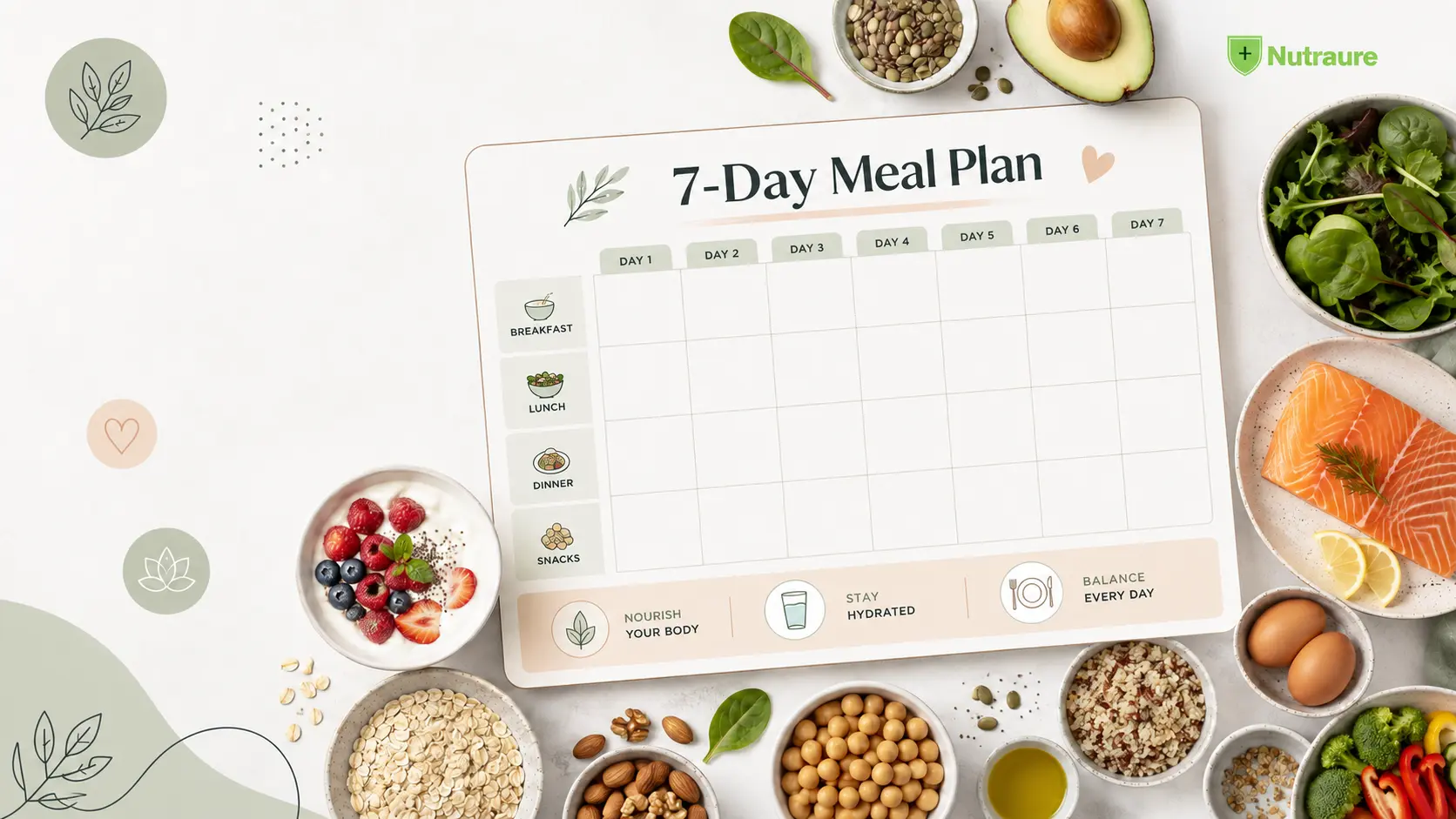
This one-week menopause meal plan follows a flexible Mediterranean-style pattern. It emphasizes vegetables, legumes, whole grains, fish, poultry, fermented dairy or alternatives, nuts, seeds and olive oil.
Portion sizes are deliberately not prescribed because your needs depend on your body size, activity, appetite, health and goals. Eat slowly, begin with a sensible serving and adjust according to your hunger and fullness.
You can repeat meals, exchange days or use the vegetarian alternatives. Consistency is more valuable than following the schedule perfectly.
Day 1
Breakfast: Greek Yogurt, Berry and Oat Bowl
Add plain Greek yogurt to a bowl and top it with berries, rolled oats and a teaspoon of chia seeds. Add cinnamon for sweetness without relying on much added sugar.
Easy swap: Use unsweetened curd or fortified soy yogurt.
Lunch: Grilled Chicken and Chickpea Salad
Combine mixed leaves, cucumber, tomato, chickpeas and grilled chicken. Dress with olive oil, lemon juice, black pepper and herbs.
Vegetarian option: Replace the chicken with tofu, paneer or additional chickpeas.
Dinner: Baked Salmon With Quinoa and Broccoli
Serve baked salmon with cooked quinoa and steamed or roasted broccoli. Add lemon and fresh herbs.
Budget swap: Use sardines, locally available fish, tofu or a bean patty.
Why Day 1 works: It combines protein with fiber-rich plants and includes an omega-3-rich fish option.
Day 2
Breakfast: Spinach and Tomato Omelet
Cook eggs with spinach, tomato, and herbs. Serve with one slice of whole-grain toast.
Add mushrooms, peppers, or leftover vegetables to reduce food waste.
Lunch: Lentil and Vegetable Soup
Cook lentils with carrots, tomatoes, onion, celery, or any vegetables you have available. Serve with a side salad or a small whole-grain roll.
Indian-style option: Prepare a vegetable dal and serve it with a small portion of brown rice or whole-wheat roti.
Dinner: Chicken or Tofu Stir-Fry
Stir-fry chicken or tofu with peppers, broccoli, carrots and green beans. Serve with brown rice.
Use ginger, garlic, lime and a modest amount of lower-sodium soy sauce for flavor.
Why Day 2 works: Lentils and vegetables increase fiber, while eggs and chicken or tofu provide protein across the day.
Day 3
Breakfast: ***** and Flaxseed Overnight Oats
Combine oats, milk or fortified plant milk, plain yogurt, ground flaxseed, chopped *****,ple and cinnamon. Refrigerate overnight.
If you prefer a warm meal, cook the same ingredients as porridge in the morning.
Lunch: Tuna and White Bean Salad
Mix tuna, white beans, cucumber, tomato, leafy greens and lemon dressing.
Vegetarian option: Replace tuna with chickpeas or baked tofu.
Dinner: Tofu and Vegetable Curry
Cook tofu with tomatoes, spinach, cauliflower and your preferred curry spices. Serve with a moderate portion of brown rice, quinoa or millet.
Choose a tomato-based or lightly coconut-based sauce rather than making the meal mostly cream or oil.
Why Day 3 works: This day combines soluble fiber from oats and beans with plant protein, vegetables and unsaturated fats.
Day 4
Breakfast: Berry, Yogurt and Spinach Smoothie
Blend plain yogurt or soy yogurt with berries, spinach, milk and ground flaxseed.
A smoothie should still contain enough food to function as a meal. Avoid making it only from fruit juice and fruit because that may not keep you satisfied for long.
Lunch: Quinoa and Chickpea Bowl
Layer quinoa, chickpeas, roasted vegetables, cucumber and leafy greens. Add a tahini and lemon dressing.
Easy swap: Use brown rice, barley or millet instead of quinoa.
Dinner: Chicken, Sweet Potato and Green Beans
Serve baked or grilled chicken with roasted sweet potato and green beans. Season with herbs, garlic and black pepper.
Vegetarian option: Use grilled tofu, tempeh or a lentil patty.
Why Day 4 works: Each meal combines a protein source with fiber-containing carbohydrates and vegetables.
Day 5
Breakfast: Cottage Cheese, **** and Walnuts
Top cottage cheese with sliced **** and a small amount of chopped walnuts.
Alternative: Use plain Greek yogurt, curd or unsweetened soy yogurt.
Lunch: Hummus and Vegetable Wrap
Spread hummus over a whole-grain wrap and add grilled vegetables, greens and a protein such as chicken, tofu or paneer.
Serve with raw vegetables rather than adding a second large refined-carbohydrate side.
Dinner: Grilled Fish With Barley and Cauliflower
Serve grilled fish with cooked barley and roasted cauliflower. Add lemon, parsley or coriander.
Gluten-free option: Replace barley with brown rice or quinoa.
Why Day 5 works: It includes calcium-rich food at breakfast, vegetables at lunch and a balanced fish-based dinner.
Day 6
Breakfast: Eggs, Avocado and Whole-Grain Toast
Serve scrambled or boiled eggs with avocado and whole-grain toast. Add sliced tomato or leftover vegetables.
Keep the avocado portion moderate if you are watching overall energy intake.
Lunch: Black Bean and Vegetable Bowl
Combine black beans, brown rice, lettuce, tomatoes, peppers, and salsa. Add a spoonful of plain yogurt if desired.
Indian-style option: Use rajma with a smaller serving of brown rice and a large cucumber-tomato salad.
Dinner: Lean Beef or Tofu With Greens and Carrots
Serve a moderate portion of lean beef or tofu with sautéed leafy greens and roasted carrots.
Replace beef with lentils, chicken, fish or soy chunks according to your diet and budget.
Why Day 6 works: The meals include varied protein sources, colorful vegetables and satisfying whole-food fats.
Day 7
Breakfast: Chia Pudding With Berries
Combine chia seeds with milk or fortified plant milk and refrigerate until thick. Top with berries and pumpkin seeds.
For more protein, mix in plain Greek yogurt or serve it on the side.
Lunch: Mediterranean Chickpea Salad
Combine chickpeas, cucumber, tomato, leafy greens, olives and a small amount of feta. Dress with lemon and olive oil.
Skip or reduce the feta and olives if you have been advised to restrict sodium.
Dinner: Roast Chicken or Tofu With Vegetables
Serve roast chicken or baked tofu with a large portion of mixed vegetables and quinoa, brown rice or a small baked potato.
Use the vegetables left in your refrigerator so the final meal also reduces waste.
Why Day 7 works: It finishes the week with legumes, seeds, vegetables, fermented dairy and a flexible protein-centered dinner.

Optional Menopause-Friendly Snacks
You do not have to eat snacks simply because they appear on a diet plan. Use them when there is a genuine gap between meals or when hunger would otherwise leave you reaching for whatever is easiest.
Choose a snack containing protein, fiber, or both:
- ***** or **** with peanut butter
- Plain yogurt with berries
- A boiled egg with sliced vegetables
- Hummus with cucumber and carrots
- A small handful of nuts with fruit
- Cottage cheese with berries
- Roasted chickpeas
- Edamame
- Whole-grain crackers with tuna or hummus
Try eating snacks without scrolling or working. Taking a few minutes to notice the food can make it easier to recognize whyou’re’re satisfied.
How to Adjust the Plan for Your Goal
For Gradual Weight Management
A menopause weight-loss diet does not need to remove entire food groups. Start with changes you can repeat:
- Fill more of your meal with non-starchy vegetables
- Keep a clear source of protein in each meal
- Reduce sugary drinks and frequent alcohol
- Measure oils, nut butter, and calorie-dense toppings initially
- Notice whether snacks come from hunger, habit,t or stress
- Combine nutrition changes with regular activity
Long-term habits are generally more sustainable than crash diets. ACOG continues to recommend healthy eating and regular exercise as the foundation of weight management during menopause and aging. Use the e scale as your only measure of progress. Also notice strength, waist fit, energy, sleep, digestion, and your ability to follow the routine consistently.
For More Consistent Energy
If your energy frequently crashes:
- Avoid skipping breakfast and lunch
- Add protein to your first meal
- Replace a pastry-only breakfast with eggs, yogurt, or oats
- Drink water regularly
- Include iron-containing foods where appropriate
- Speak with a clinician if fatigue is persistent or severe
Fatigue is not always caused by diet. Thyroid conditions, anemia, medication effects, depression, poor sleep, and other medical issues may require assessment.
For Fewer Cravings
Cravings often become more difficult when meals are too small, protein is missing,g or you go for long periods without eating.
Experiment with:
- A protein-containing breakfast
- A planned afternoon snack
- More vegetables or legumes at lunch
- Regular meal times
- Keeping highly tempting foods less visible
- Allowing a reasonable portion instead of creating rigid food rules
For Hot Flashes
Food does not provide guaranteed hot-flash relief. However, maintaining a healthy weight and identifying personal triggers may help some people. Alcohol, caffeine,ne and spicy foods are commonly reported triggers, but responses vary. Track your symptoms in a daily diary before removing foods. If hot flashes are frequent, severe, or disrupting sleep, discuss evidence-based treatment options with a healthcare professional.
The National Institute ofAging’ss menopausal overview provides a reliable introduction to symptoms and treatment discussions.
For Bone Health
Include calcium-rich foods across the day rather than depending on one meal:
- Yogurt at breakfast
- Fortified plant milk in oats
- Tofu at lunch
- Leafy vegetables at dinner
- Sardines or calcium-rich dairy when suitable
Diet is only one part of bone care. Weight-bearing exercise, resistance training, smoking avoidance and appropriate medical screening also matter. ay Grocery List
Adjust quantities for the number of people you are feeding and the meals you plan to repeat.
Protein and Dairy
- Eggs
- Plain Greek yogurt or curd
- Cottage cheese or paneer
- Chicken
- Salmon or locally available fish
- Tuna
- Tofu
- Lentils
- Chickpeas
- White or black beans
- Hummus
- Fortified milk or plant milk
Vegetables
- Spinach or other leafy greens
- Broccoli
- Cauliflower
- Carrots
- Green beans
- Tomatoes
- Cucumbers
- Bell peppers
- Sweet potatoes
- Salad leaves
- Onions
- Mushrooms
Frozen vegetables are useful when fresh produce is expensive or likely to spoil.
Fruit
- Berries, fresh or frozen
- Apples
- Pears
- Bananas
- Lemons or limes
- Any seasonal fruit you enjoy
Whole Grains and Starchy Foods
- Rolled oats
- Brown rice
- Quinoa, millet or barley
- Whole-grain bread
- Whole-grain wraps
- Whole-wheat roti flour
- Potatoes or sweet potatoes
Healthy Fats and Flavorings
- Olive oil
- Avocado
- Walnuts or almonds
- Chia seeds
- Ground flaxseed
- Pumpkin seeds
- Tahini
- Peanut butter
- Herbs
- Garlic
- Ginger
- Cinnamon
- Curry spices
Seven Ways to Make the Plan Easier
1. Prepare Two Proteins in Advance
Cook a tray of chicken or tofu and prepare a pot of lentils. You can then use them in salads, bowls, wraps and dinners.
2. Wash and Chop Vegetables Together
Prepare sturdy vegetables such as carrots, peppers and broccoli at the beginning of the week. Store leafy vegetables separately to keep them fresh.
3. Make One Flexible Grain
Cook brown rice, quinoa, barley or millet in advance. Refrigerate it promptly and reheat it thoroughly when needed.
4. Repeat Breakfasts
You do not need seven completely different breakfasts. Repeating two or three reliable choices reduces cost, waste and morning decisions.
5. Keep Emergency Meals Available
Useful options include:
- Eggs and whole-grain toast
- Tinned fish with salad
- Lentil soup
- Frozen vegetables with tofu
- Plain yogurt with oats and fruit
An imperfect balanced meal is usually more helpful than skipping dinner and becoming extremely hungry later.
6. Make Water Easy to Reach
Keep water beside your desk or in the place where you spend most of the day. Flavor it with lemon, cucumber, or mint when plain water feels boring.
7. Review the Week Without Judging Yourself
At the end of seven days, ask:
- Which meals kept me satisfied?
- Which meals were easiest to prepare?
- When did cravings appear?
- Did caffeine or alcohol affect my sleep?
- What should I repeat next week?

Common Menopause Diet Mistakes
Eating Too Little
Constantly trying to eat as little as possible can leave you tired, preoccupied with food, and more vulnerable to overeating later. A sustainable plan should provide enough nourishment to support daily life.
Skipping Protein
A meal made mainly from refined carbohydrates may not be satisfying. Add eggs, yogurt, beans, tofu, fish,h or another protein source.
Treating Nutritious Foods as Unlimited
Nuts, seeds, avocado and olive oil are useful foods, but portions can become large without you noticing. Use enough for flavor and satisfaction rather than adding them automatically to every meal.
Believing “Hormone-Balancing” Marketing
Be cautious with teas, powders and supplements that promise to reset hormones, melt menopause belly fat or cure symptoms. These phrases often exceed the available evidence.
For credible education and treatment information, visit Menopause Society’s patient education hub. Sleep and Stress
Sleep difficulties are common during the menopausal transition, and night sweats or mood changes can contribute. Poor sleep can also make meal planning and appetite management harder. Sleep is valuable, but it cannot compensate completely for ongoing insomnia or untreated symptoms.
Expecting Seven Days to Transform Your Body
This seven-day menopause meal plan is a starting framework, not a seven-day cure. Use the week to identify meals you can repeat and habits that fit your life.
Frequently Asked Questions
What is the best diet for menopause?
No single diet is best for everyone. A balanced Mediterranean-style pattern is a practical option because it emphasizes vegetables, fruit, legumes, whole grains, fish, nuts and olive oil without requiring extreme restriction.
Evidence suggests it may support cardiometabolic health during menopause, but outcomes vary, and it should not be presented as a guaranteed treatment for symptoms. Can any diet plan help with menopause weight gain?
A one-week plan cannot guarantee weight loss. It can help you establish regular meals, improve food quality and identify portions or habits that may need adjustment.
Sustainable weight management usually requires consistent nutrition, physical activity, sleep support and sufficient time.
What foods are best to eat during menopause?
Useful choices include protein-rich foods, vegetables, fruit, legumes, whole grains, fish, nuts, seeds, and calcium-rich foods. Variety matters more than finding one supposedly perfect food.
What should I eat for menopause belly fat? No food specifically removes
There is no food that specifically removes abdominal fat. Build meals around protein and vegetables, choose high-fiber carbohydrates, reduce sugary drinks, manage portions, and include regular physical activity.
Be cautious of products promising targeted fat loss.
Is protein important during menopause?
Protein is important throughout adulthood and supports muscle maintenance. Include foods such as eggs, yogurt, fish, chicken, tofu, beans, and lentils across the day.
Your ideal intake may differ if you have kidney disease or another medical condition, so seek individualized guidance when needed.
Can food reduce hot flashes?
Some people find that avoiding personal triggers such as alcohol, spicy foods, or excess caffeine helps. However, diet does not reliably eliminate hot flashes for everyone.
Persistent or disruptive symptoms deserve a conversation with a qualified clinician because effective nonhormonal and hormonal treatments may be available.
Are soy foods safe during menopause?
For most people, ordinary soy foods such as tofu, tempeh, edamame and unsweetened soy milk can be included as nutritious protein sources.
Concentrated isoflavone supplements are different from whole soy foods. Anyone with a hormone-sensitive condition or taking relevant medication should discuss supplements with their healthcare professional.
How many meals should I eat each day?
There is no required number. Three balanced meals work well for many people, while others prefer smaller meals and a planned snack.
Choose a rhythm that keeps your energy steady without encouraging constant grazing.
Can I follow this plan as a vegetarian?
Yes. Replace fish, chicken and meat with tofu, tempeh, lentils, beans, chickpeas, eggs or dairy according to your preferences.
Pay attention to protein, vitamin B12, iron, calcium and vitamin D. A dietitian can help if your diet is entirely plant-based.
Can I drink coffee during menopause?
Coffee does not need to be removed automatically. Reduce the amount or drink it earlier if caffeine worsens hot flashes, anxiety,y or sleep.
Should I take calcium or vitamin D supplements?
Do not assume supplements are necessary simply because you are in menopause. Your diet, age, sun exposure, medications, medical history,y and laboratory results may affect the decision.
Discuss supplementation with a clinician instead of taking high doses without guidance.
Final Thoughts
A useful 7-day diet plan for menopause should make eating feel clearer, not more stressful. You do not need to ban carbohydrates, buy expensive supplements, or prepare a different recipe every day.
Begin with a few repeatable habits:
- Include protein in each main meal
- Eat vegetables and fruit regularly
- Choose fiber-rich carbohydrates
- Include calcium-containing foods
- Use healthy fats in sensible portions
- Monitor your personal symptom triggers
- Prepare simple foods before the week becomes busy
After seven days, keep the meals that worked and replace the ones that did not. That is how a short plan becomes a sustainable routine—through practical adjustments rather than perfection.