Recurring breakouts can make eating feel unnecessarily complicated. One article tells you to remove dairy, another blames chocolate, and someone on social media insists that drinking more water will clear your skin in a week.
The reality is less dramatic—and more useful.
Diet can influence acne for some people, but food is rarely the only cause. Acne develops when hair follicles become blocked by oil and dead skin cells, with inflammation contributing to red, swollen breakouts. Hormones, genetics, medications, skincare products, stress, and certain health conditions can also play a role.
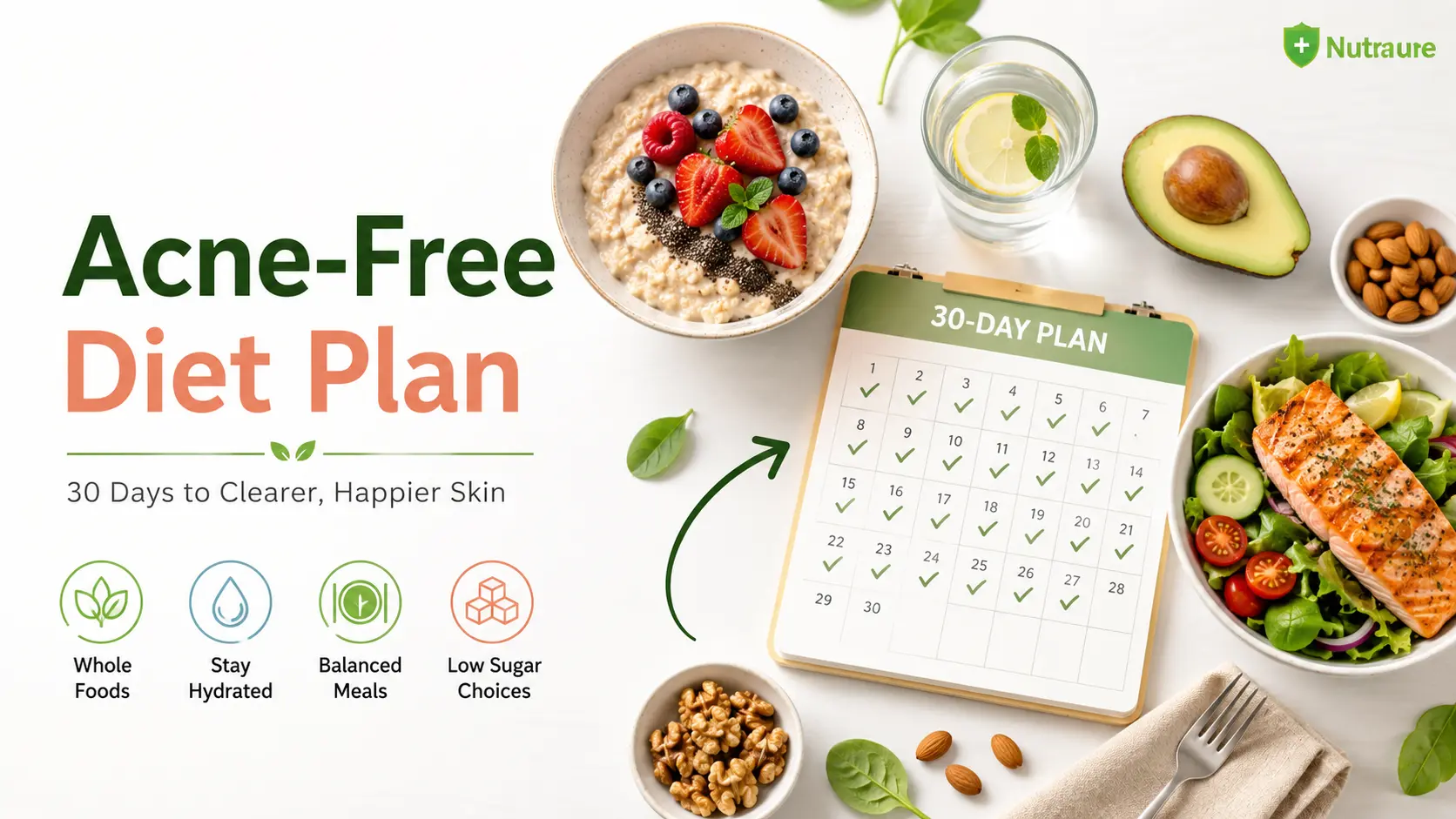
This acne-free diet plan is therefore not a detox, crash diet, or promise of flawless skin in 30 days. It is a structured way to:
- Replace high-glycemic, heavily processed foods with balanced meals
- Observe whether certain foods appear to affect your breakouts
- Build a practical clear-skin grocery list
- Improve the overall nutritional quality of your Diet
- Create habits you can continue after the first month
Research suggests that low-glycemic eating may reduce acne severity in some people. However, the evidence is not strong enough to claim that one Diet will clear everyone’s skin. The American Academy of Dermatology also emphasises that effective acne management may require acne-friendly skincare and medication—not Diet alone.
Important: Use this plan as a flexible eating framework, not a replacement for medical treatment. Anyone with food allergies, diabetes, kidney disease, digestive conditions, nutritional deficiencies, pregnancy-related needs, or a history of disordered eating should personalize it with a qualified healthcare professional.
What Is an Acne-Free Diet Plan?
An acne-free diet plan is better understood as an acne-conscious eating plan. No food can guarantee that you will become acne-free, and eating a single “skin superfood” will not undo the other factors involved in breakouts.
The purpose of the plan is to build meals around foods that:
- Produce a slower rise in blood sugar
- Provide protein, fiber and healthy fats
- Help replace sugary drinks and refined snacks
- Make it easier to track possible personal triggers
- Support your general health while you treat your skin
This approach avoids two common extremes. It does not claim that Diet has nothing to do with acne, but it also does not blame every breakout on something you ate.
A 2022 systematic review concluded that a high glycemic index, high glycemic load and greater carbohydrate intake may have a modest but meaningful acne-promoting effect. The same review found that dairy may be associated with acne in certain populations, although individual responses can differ and more randomized trials are needed.
What this 30-day plan can do
Over four weeks, the plan may help you:
- Eat fewer refined carbohydrates and added sugars
- Plan more balanced breakfasts, lunches and dinners
- Notice patterns between meals and breakouts
- Develop a repeatable grocery-shopping routine
- Separate possible food triggers from random assumptions
What it cannot do
This Diet cannot diagnose the cause of your acne, replace prescription treatment, or guarantee visible clearing within one month.
In fact, the American Academy of Dermatology notes that even proven acne treatments often require at least six to eight weeks before people begin seeing fewer breakouts. That makes 30 days a useful starting period for building habits and collecting observations—not a deadline by which your skin must become clear.
How Diet May Affect Acne
The connection between Diet and acne is still being studied. Current research focuses mainly on glycemic load, milk consumption,n and broader Western-style eating patterns.
High-glycemic foods and blood sugar spikes
Glycemic index describes how quickly a carbohydrate-containing food raises blood sugar. Glycemic load also considers how much carbohydrate a typical serving contains.
Foods such as sugary drinks, pastries, sweetened cereal, white bread, fries, es and many highly processed snacks can produce a relatively rapid rise in blood sugar. This leads to a larger insulin response, which may influence hormones and biological pathways involved in oil production and acne development.
Small clinical trials have reported improvements among people following lower-glycemic diets. A 12-week randomized trial involving young men found greater acne improvement in the low-glycemic-load group, although weight loss may have contributed to the result. Another 10-week trial involving patients with mild to moderate acne also found clinical improvement with a lower-glycemic diet.
These findings are promising, but they do not mean that every high-glycemic food directly causes pimples. Your overall eating pattern matters more than one slice of white bread or an occasional dessert.
Cow’s milk and acne
Some observational research has found an association between cow’s milk consumption and acne, particularly among adolescents and young adults. However, an association does not prove that milk caused the breakouts.
A systematic review and meta-analysis found that dairy intake was associated with higher odds of acne. Still, the researchers warned that variation and bias across the included studies limited the certainty of the findings.
The evidence also does not support treating every dairy product the same way. The American Academy of Dermatology notes that studies have linked cow’s milk with acne, while comparable evidence has not shown that yogurt or cheese increases breakouts.
For that reason, this plan does not require everyone to become dairy-free. A better approach is to observe your normal intake and test a carefully chosen change only when you have a reasonable reason to suspect milk.
Chocolate, fried food and other suspected triggers
People frequently blame chocolate, spicy meals, fried food, coffee or nuts for their acne. These foods may appear alongside other relevant factors, including added sugar, refined flour, milk, sleep changes, stress or menstrual-cycle changes.
For example, a milk chocolate bar contains more than cocoa. It may also contain sugar and dairy, making it difficult to identify which ingredient—or whether the food at all—was connected to a breakout.
Avoid labeling a food as a trigger after one meal. Instead, track repeated patterns while keeping the rest of your routine reasonably consistent.
Six Principles of a Practical Acne Diet Plan
1. Build meals around minimally processed foods
Choose vegetables, fruit, legumes, whole grains, eggs, fish, poultry, tofu, nuts and seeds more often than packaged snack foods.
“Minimally processed” does not mean everything must be raw or prepared from scratch. Frozen vegetables, canned beans, plain oats and canned fish can all make nutritious meals more convenient.
2. Combine carbohydrates with protein and fiber
A bowl of sugary cereal is digested differently from a meal containing oats, seeds, fruit and eggs or tofu.
Protein and fiber help make meals more satisfying and can reduce the temptation to rely on sweets or refined snacks later in the day.
A simple plate structure is:
- Half vegetables or salad
- One-quarter protein
- One-quarter whole grains, beans or another fiber-rich carbohydrate
- A small serving of healthy fat
This formula does not need to be followed perfectly at every meal.
3. Replace refined carbohydrates rather than banning carbs
Carbohydrates are not automatically bad for acne. Lentils, beans, oats, fruit, and whole grains contain valuable nutrients and fiber.
The more useful change is to replace frequent servings of:
- Sugary cereal
- White bread
- Pastries
- Candy
- Sweetened beverages
- Large portions of refined snack foods
with options such as oats, beans, whole-grain bread, brown rice, quinoa, barley or sweet potatoes.
4. Do not remove dairy without a plan
Removing an entire food group “just in case” can make the Diet harder to follow and may reduce calcium, protein, or vitamin intake.
Start by recording how often you drink cow’s milk or use milk-based protein products. When milk appears to be a consistent trigger, discuss a short trial with a doctor or registered dietitian, especially for children and teenagers.
Choose unsweetened fortified alternatives rather than replacing milk with a heavily sweetened drink.
5. Make changes gradually
Changing your breakfast, snacks, drinks, dairy intake, and skincare routine on the same day makes it difficult to learn anything.
Begin with the clearest improvement: reduce sugary drinks and high-glycemic snacks. Once that becomes routine, evaluate whether another change is justified.
6. Continue proven acne care
Food choices are only one part of managing acne. Keep using treatments prescribed or recommended by your clinician unless you have been told to stop.
The American Academy of Dermatology’s diet-and-acne guidance specifically states that keeping skin clear usually requires more than changing food.
Best Foods for an Acne-Friendly Diet
There is no official list of foods that “clear acne.” The following choices are recommended because they make it easier to follow a balanced, lower-glycemic eating pattern.
Colorful vegetables
Use vegetables as the foundation of lunch and dinner whenever practical.
Options include:
- Spinach and other leafy greens
- Broccoli
- Cauliflower
- Bell peppers
- Carrots
- Tomatoes
- Cucumber
- Courgette or zucchini
- Green beans
- Cabbage
- Mushrooms
Fresh, frozen and lightly cooked vegetables are all acceptable. Choose the form you are most likely to eat consistently.
Whole fruit
Berries, oranges, apples, pears, kiwi, guava, papaya and peaches provide fiber and micronutrients.
Whole fruit is usually a more satisfying choice than juice because it retains its natural fiber. You do not need to fear naturally occurring sugar in a reasonable serving of fruit.
Pair fruit with nuts, seeds, plain yogurt, eggs or another protein source when you need a more filling snack.
Protein-rich foods
Include a protein source at each main meal.
Suitable options include:
- Eggs
- Fish
- Chicken or turkey
- Lentils and dal
- Chickpeas
- Beans
- Tofu or tempeh
- Unsweetened yogurt when tolerated
- Cottage cheese or paneer, when tolerated
- Lean meat
- Nuts and seeds
Protein supports general nutrition and helps create satisfying meals. It should not be presented as a direct acne treatment.
Lower-glycemic carbohydrates
Useful choices include:
- Steel-cut or rolled oats
- Quinoa
- Barley
- Brown or basmati rice in moderate portions
- Whole-grain bread
- Whole-wheat roti
- Beans and lentils
- Sweet potatoes
- Buckwheat
- Bulgur
Preparation and portion size still matter. A very large serving of any carbohydrate may affect blood sugar differently from a smaller serving eaten with protein, vegetables, and healthy fats.
Healthy fat sources
Add moderate portions of:
- Walnuts
- Almonds
- Pumpkin seeds
- Chia seeds
- Ground flaxseed
- Avocado
- Olive oil
- Oily fish
These foods can make meals more satisfying and improve overall diet quality. Avoid describing them as acne cures.
Unsweetened drinks
Water, plain sparkling water, and unsweetened tea are practical replacements for soda, milkshakes, and heavily sweetened coffee.
Water supports normal body functions, but drinking excessive amounts will not flush acne from your skin.
Foods to Limit or Test Carefully
“Limit” does not mean that one serving will cause a breakout. It means these foods are useful targets when improving the overall pattern of your Diet.
Sugary drinks
Regular soda, energy drinks, sweetened iced tea, packaged juice drinks, milkshakes and dessert-style coffees can add a substantial amount of sugar without providing much fullness.
Begin by replacing one daily sugary drink with water or an unsweetened alternative.
Refined snacks and desserts
Reduce how often you eat:
- Doughnuts
- Cakes and pastries
- Candy
- Sweet biscuits
- Sugary cereal
- White-bread snacks
- Large servings of chips
- Desserts eaten as everyday snacks
A planned dessert occasionally is different from grazing on refined snacks throughout the day.
Highly processed convenience meals
Some frozen or packaged foods are useful. The issue is relying heavily on meals that combine refined carbohydrates, low fiber and added sugar while providing few vegetables or protein.
Read the full ingredient and nutrition label rather than judging a food by words such as “natural,” “fit” or “healthy.”
Cow’s milk when you suspect a pattern
Do not automatically remove yogurt, cheese, and every dairy-containing food.
First, track:
- How much milk you drink
- Whether you use whey-based shakes
- When breakouts appear
- Whether the same pattern happens repeatedly
- Other simultaneous changes, including stress and skincare
A short, structured trial is more informative than indefinite restriction based on fear.

Your 30-Day Acne-Free Diet Plan
Treat these 30 days as a habit-building and observation period. Do not expect every existing spot to disappear by Day 30.

Days 1–7: Simplify Your Routine
The first week is about establishing a baseline and removing the most obvious sources of added sugar and refined carbohydrates.
Day 1: Record your starting point
Write down:
- Your usual breakfast, lunch, dinner, and snacks
- Drinks consumed during the day
- Current supplements
- Current skincare products and acne medication
- Approximate breakout locations and severity
Do not change everything yet. You need a realistic picture of your normal routine.
Day 2: Improve your drinks
Replace at least one sugary drink with water, sparkling water, or unsweetened tea.
Do not force yourself to drink an arbitrary amount of water. Drink regularly and pay attention to thirst, activity and weather.
Day 3: Rebuild breakfast
Choose a breakfast containing protein and fiber.
Examples:
- Oats, berries, chia seeds and two eggs
- Vegetable omelet with whole-grain toast
- Besan chilla with vegetables
- Tofu scramble with roti
- Plain yogurt, fruit, nuts and oats, when dairy is tolerated
Day 4: Add vegetables to lunch
Aim to make vegetables or salad a visible part of the meal rather than a garnish.
Day 5: Plan two reliable snacks
Choose options such as fruit with nuts, roasted chickpeas, boiled eggs, hummus with vegetables or plain yogurt.
Day 6: Prepare one meal at home
A home-prepared meal makes it easier to control added sugar, portion size and ingredients.
Day 7: Review, not judge
Look for practical problems. Were you hungry? Did food preparation take too long? Did you rely on snacks because lunch lacked protein?
Adjust the plan rather than blaming yourself.
Days 8–14: Balance Blood Sugar
During Week 2, focus on how meals are assembled.
Day 8: Add protein to each main meal
Use eggs, beans, lentils, tofu, fish, chicken, or another suitable protein.
Day 9: Upgrade one refined carbohydrate
Try one swap:
- White bread to whole-grain bread
- Sugary cereal to oats
- Large white-rice portion to a smaller portion paired with dal and vegetables
- Pastry breakfast to eggs and whole-grain toast
- Chips to roasted chickpeas
Day 10: Check packaged-food labels
Look for added sugars and notice serving sizes. You do not need to calculate every gram; the goal is to become aware of what you eat frequently.
Day 11: Build a balanced lunch
Combine vegetables, protein, a fiber-rich carbohydrate, and a small amount of healthy fat.
Day 12: Make dessert intentional
When you want dessert, choose it deliberately and enjoy a reasonable serving after a balanced meal. This is usually more sustainable than declaring sugar permanently forbidden.
Day 13: Prepare tomorrow’s breakfast
Small preparation reduces rushed, high-sugar choices.
Day 14: Compare your first two weeks
Review your energy, hunger, digestion,n and meal consistency. Do not draw firm conclusions about acne after only 14 days.
Days 15–21: Observe Possible Triggers
By Week 3, the core diet should feel more stable. Now you can look for repeated patterns.
Day 15: Review milk and whey intake
Count how often you consume cow’s milk, milkshakes, es or whey-based shakes. Do not change your intake unless you have identified a reason to test it.
Day 16: Choose one variable
When a food repeatedly appears before worsening breakouts, select only that one variable for closer observation.
Day 17: Protect nutritional balance
When removing a food, replace its nutritional role. For example, an unsweetened fortified milk alternative may replace cow’s milk in cereal, while beans, tofu, fish, eggs or poultry can provide protein.
Day 18: Avoid blaming single meals
Acne lesions do not always appear immediately after a food is eaten. Hormonal changes, skincare, sleep and stress may overlap with the timing.
Day 19: Repeat a dependable meal
A few reliable meals make tracking easier because they reduce random dietary variation.
Day 20: Check your snack pattern
Notice whether hunger is leading to frequent sweet or refined snacks. Increase protein or fiber at the preceding meal when necessary.
Day 21: Photograph only for private tracking
When comfortable, take a private photo in similar lighting and from the same angle. Do not use filters. The purpose is to compare patterns, not scrutinize your skin every hour.
Days 22–30: Personalize and Continue
The final stage turns the short-term plan into a realistic routine.
Day 22: Identify the easiest habit
Keep the change that required the least effort and produced the clearest benefit, such as replacing soda or preparing breakfast.
Day 23: Identify the hardest habit
Simplify it. Use frozen vegetables, canned beans, batch-cooked grains, or repeated breakfasts when time is the problem.
Day 24: Reassess unnecessary restrictions
Return foods you removed without a clear reason, unless a clinician advised otherwise.
Day 25: Create three emergency meals
Examples:
- Eggs, whole-grain toast and frozen vegetables
- Canned beans, microwaveable brown rice and salad
- Tofu or chicken stir-fry using frozen vegetables
- Dal, vegetables and roti
- Canned salmon or tuna with whole-grain crackers and cucumber
Day 26: Plan for restaurants
Choose a meal with vegetables and protein, then select the carbohydrate or dessert you genuinely want. One restaurant meal will not ruin the plan.
Day 27: Review your skincare routine
Diet cannot compensate for harsh scrubbing, picking, or unsuitable products. Follow acne-friendly skincare and prescribed treatment.
Day 28: Examine your tracking notes
Look for repeated patterns rather than isolated events.
Day 29: Choose your next 30-day goal
Examples include:
- Continue reducing sugary drinks
- Maintain a balanced breakfast
- Discuss suspected milk sensitivity with a dietitian
- Book a dermatologist appointment
- Improve meal preparation
Day 30: Evaluate realistically
Ask:
- Did I eat more balanced meals?
- Did I reduce frequent high-glycemic snacks?
- Did my energy or hunger improve?
- Did any food show a repeated, convincing pattern?
- Is my acne improving, unchanged,d or worsening?
- Do I need professional treatment?
The most valuable result may be a clearer understanding of your habits rather than completely clear skin.
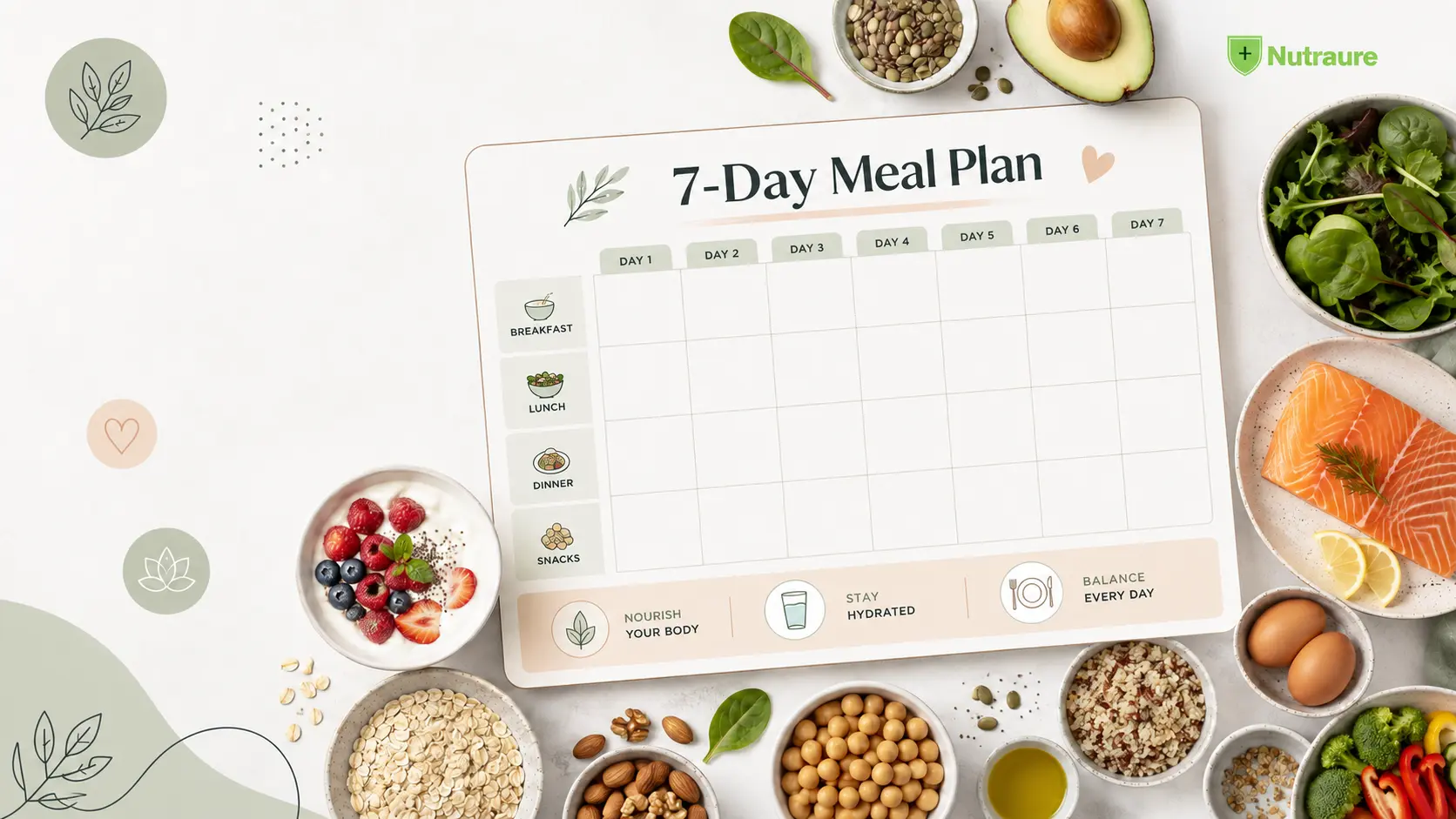
Seven-Day Acne-Friendly Meal Plan
Portions should be adjusted for age, appetite, activity level and individual nutritional needs. Vegetarian alternatives are included where practical.
| Day | Breakfast | Lunch | Dinner | Snack |
|---|---|---|---|---|
| 1 | Oats with berries, chia seeds and eggs or tofu | Chickpea salad with whole-grain bread | Baked salmon or tofu, broccoli and sweet potato | ***** with nuts |
| 2 | Vegetable omelette or besan chilla | Dal, mixed vegetables and brown rice | Chicken or tempeh stir-fry with vegetables | Roasted chickpeas |
| 3 | Plain yoghurt with fruit and seeds, or fortified dairy-free yoghurt | Quinoa and bean bowl | Lentil soup with salad and whole-grain toast | Carrots with hummus |
| 4 | Eggs with avocado and whole-grain toast | Grilled chicken or tofu wrap with salad | Fish curry or chickpea curry with vegetables and rice | **** with pumpkin seeds |
| 5 | Overnight oats with ***** and cinnamon | Bean soup with a side salad | Vegetable and tofu stir-fry with brown rice | Boiled egg or edamame |
| 6 | Tofu scramble or egg bhurji with roti | Salmon, tuna or chickpea salad bowl | Dal, roasted vegetables and quinoa | Unsweetened yogurt or fruit |
| 7 | Oats, nuts and sliced fruit | Leftover grain-and-protein bowl | Chicken, fish, tofu or bean tray bake | ***** with nut butter |
Repeat the pattern with different vegetables, proteins and whole grains. A plan that fits your schedule is more useful than a complicated menu you abandon after three days.

Acne-Friendly Grocery List
Vegetables
- Spinach and leafy greens
- Broccoli and cauliflower
- Carrots
- Bell peppers
- Cucumber
- Tomatoes
- Green beans
- Cabbage
- Frozen mixed vegetables
Fruit
- Apples
- Pears
- Oranges
- Berries
- Kiwi
- Guava
- Papaya
- Peaches
Protein
- Eggs
- Lentils and dal
- Chickpeas
- Beans
- Tofu or tempeh
- Fish
- Chicken
- Plain yogurt when tolerated
- Nuts and seeds
Whole-food carbohydrates
- Oats
- Brown or basmati rice
- Quinoa
- Barley
- Whole-grain bread
- Whole-wheat atta
- Sweet potatoes
Healthy fats and pantry staples
- Olive oil
- Chia seeds
- Ground flaxseed
- Pumpkin seeds
- Walnuts
- Natural nut butter
- Herbs and spices
- Unsweetened tea
Simple Food Swaps for Clearer Eating Habits
| Instead of | Try |
| Sugary breakfast cereal | Oats with fruit, seeds and protein |
| Sweetened coffee drink | Plain coffee or tea with less added sugar |
| Regular soda | Water, sparkling water or unsweetened tea |
| White-bread snack | Whole-grain toast with eggs, hummus or nut butter |
| Candy as a daily snack | Fruit with nuts or seeds |
| Chips | Roasted chickpeas or vegetables with hummus |
| Oversized white-rice meal | Smaller rice portion with dal, protein and vegetables |
| Sweetened fruit yoghurt | Plain yogurt with whole fruit |
| Milkshake | Unsweetened smoothie containing whole fruit and protein |
| Dessert-style protein bar | Eggs, nuts, fruit, tofu or roasted legumes |
The aim is not to find a “perfect” replacement. It is to make the everyday choice more balanced while leaving room for occasional treats.
How to Track Whether Diet Is Affecting Your Acne
Use a simple daily record rather than a complicated spreadsheet.
Track:
- Main meals and snacks
- Cow’s milk or whey intake
- Sugary drinks and desserts
- New skincare products
- Menstrual-cycle timing, when relevant
- Stress and sleep changes
- New medications or supplements
- Breakout location and general severity
Avoid counting every pore or repeatedly checking the mirror. Review your notes once a week.
A food becomes a more credible suspected trigger when:
- You consume it repeatedly.
- A similar skin pattern repeatedly follows.
- Other major variables remain relatively stable.
- The pattern improves during a reasonable trial.
- The pattern returns after reintroduction.
Even then, the pattern is personal evidence—not proof that the food causes acne for everyone.
Common Acne Diet Mistakes
Expecting clear skin in exactly 30 days
Some people may notice changes during the first month, while others will not. Proven acne treatments often take longer than 30 days to show visible improvement.
Removing too many foods at once
A highly restrictive diet is difficult to sustain and makes it impossible to determine which change mattered.
Treating every carbohydrate as harmful
Beans, lentils, fruit, vegetables and intact whole grains are not equivalent to sugary drinks and refined desserts.
Assuming dairy is always the problem
Milk may be relevant for some people, but the research is observational and does not justify universal dairy avoidance.
Buying unnecessary supplements
More is not always better. Supplements can cause side effects, interact with medication, or provide excessive doses. Do not introduce multiple “skin supplements” during a food-tracking experiment.
Ignoring medical treatment
Diet should complement appropriate acne care rather than replace it. The NIAMS acne overview explains that acne is an inflammatory skin disorder involving blocked follicles, oil, skin cells and bacteria—not simply a sign of eating badly.
Changing skincare and Diet simultaneously
When everything changes at once, you cannot determine what helped or worsened your skin.
When to See a Dermatologist
Arrange professional care when acne is:
- Deep, painful, or cystic
- Leaving scars or persistent dark marks
- Suddenly becoming worse
- Affecting your confidence or mental wellbeing
- Not improving with appropriate over-the-counter care
- Accompanied by other symptoms, such as irregular periods or unusual hair growth
- Difficult to distinguish from another skin condition
Deep breakouts such as nodules and cysts carry a greater risk of scarring. Picking and squeezing can increase inflammation and make scars more likely.
The American Academy of Dermatology’s acne-treatment guide explains that different types of acne often require different treatments. A dermatologist can confirm the diagnosis and build a plan designed to prevent new breakouts and scarring.
Frequently Asked Questions
What is the best Diet for acne-prone skin?
There is no single best diet for everyone with acne. A balanced, lower-glycemic eating pattern containing vegetables, whole fruit, legumes, protein, whole grains and healthy fats is a reasonable starting point.
Research currently provides stronger support for reducing a high glycemic load than for eliminating broad categories such as gluten, dairy or fat.
Can an acne-free diet plan completely clear acne?
Diet may improve acne for some people, but it cannot be relied on as a complete treatment. Acne has several possible contributing factors, including hormones, genetics, blocked follicles, inflammation, skincare products and medication.
Which foods should I avoid for acne?
Start by limiting frequent sugary drinks, pastries, candy, refined snack foods and meals dominated by high-glycemic carbohydrates.
Do not automatically avoid fruit, all dairy, all carbohydrates, nuts, spices or gluten without a personal pattern or medical reason.
Does dairy cause acne?
Some studies have found an association between cow’s milk and acne, but they do not prove that milk causes acne in every person. Yogurt and cheese have not shown the same consistent relationship in the evidence summarised by the American Academy of Dermatology.
Is chocolate bad for acne?
Chocolate cannot be treated as a universal acne trigger. Many chocolate products also contain considerable sugar and milk, making it difficult to isolate cocoa as the cause.
Track your response rather than assuming all chocolate must be avoided.
How long does a diet take to improve acne?
A 30-day period can help you establish better habits and begin observing patterns. It may not be long enough to judge the full effect on acne.
Diet studies reporting improvement have commonly lasted around 10 to 12 weeks, and standard acne treatments may require six to eight weeks before fewer breakouts are visible.
Does drinking water clear acne?
Water does not directly cure acne. Good hydration supports normal health and can help replace high-sugar beverages, but drinking excessive water will not wash oil or blocked cells out of your pores.
What is the best breakfast for acne-prone skin?
Choose a breakfast with protein, fiber and a minimally processed carbohydrate.
Examples include:
- Eggs with vegetables and whole-grain toast
- Oats with seeds, fruit and eggs
- Besan chilla with vegetables
- Tofu scramble with roti
- Plain yogurt with oats, nuts and fruit, when tolerated
Can this plan help hormonal acne?
Balanced eating may support general health and reduce possible dietary contributors, but hormonal acne often requires a broader treatment plan.
People with persistent jawline acne, irregular menstrual cycles or other hormonal symptoms should seek a professional assessment rather than relying only on dietary changes.
Is an elimination diet necessary?
Usually not. Begin by improving the overall quality of your Diet and tracking your existing routine.
Consider testing one suspected food only when you have noticed a repeated pattern. Avoid eliminating several food groups without professional supervision.
Can teenagers follow this acne diet plan?
Teenagers can follow the balanced-meal principles, but they should not begin a restrictive dairy-free, gluten-free, or low-carbohydrate Diet without guidance.
Growth, school schedules, sports and nutrient needs must be considered. Painful acne, scarring or emotional distress also deserve medical care rather than prolonged dietary experimentation.
Bottom Line
A useful acne-free diet plan should help you eat better without making you afraid of food.
For the next 30 days, focus on balanced meals, fewer sugary drinks, fewer refined snacks, more vegetables, dependable protein sources, and realistic tracking. Test only one suspected trigger at a time, and do not remove foods without replacing the nutrients they provide.
Most importantly, remember that acne is not proof that you have failed to eat perfectly. Diet may influence your skin, but it is only one part of the picture. Consistent skincare, appropriate treatment and professional support remain essential—especially when acne is painful, persistent or causing scars.