Following a 1000 calorie diet menu plan may sound simple: choose a few low-calorie meals, measure your portions, and stay within the daily target. In practice, the difficult part is not finding foods with fewer calories. It is building meals that feel satisfying, provide useful nutrients, and fit into your normal routine.
A daily intake of 1,000 calories is highly restrictive for most adults. Some health services classify diets providing 1,000 calories or less as very-low-calorie diets and recommend following them only with professional supervision. Average energy needs are considerably higher and vary according to age, body size, health, activity level, and other personal factors.
This seven-day plan is therefore an educational menu example, not a personalized prescription. Before trying it, speak with a doctor or registered dietitian, particularly if you take medication or have a medical condition.
This guide explains:
- How to make lower-calorie meals more filling
- What to eat on a 1000 calorie diet
- A complete seven-day sample menu
- Simple food swaps and meal-prep ideas
- What to place on your weekly grocery list
- Common mistakes that can make restrictive eating harder
- Who should avoid this type of diet without medical guidance
What Is a 1000 Calorie Diet Menu Plan?
A 1000 calorie diet plan limits all food and calorie-containing drinks consumed during one day to approximately 1,000 calories.
Calories measure the energy provided by food and drinks. Your body uses that energy for basic functions such as breathing, circulation, digestion, movement, and exercise. Because calorie requirements differ from person to person, the same 1,000-calorie target can affect two people very differently.
Someone may consider a low-calorie eating plan because they want:
- A structured approach to portion control
- A short-term menu recommended by a healthcare provider
- Help preparing for a medical procedure
- A clearer understanding of how quickly calories add up
- A temporary transition into a longer-term weight-management plan
However, a restrictive plan should not be treated as a crash-diet challenge. MedlinePlus notes that rapid weight-loss diets are difficult to sustain and that people who lose weight very quickly are more likely to regain it than those who make slower, less drastic changes.
Is 1,000 calories enough for everyone?
No.
For comparison, the NHS uses average reference amounts of around 2,000 calories for women and 2,500 calories for men to maintain a healthy weight, although individual needs can be higher or lower.
That does not mean everyone should subtract a fixed number and follow the same diet. A suitable calorie target should consider:
- Age
- Height and current weight
- Activity level
- Medical history
- Medications
- Pregnancy or breastfeeding
- Weight-management goals
- Previous eating difficulties
The NIDDK Body Weight Planner can help adults explore more personalized calorie and activity estimates, but it does not replace medical advice.
How to Stay Full on a 1000 Calorie Diet
No meal plan can guarantee that you will never feel hungry, especially when calories are restricted significantly. You can, however, make each meal more satisfying by choosing foods that provide more volume, protein, and fiber for the calories available.
Include protein throughout the day.
Instead of saving most of your protein for dinner, divide it between breakfast, lunch, dinner, and selected snacks.
Practical protein choices include:
- Eggs
- Plain Greek yogurt
- Cottage cheese
- Chicken or turkey
- Fish
- Tofu
- Lentils
- Beans and other pulses
The NHS recommends including protein sources such as beans, pulses, fish, eggs, or lean meat in meals because they can help you feel full for longer.
A protein-containing breakfast might be eggs with whole-grain toast or plain yogurt with oats and berries. At lunch, you could choose chicken, tuna, tofu, beans, or lentils instead of relying only on lettuce and cucumber.
Use vegetables to increase meal volume.e
A small serving of fried or highly processed food can use a large part of your daily calorie allowance without creating a substantial-looking meal.
Non-starchy vegetables help you build a larger plate. Useful options include:
- Leafy greens
- Broccoli
- Cauliflower
- Cabbage
- Cucumbers
- Tomatoes
- Bell peppers
- Mushrooms
- Green beans
- Zucchini
Many vegetables are low in calories and high in fiber and can help meals feel more filling. The NHS suggests including at least two portions of vegetables in a main meal when trying to lose weight.
Avoid assuming that every vegetable dish is automatically low in calories. Oil, butter, cheese, cream, sugary sauces, and dressings can change the total quickly.
Choose whole or minimally processed carbohydrates.
Carbohydrates do not need to disappear from your menu—the portion and preparation method matter.
Useful choices include:
- Oats
- Whole-grain bread
- Brown rice
- Quinoa
- Beans
- Lentils
- Potatoes or sweet potatoes
- Whole fruit
Measure calorie-dense portions rather than guessing. A small serving of rice combined with vegetables and protein will usually be more satisfying than eating the same calories as rice alone.
Plan snacks instead of reacting to hunger.r
Unplanned snacking can make a 1,000-calorie target difficult to manage. Set aside approximately 70 to 100 calories for a small snack when needed.
Examples include:
- A small *****
- Berries
- Plain low-fat yogurt
- One boiled egg
- Cucumber with a measured portion of hummus
- Air-popped popcorn
- Carrot sticks
- A small ******
Pour snacks into a bowl rather than eating directly from a packet. This makes the portion visible and easier to track.
Measure oils, dressings, nuts, and spreads
Healthy foods still contain calories.
One heavy pour of oil, an oversized spoonful of peanut butter, or several handfuls of nuts can change the daily total significantly. Measure calorie-dense ingredients with a teaspoon, tablespoon, measuring cup, or kitchen scale.
Choose calorie-free drinks most of the time.
Water, plain tea, black coffee, and suitable sugar-free drinks add little or no energy to the day. Sugary coffee, sweetened tea, fruit drinks, soft drinks, and alcohol can use calories without offering the satisfaction of a meal.
Hydration needs vary, but the NHS suggests six to eight cups of fluid per day as a general guide.

Foods to Eat on a 1000 Calorie Diet Menu Plan
With such a limited calorie allowance, every choice has to work harder. Prioritize foods that contribute protein, fiber, vitamins, minerals, or useful meal volume.
Lean and filling protein options.
Choose one protein source at most meals:
- Skinless chicken breast
- Fish
- Eggs
- Plain Greek yogurt
- Cottage cheese
- Tuna packed in water
- Tofu or tempeh
- Beans
- Chickpeas
- Lentils
Check packaged-food labels because calorie values, added sugar, sodium, and serving sizes vary between products.
Low-calorie vegetables
Build lunches and dinners around vegetables such as:
- Spinach
- Lettuce
- Cucumber
- Tomatoes
- Broccoli
- Cauliflower
- Cabbage
- Carrots
- Peppers
- Green beans
- Mushrooms
Fresh, frozen, and no-added-salt canned vegetables can all be useful.
Controlled portions of carbohydrates
Possible portions include:
- A slice of whole-grain toast
- A small serving of cooked rice
- Half a cup of oats
- A small potato
- A small whole-grain wrap
- A measured serving of quinoa
Whole-grain foods are often a more practical choice than heavily refined alternatives because they can provide more fiber.
Healthy fats in small quantities
Fats are important, but they are calorie-dense. Measure rather than pour or snack freely.
Examples include:
- Olive oil
- Avocado
- Almonds
- Walnuts
- Seeds
- Peanut or almond butter
Foods to limit
A 1000 calorie meal plan leaves little room for foods that are easy to overeat, including:
- Sugary drinks
- Sweetened coffee
- Fried foods
- Pastries
- Chips
- Creamy sauces
- Large servings of cheese
- Alcohol
- Oversized restaurant meals
- Unmeasured oils and spreads
You do not have to label individual foods as “good” or “bad.” The practical question is whether a food helps you create a balanced and satisfying day within a very small calorie allowance.
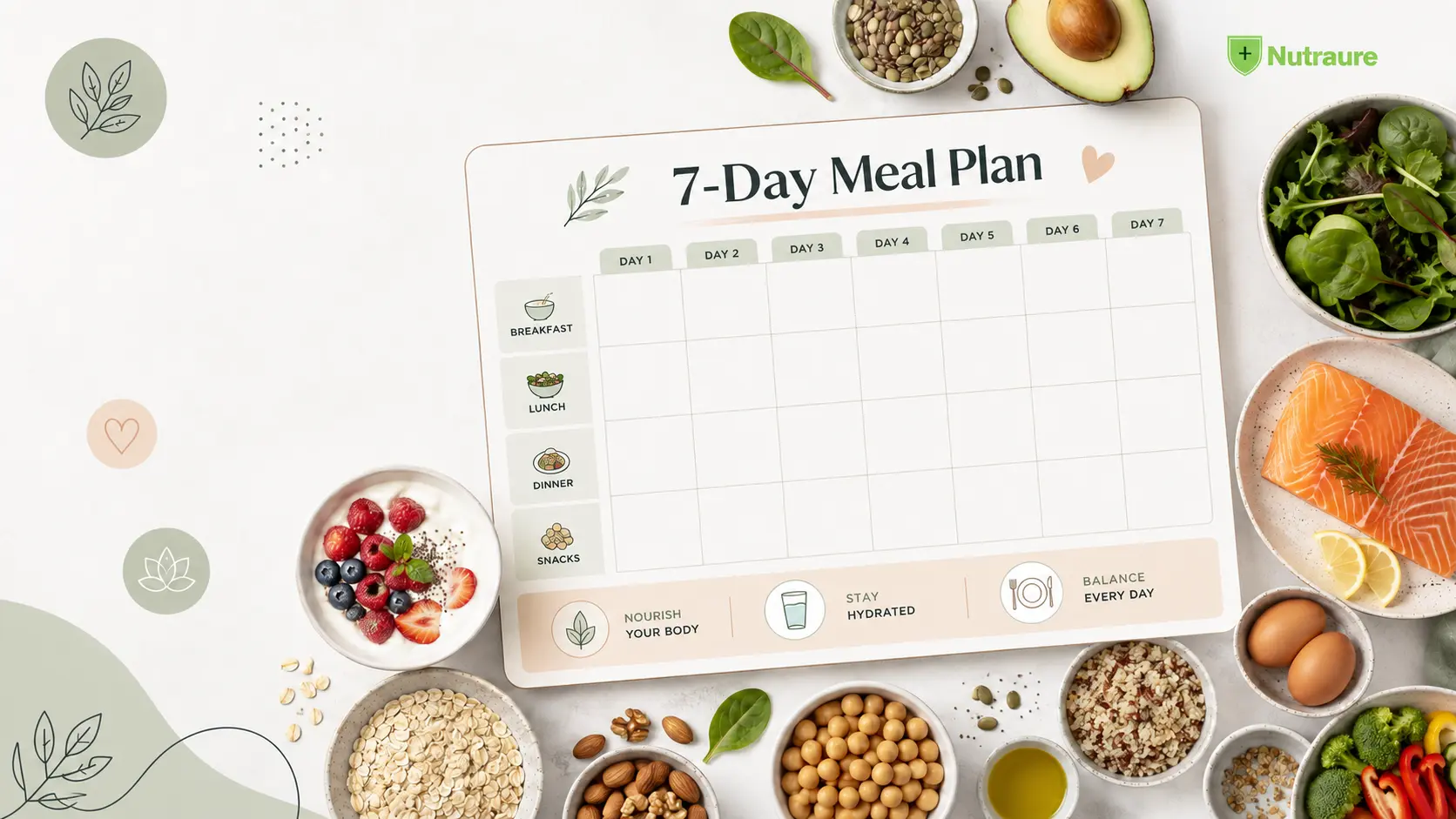
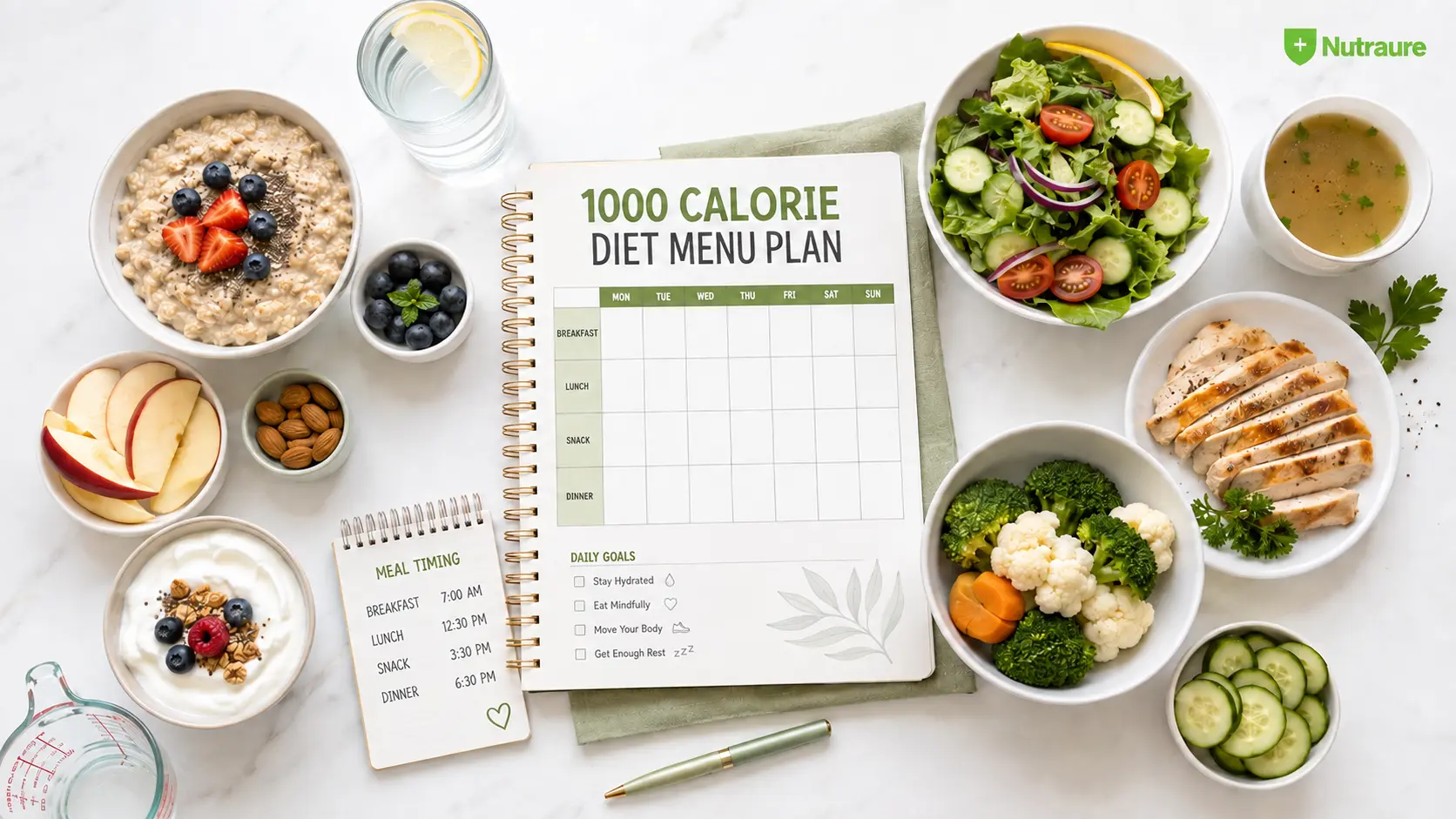
7-Day 1000 Calorie Diet Menu Plan
The calories below are estimates, not laboratory-tested values. Portions, brands, recipes, and cooking methods can change the final total.
Use food labels or a reliable database such as USDA FoodData Central to check the products and portions you actually use. FoodData Central is the USDA’s comprehensive source of food-composition information.
Avoid forcing every day to equal exactly 1,000 calories. A total of 990 or 1,020 is not meaningfully different in everyday meal planning. Accuracy matters, but perfection is neither realistic nor necessary.
Day 1: Oatmeal, chicken salad and soup
Breakfast — approximately 250 calories
- Oatmeal made with water
- Half a cup of berries
- A small portion of plain Greek yogurt
- Cinnamon
Morning snack — approximately 80 calories
- One small *****
Lunch — approximately 280 calories
- Grilled chicken breast
- Mixed lettuce
- Cucumber and tomatoes
- Lemon juice
- One measured teaspoon of olive oil
Afternoon snack — approximately 90 calories
- Plain low-fat yogurt
Dinner — approximately 300 calories
- Vegetable and lentil soup
- One slice of whole-grain toast
- Steamed vegetables
Estimated daily total: 1,000 calories
Day 2: Eggs, tuna salad and fish
Breakfast — approximately 250 calories
- Two eggs
- One slice of whole-grain toast
- Tomato slices
Morning snack — approximately 80 calories
- One ****** or another small piece of fruit
Lunch — approximately 280 calories
- Tuna packed in water
- Lettuce, cucumber and tomato
- Yogurt-and-lemon dressing
- One or two whole-grain crackers
Afternoon snack — approximately 80 calories
- Air-popped popcorn
Dinner — approximately 310 calories
- Baked white fish
- Steamed broccoli and carrots
- Small boiled potato
- Lemon and herbs
Estimated daily total: 1,000 calories
Day 3: Greek yogurt, vegetable soup and chicken
Breakfast — approximately 240 calories
- Plain Greek yogurt
- Measured serving of oats
- Mixed berries
Morning snack — approximately 80 calories
- Cucumber sticks
- One measured tablespoon of hummus
Lunch — approximately 250 calories
- Broth-based vegetable soup
- One boiled egg
- One slice of whole-grain toast
Afternoon snack — approximately 70 calories
- A cup of strawberries or mixed berries
Dinner — approximately 360 calories
- Grilled chicken breast
- Small serving of brown rice
- Steamed greens
- Salsa, herbs, or lemon for flavor
Estimated daily total: 1,000 calories
Day 4: ***** oatmeal, tofu salad and fish
Breakfast — approximately 250 calories
- Oatmeal
- Chopped *****
- Cinnamon
- Small spoonful of plain yogurt
Morning snack — approximately 75 calories
- One boiled egg
Lunch — approximately 280 calories
- Tofu
- Large mixed salad
- Cucumber, tomato and peppers
- Measured light dressing
Afternoon snack — approximately 85 calories
- Plain low-fat yogurt
Dinner — approximately 310 calories
- Baked fish
- Broccoli
- Cauliflower
- Small potato or measured serving of quinoa
Estimated daily total: approximately 1,000 calories
Day 5: Eggs, chicken bowl and lentil soup
Breakfast — approximately 240 calories
- Two eggs
- Berries or a small ******
- Tomato slices
Morning snack — approximately 90 calories
- Plain Greek yogurt
Lunch — approximately 320 calories
- Grilled chicken
- Lettuce and chopped vegetables
- Small portion of brown rice
- Salsa or yogurt dressing
Afternoon snack — approximately 70 calories
- Sliced *****
Dinner — approximately 280 calories
- Lentil and vegetable soup
- Side salad
- Lemon juice and herbs
Estimated daily total: 1,000 calories
Day 6: Peanut-butter toast, lentils and chicken
Breakfast — approximately 240 calories
- One slice of whole-grain toast
- Measured peanut butter
- Half a banana or a few berries
Morning snack — approximately 70 calories
- Mixed berries
Lunch — approximately 310 calories
- Lentils
- Chopped cucumber, tomato and spinach
- Small serving of brown rice
- Lemon and herbs
Afternoon snack — approximately 80 calories
- Air-popped popcorn
Dinner — approximately 300 calories
- Grilled chicken
- Green beans
- Carrots
- Cauliflower
- Light broth or tomato-based sauce
Estimated daily total: 1,000 calories
Day 7: Yogurt, rice-and-bean salad and fish
Breakfast — approximately 230 calories
- Plain Greek yogurt
- Fresh fruit
- Small measured serving of oats
Morning snack — approximately 75 calories
- One boiled egg
Lunch — approximately 300 calories
- Mixed salad
- Beans or chickpeas
- Small serving of brown rice
- Cucumber and tomatoes
- Lemon dressing
Afternoon snack — approximately 80 calories
- Cucumber and carrot sticks
- Measured hummus
Dinner — approximately 315 calories
- Baked fish
- Vegetable soup
- Steamed greens
Estimated daily total: 1,000 calories

How to Adjust the Menu
The example plan is not the only way to structure a low-calorie day. You can replace foods according to your culture, budget, preferences, and availability while keeping portions and overall nutrition in mind.
Vegetarian substitutions
Replace:
- Chicken with tofu, tempeh, lentils, beans, or low-fat cottage cheese
- Tuna with chickpeas or white beans
- Fish with tofu, lentil patties, or a measured bean dish
- Meat-based soup with lentil, bean, or vegetable soup
Vegetarian foods are not automatically low in calories. Nuts, cheese, coconut milk, oil, and large servings of grains can quickly increase the total.
Indian-style substitutions
Possible options include:
- Vegetable oats or savory porridge
- Moong dal chilla prepared with minimal oil
- Plain curd with fruit
- Grilled paneer in a measured portion
- Dal with vegetables
- Small phulka without added ghee
- Cucumber, tomato and carrot salad
- Clear vegetable soup
- Tofu or low-fat paneer bhurji
Oil, ghee, sugar, cream, coconut, fried tempering, and serving size will affect calories significantly. Measure them rather than relying on visual estimates.
Easy Food Swaps That Save Calories
Small substitutions can create more room for satisfying meals.
At breakfast
Replace:
- Sweetened cereal with oats and fruit
- Flavored yogurt with plain yogurt and berries
- Fried bread with whole-grain toast
- Sugary coffee with unsweetened coffee or tea
At lunch
Replace:
- Creamy salad dressing with lemon and measured yogurt dressing
- Fried chicken with grilled chicken
- A large rice serving with a smaller portion plus vegetables
- Mayonnaise-heavy tuna with yogurt, mustard, lemon, or herbs
At snack time
Replace:
- Chips with air-popped popcorn
- Sweets with fruit and plain yogurt
- Biscuits with a boiled egg
- Unlimited nuts with a measured portion
At dinner
Replace:
- Cream-based soup with broth-based vegetable soup
- Deep-fried fish with grilled or baked fish
- Large pasta servings with extra vegetables and a smaller pasta portion
- Heavy sauces with tomato, lemon, herbs, spices, or broth
The best swap is not always the food with the lowest possible calorie count. Choose the option that is satisfying enough to prevent uncontrolled snacking later.
1000 Calorie Diet Grocery List
A clear grocery list makes the plan easier to follow and reduces last-minute food decisions.
Protein
- Eggs
- Plain Greek yogurt
- Low-fat cottage cheese
- Chicken breast
- Fish
- Tuna packed in water
- Tofu
- Lentils
- Beans
- Chickpeas
Vegetables
- Leafy greens
- Cucumbers
- Tomatoes
- Broccoli
- Cauliflower
- Carrots
- Bell peppers
- Green beans
- Cabbage
- Mushrooms
Fruit
- Apples
- Oranges
- Berries
- Bananas
- Melon
- Pears
Smart carbohydrate options
- Oats
- Brown rice
- Quinoa
- Whole-grain bread
- Small potatoes
- Whole-grain wraps
Flavor and pantry basics
- Low-sodium broth
- Lemon
- Vinegar
- Mustard
- Herbs
- Spices
- Salsa without excessive added sugar
- Olive oil
- Air-popping popcorn kernels
Meal-prep supplies
- Portion containers
- Measuring spoons
- Measuring cups
- Kitchen scale
- Reusable snack containers
- Food labels or masking tape for dates

Meal-Prep Tips for a Lower-Calorie Week
Prepare protein first
Cook several portions of chicken, fish, tofu, lentils, or eggs. Store them safely in measured containers so lunch doesn’t become a bowl of vegetables with very little protein.
Chop vegetables in advance.
Wash and cut cucumbers, peppers, carrots, broccoli, and salad vegetables. When vegetables are ready to use, building a larger meal becomes easier.
Portion calorie-dense foods
Pre-measure:
- Rice
- Oats
- Nuts
- Nut butter
- Oil
- Dressing
- Hummus
- Cheese
These foods can fit into the plan, but casual pouring or scooping makes accurate tracking difficult.
Repeat a few meals
You do not need 21 completely different recipes.
Repeating two breakfasts and two lunches can:
- Save preparation time
- Reduce waste
- Make shopping easier
- Improve calorie consistency
- Reduce daily decision-making
Change herbs, spices, vegetables, or fruit to create variety.
Common 1000 Calorie Diet Mistakes
Starting without professional guidance
This is the most serious mistake. Some health services recommend that diets providing 1,000 calories or less be followed with support from a registered dietitian and, when necessary, medical monitoring.
Guessing portion sizes
A spoonful of peanut butter, bowl of rice, handful of nuts, or pour of oil may be much larger than the serving used in your calorie estimate.
Measure these foods until you can reliably recognize the intended portion.
Eating too little protein
A salad containing only vegetables may be low in calories, but it may not feel like a complete meal. Include a measured protein source.
Drinking a large part of the allowance
Sweetened coffee, smoothies, fruit drinks, alcohol, and soft drinks can leave fewer calories for food.
Saving nearly everything for dinner
Some people prefer fewer, larger meals, but others become extremely hungry when they eat very little during the day. Distribute the allowance in a way that supports your energy, concentration, and appetite.
Ignoring warning signs
Do not treat dizziness, faintness, persistent weakness, confusion, severe headaches, or an inability to complete normal activities as proof that the diet is “working.” Stop and seek medical guidance.
Treating the plan as a long-term solution
A seven-day menu does not teach you how to maintain a healthy weight indefinitely. A safer weight-management program should be personalized, evidence-based, realistic, and suitable for your health and preferences.
How Much Weight Can You Lose on 1,000 Calories a Day?
There is no responsible answer that applies to everyone.
Your results depend on:
- Your usual calorie intake
- Current weight and body composition
- Height and age
- Activity level
- Water and glycogen changes
- Medical conditions
- Medications
- How accurately portions are measured
- How long the plan is followed
A large change on the scale during the first few days may include water, not only body fat. Rapid weight-loss claims based on one fixed calorie target can therefore be misleading.
MedlinePlus notes that faster weight loss is more likely to be regained than weight lost through slower, less drastic changes. NIDDK recommends weight-loss programs with realistic goals, a calorie level tailored to the individual, ongoing support, and a plan for maintaining progress.
Rather than asking, “How much can I lose in seven days?” a more useful question is:
What calorie level can I follow safely while meeting my nutritional needs and building habits I can maintain?
Who Should Not Follow This Plan Without Medical Guidance?
Do not begin a 1000 calorie diet independently if you are:
- Under 18
- Pregnant or breastfeeding
- Living with diabetes or taking glucose-lowering medication
- Taking medication affected by food intake or body-weight changes
- Managing kidney, liver, heart, digestive, or hormonal conditions
- Recovering from an illness, injury, or surgery
- Highly active or training intensively
- Underweight
- Experiencing unexplained weight loss
- Living with or recovering from an eating disorder
NHS-affiliated guidance states that very-low-calorie plans should not be followed by children or pregnant or breastfeeding people and that anyone taking medication should inform their healthcare team before changing their diet substantially.
Frequently Asked Questions
Is a 1000 calorie diet safe for weight loss?
It may be appropriate in limited situations under professional supervision, but it is too restrictive for many adults. Safety depends on your health, body size, activity level, medications, nutritional needs, and how long you follow it.
Can I follow this 1000 calorie diet menu plan for seven days?
A seven-day period does not automatically make the plan safe. Speak with a qualified healthcare professional before starting, especially when you have a medical condition or take medication.
What can I eat on a 1000 calorie diet?
Prioritize lean protein, vegetables, whole fruit, controlled servings of whole grains or starchy foods, and small quantities of healthy fats. Choose foods that contribute useful nutrition rather than spending most of the allowance on sugary drinks, fried snacks, or desserts.
How do I stay full while eating 1,000 calories?
Include protein at meals, use vegetables to increase food volume, select fiber-rich foods, plan snacks, measure calorie-dense ingredients, and avoid using too many calories on drinks. These steps may improve satisfaction, but they cannot guarantee that such a restrictive target will feel comfortable.
What are the best snacks for a 1000 calorie meal plan?
Suitable options may include a boiled egg, plain yogurt, berries, a small *****, cucumber with measured hummus, carrots, or a small serving of air-popped popcorn.
Can I follow a high-protein 1000 calorie meal plan?
You can select protein-containing foods throughout the day, but achieving adequate protein and complete nutrition within 1,000 calories can be difficult. A dietitian can help determine an appropriate target and food combination.
Can this menu be vegetarian?
Yes. Use tofu, tempeh, beans, lentils, chickpeas, eggs, yogurt, or cottage cheese according to your dietary preferences. Continue measuring oils, nuts, cheese, and grains because vegetarian foods can still be calorie-dense.
Do I need to count every calorie?
You do not need to become obsessed with exact numbers, but portion accuracy matters on a restrictive plan. Check labels, measure high-calorie ingredients, and remember that the manufacturer’s stated serving may differ from the amount you eat.
Can I exercise while eating 1,000 calories?
Do not assume that your usual exercise routine remains appropriate. Energy demands vary widely, and strenuous activity may not be suitable with a severely restricted intake. Ask your healthcare provider what type and amount of movement is appropriate for you.
Final Thoughts
A useful 1000 calorie diet menu plan needs more than seven lists of low-calorie foods. It should help you understand portion sizes, distribute meals sensibly, prioritize protein and vegetables, prepare food in advance, and recognize when the calorie target is unsuitable.
The sample menu can serve as a planning example, but it should not replace individualized care. Your safest and most sustainable calorie target is the one that reflects your body, health, routine, preferences, and long-term goals.