When acid reflux keeps interrupting your meals, sleep, or daily routine, deciding what to eat can become surprisingly stressful. Foods that seem harmless may cause discomfort, while long lists of “forbidden” foods can make every meal feel restrictive.
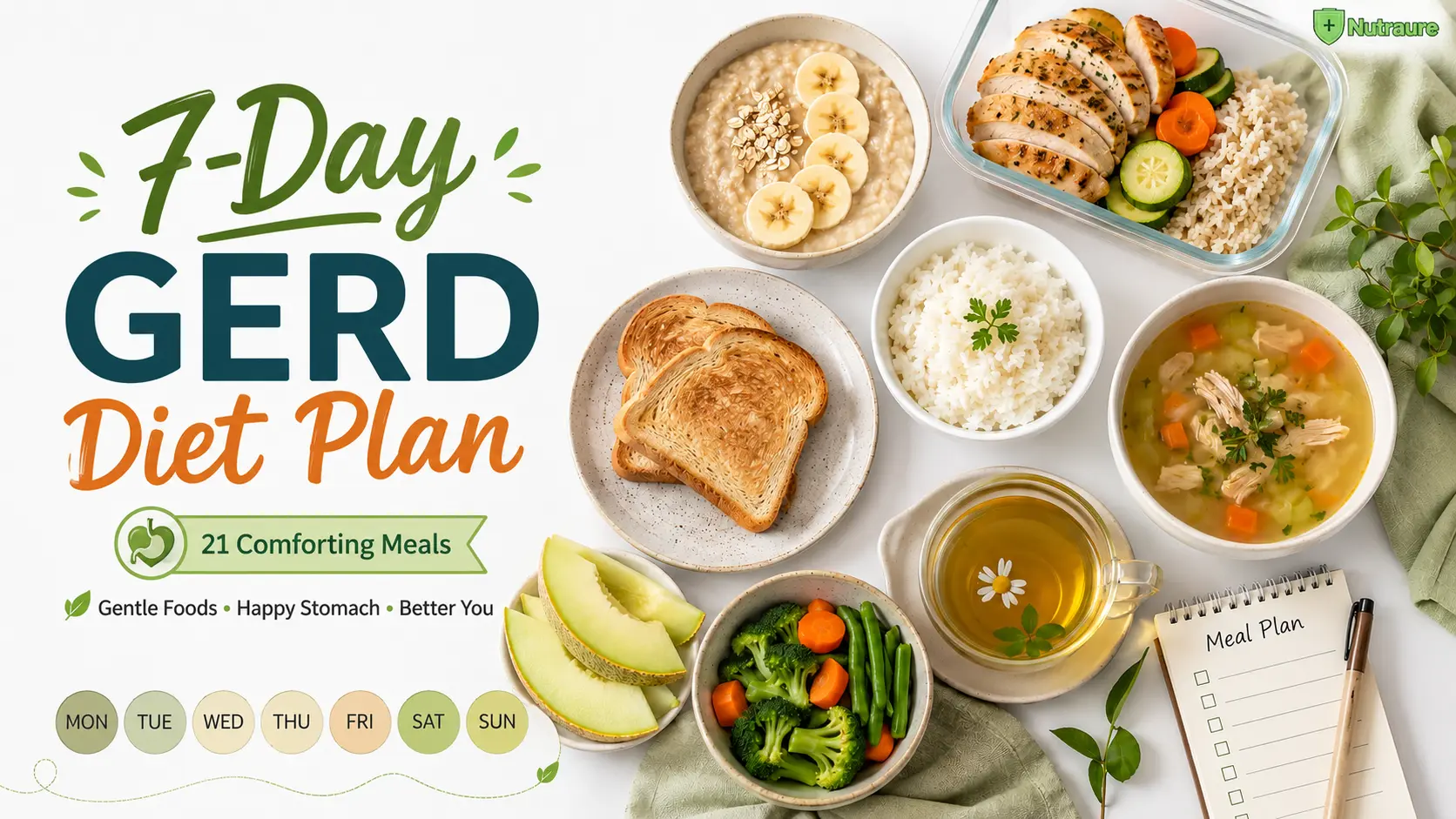
This 7-day GERD diet plan gives you a calmer place to start. It includes 21 simple breakfast, lunch, and dinner ideas made with lean proteins, whole grains, cooked vegetables, and other foods that many people find easier to tolerate.
However, there is no single GERD menu that works for everyone. Coffee may trigger symptoms for one person but not another. The same is true of dairy, bananas, onions, whole grains, and even portion size. Use this plan as a flexible framework, record how you feel after meals, and replace anything that consistently causes symptoms.
This article also covers common reflux triggers, snack ideas, a practical grocery list, meal-timing habits, and ways to customize the plan.
Medical note: This meal plan provides general educational information. It is not a diagnosis, treatment plan, or replacement for care from a doctor or registered dietitian. Do not stop or change prescribed GERD medication without speaking with your healthcare professional.
What Is GERD?
Gastroesophageal reflux happens when stomach contents move back into the esophagus—the tube that carries food from your mouth to your stomach. Occasional reflux is common. Gastroesophageal reflux disease, or GERD, is a longer-lasting condition that causes repeated, bothersome symptoms or complications over time.
Heartburn is the symptom most people recognize, but GERD can also cause regurgitation, a sour taste, coughing, hoarseness, or difficulty swallowing. Some people experience symptoms mainly after meals, while others struggle more when bending over or lying down.
Food does not affect everyone in the same way, and diet alone may not control established GERD. Still, changing meal size, timing, cooking methods, and personal trigger foods can be a useful part of an overall treatment plan.
How Can a GERD Diet Plan Help?
A GERD-friendly eating pattern is not simply a bland diet. Its purpose is to help you identify combinations of food and eating habits that are less likely to worsen your symptoms.
The most useful changes often include:
- Eating moderate portions instead of very large meals
- Reducing foods that repeatedly trigger your symptoms
- Choosing lighter cooking methods rather than deep-frying
- Allowing enough time between dinner and bedtime
- Tracking foods, portions, meal times, and symptoms
- Building meals that are nourishing enough to follow consistently
The American College of Gastroenterology suggests avoiding meals within two to three hours of bedtime and limiting personally identified trigger foods. The guideline classifies several lifestyle recommendations as conditional because the supporting evidence is not equally strong for every person. This is one reason a personalized approach is better than removing every commonly mentioned food forever.
GERD Diet Basics Before Starting the Plan
Focus on foods you personally tolerate
Many GERD-friendly meal plans are built around oatmeal, brown rice, couscous, potatoes, lean poultry, fish, and cooked vegetables. Whole grains, root vegetables, and green vegetables also supply fiber and can help make meals satisfying without relying on rich sauces or fried ingredients.
Possible starting foods include:
- Oatmeal and other mild whole-grain cereals
- Rice, quinoa, couscous, potatoes, and sweet potatoes
- Skinless chicken or turkey
- White fish and modest portions of other baked fish
- Egg whites or whole eggs if tolerated
- Carrots, squash, zucchini, green beans, spinach, and broccoli
- Bananas, melons, pears, or applesauce if tolerated
- Low-fat yogurt or dairy alternatives that do not trigger symptoms
- Mild, broth-based soups
- Water and non-mint, caffeine-free drinks
These foods are not universally “safe.” A banana, yogurt, lentil soup, or high-fiber vegetable can still cause symptoms in some people. Your own response matters more than a generic food list.
Watch for common trigger categories.
The National Institute of Diabetes and Digestive and Kidney Diseases lists several foods and drinks commonly associated with GERD symptoms, including citrus, tomatoes, alcohol, chocolate, coffee and other caffeine sources, high-fat foods, mint, and spicy foods. The organization also emphasizes that these foods cause problems for some people—not necessarily everyone. Read the full NIDDK GERD diet guidance.
Common triggers worth monitoring include:
- Deep-fried or greasy meals
- Heavy cream sauces
- Large servings of high-fat meat
- Tomato sauce and ketchup
- Oranges, lemons, grapefruit, and citrus juice
- Hot peppers and highly spicy seasonings
- Coffee, energy drinks, and caffeinated tea
- Chocolate
- Peppermint and spearmint
- Carbonated drinks
- Alcohol
- Raw onion or garlic, for people who are sensitive to them
You do not have to remove every item at once unless a healthcare professional has advised you to do so. Start with foods that clearly correspond with symptoms, then assess one change at a time.
Choose lighter cooking methods.s
Baking, steaming, poaching, boiling, air-frying with minimal oil, and gentle grilling can help you prepare flavorful meals without the heavy fat found in deep-fried food.
Season dishes with herbs such as parsley, basil, oregano, thyme, or dill. Avoid automatically adding chili, tomato, citrus juice, vinegar, raw onion, or large amounts of garlic. These ingredients may be fine for some people, but they are common enough triggers to test cautiously.
Pay attention to when and how much you eat.
Meal timing can be as important as individual ingredients. Try to finish dinner at least two to three hours before lying down. The American College of Gastroenterology’s GERD guide also recommends reviewing eating, sleeping, alcohol, smoking, and weight-related factors with a healthcare professional when relevant.
Eat slowly, chew thoroughly, and stop before you feel uncomfortably full. You may tolerate the same food differently depending on the portion, cooking method, time of day, and what you eat with it.

How to Use This 7-Day GERD Diet Plan
The plan includes three main meals and one optional snack each day. It does not prescribe a specific calorie intake because energy and nutrition needs vary by age, body size, activity level, health history, medication use, and personal goals.
Adjust portions to your needs. Add a tolerated snack when necessary, especially if the listed meals would leave you hungry. People with diabetes, kidney disease, food allergies, pregnancy-related nutrition needs, eating disorders, or other medical conditions should request an individualized plan.
Keep preparation simple during the first week. Changing several ingredients at once makes it harder to identify what helped or worsened your symptoms.
Day 1: A Simple, Gentle Start
Breakfast: Banana oatmeal
Cook rolled oats with water or a tolerated low-fat milk. Top with half a sliced banana and a small sprinkle of cinnamon if cinnamon does not bother you.
Oatmeal provides a filling base without the fried ingredients, chocolate, citrus, or heavy cream found in many breakfast choices. Bananas are often included in low-acid meal plans, but they are not comfortable for everyone. Substitute diced melon or a tolerated **** if needed.
Lunch: Chicken, brown rice, and green beans
Serve grilled or baked skinless chicken breast with brown rice and steamed green beans. Season with parsley, thyme, and a small amount of salt rather than hot sauce or citrus marinade.
Use white rice if brown rice feels too heavy or causes bloating. The goal is to create a meal you can digest comfortably, not to force a particular grain because it appears on a “healthy food” list.
Dinner: Baked white fish with potatoes and carrots
Bake cod, haddock, or another lean white fish with dill. Serve it with mashed potatoes prepared using minimal fat and a side of cooked carrots.
Avoid lemon juice, chili flakes, rich butter sauces, and tomato-based toppings during this first trial week.
Optional snack: Melon cubes or a few plain whole-grain crackers.
Why this day may feel manageable: The meals use mild seasonings, lean protein, moderate fat, and cooked vegetables. They also avoid several widely reported trigger categories.
Day 2: Familiar Meals Without Heavy Sauces
Breakfast: Toast, egg, and ****
Top whole-grain toast with scrambled egg whites or one lightly cooked whole egg. Serve with a small portion of sliced **** if tolerated.
Egg yolks contain more fat than egg whites, so some people prefer whites during a flare. Others tolerate whole eggs without difficulty—record which option you choose and how you feel afterward.
Lunch: Turkey and cucumber wrap
Fill a soft whole-grain tortilla with sliced turkey, cucumber, lettuce, and a small amount of low-fat plain yogurt as a dressing.
Check packaged turkey for strong pepper, chili, garlic, or heavy seasoning. Avoid mustard, tomato, pickles, vinegar-based dressing, and raw onion during the initial trial if these ingredients commonly bother you.
Dinner: Chicken and rice soup
Simmer chicken, rice, carrots, zucchini, and spinach in a mild, lower-sodium broth. Use thyme or parsley for flavor.
Store-bought soups often contain tomato, chili, black pepper, onion, garlic, or high levels of fat. Read the label or prepare a simple batch at home so you know what is in it.
Optional snack: Unsweetened applesauce, provided apples do not trigger symptoms.
Why this day may feel manageable: Soft textures and a broth-based dinner can be comforting without relying on rich sauces. The wrap also provides a portable lunch for busy days.
Day 3: Comforting Foods With Easy Swaps
Breakfast: Yogurt, oats, and banana
Combine low-fat plain yogurt with soft oats and sliced banana. Choose an unsweetened dairy alternative if regular yogurt causes symptoms.
Dairy is highly individual. Some people tolerate low-fat yogurt but react to full-fat dairy, while others feel better avoiding dairy completely. Do not keep eating it simply because it appears in the plan.
Lunch: Chicken-stuffed sweet potato
Bake a sweet potato and top it with shredded chicken and steamed zucchini. Add chopped parsley or dill for freshness without using citrus juice or hot sauce.
Keep added butter and cheese modest. If the sweet potato feels too sweet or filling, substitute a regular baked potato.
Dinner: Turkey meatballs with rice and spinach
Prepare turkey meatballs without tomato sauce. Bind them with oats or breadcrumbs, then bake until fully cooked. Serve with plain rice and gently cooked spinach.
Flavor the meatballs with dried herbs rather than chili, strong pepper, raw garlic, or raw onion. A small amount of these ingredients may be acceptable when you know you tolerate them.
Optional snack: A plain rice cake with a thin layer of tolerated nut or seed butter. High-fat spreads can be a trigger, so begin with a small amount.
Why this day may feel manageable: It shows that a reflux-aware plan does not require dry, flavorless meals. Herbs, soft vegetables, and varied textures can make simple ingredients more enjoyable.
Day 4: A Lighter Fish Day
Breakfast: Cream of rice with melon
Prepare cream of rice cereal with water or a tolerated milk. Add sliced cantaloupe or honeydew.
Avoid large amounts of sugar, chocolate powder, mint flavoring, or rich cream. A small amount of maple syrup may be acceptable if sweetness does not affect your symptoms.
Lunch: Mild tuna and cucumber bowl
Combine water-packed tuna with cucumber, lettuce, and a spoonful of low-fat plain yogurt. Serve with rice, quinoa, or a slice of whole-grain bread.
Traditional tuna salad may contain mayonnaise, lemon juice, vinegar, mustard, onion, or pickles. The simpler yogurt version reduces several possible triggers, although dairy should still be adjusted to your tolerance.
Dinner: Baked fish, quinoa, and vegetables
Serve baked white fish with quinoa and steamed green beans. The original plan can also be made with salmon, but salmon has more fat and may feel heavy for some people. Start with a modest portion or select a leaner fish during an active flare.
Optional snack: Unsalted pretzels or a tolerated non-citrus fruit.
Why this day may feel manageable: The meals remain protein-rich while avoiding frying and acidic dressings.
Day 5: Mild, Filling, and Flexible
Breakfast: Scrambled eggs with spinach and toast
Cook egg whites or a whole egg with spinach in a nonstick pan using minimal oil. Serve with toast.
Skip cheese, spicy seasoning, and tomato. Add parsley or basil instead.
Lunch: Mild lentil and vegetable soup
Prepare lentils with carrots, zucchini, spinach, and a gentle broth. Serve with soft bread or rice.
Lentils are nutritious, but they can cause gas or abdominal pressure in some people. Because pressure and fullness may worsen reflux, begin with a small portion. Substitute chicken and rice soup if legumes do not suit you.
Dinner: Baked chicken with couscous and squash
Bake chicken breast with thyme and serve it alongside couscous and roasted squash. Use only enough oil to prevent sticking and keep the meal comfortable.
Optional snack: A banana, melon, or crackers—choose the option that has worked best during the previous four days.
Why this day may feel manageable: It offers a plant-based lunch option while preserving an easy substitution for people who do not tolerate legumes.
Day 6: Easy Meal-Prep Choices
Breakfast: **** oatmeal
Cook oats and top them with soft **** slices. Peeling or lightly cooking the **** may make it more comfortable for some people.
If pears cause bloating, return to a fruit you tolerated earlier in the week rather than trying to force variety.
Lunch: Turkey and vegetable rice bowl
Layer rice with lean ground turkey, cooked carrots, and green beans. Season with mild dried herbs.
Avoid packaged sauces containing tomato, chili, vinegar, citrus, peppermint, or large amounts of garlic. A spoonful of plain yogurt may add moisture if dairy is suitable for you.
Dinner: White fish with potatoes and peas
Bake or poach white fish and serve it with boiled potatoes and cooked peas. Replace peas with carrots or zucchini if they cause gas.
Optional snack: Low-fat yogurt or an unsweetened dairy alternative.
Why this day may feel manageable: Both lunch and dinner can be prepared in advance, making it easier to avoid last-minute takeaway meals that may be greasy, spicy, or oversized.
Day 7: Finish With Familiar Favorites
Breakfast: Whole-grain cereal
Choose a lower-sugar cereal and serve it with low-fat milk or a tolerated unsweetened alternative. Add melon or banana if desired.
Check ingredient lists for chocolate, peppermint flavoring, citrus pieces, or very high fat content.
Lunch: Chicken noodle soup
Prepare a mild soup with chicken, noodles, carrots, zucchini, and spinach. Keep the portion moderate and avoid pairing it with a large, high-fat side dish.
Dinner: Turkey patty with rice and zucchini
Bake or grill a lean turkey patty and serve it with rice and cooked zucchini. Skip tomato ketchup, raw onion, spicy relish, and rich cheese.
Moisten the patty with grated zucchini or a small amount of tolerated yogurt rather than serving it with an acidic sauce.
Optional snack: Melon, applesauce, toast, or crackers.
Why this day may feel manageable: It closes the week with recognizable meals that can easily become part of a longer-term routine.

Easy GERD-Friendly Snack Ideas
A snack can prevent you from becoming overly hungry and eating a very large meal later. However, constant grazing or eating close to bedtime may also worsen symptoms for some people. Keep snacks small and purposeful.
Options to test include:
- Banana or melon
- **** slices
- Unsweetened applesauce
- Plain toast
- Rice cakes
- Whole-grain crackers
- Unsalted pretzels
- A small bowl of oatmeal
- Low-fat plain yogurt
- A small portion of tolerated nut butter with toast
- A hard-boiled egg or egg whites
- Leftover rice with a small amount of lean turkey
Avoid assuming that “healthy” automatically means reflux-friendly. Citrus fruit, dark chocolate, peppermint tea, tomato juice, high-fat nuts, and rich protein bars may fit some nutrition plans while still triggering reflux in certain people.
Foods to Limit or Test Carefully
A trigger list should help you investigate patterns, not make you afraid of eating. The following foods are commonly associated with symptoms and may be worth limiting during an initial trial:
Tomato-based foods
Pizza sauce, pasta sauce, ketchup, tomato soup, salsa, and tomato juice combine acidity with other possible triggers such as fat, chili, garlic, or onion.
Try instead: Herb-seasoned broth, a small amount of plain yogurt if tolerated, mashed squash, or a simple vegetable purée without tomato.
Citrus fruit and juice
******, lemon, lime, and grapefruit may irritate some people.
Try instead: Melon, banana, ****, or another non-citrus fruit you tolerate.
Fried and high-fat foods
Deep-fried meals, rich desserts, fatty meat, cream sauces, and large amounts of butter can feel heavy and may worsen symptoms.
Try instead: Baked chicken, poached fish, broth-based soup, steamed vegetables, or oven-roasted potatoes prepared with modest oil.
Coffee and caffeinated drinks
Coffee, strong tea, energy drinks, and some sodas may trigger symptoms.
Try instead: Water or a caffeine-free, non-mint drink. Remember that peppermint and spearmint teas can also be problematic.
Chocolate and mint
Both are commonly reported triggers and are frequently combined with fat and sugar in desserts.
Try instead: Oat-based snacks, fruit, applesauce, or plain yogurt with tolerated fruit.
Spicy food
Chili hot sauce, cayenne, and heavily spiced curries may worsen burning or discomfort.
Try instead: Parsley, dill, basil, thyme, oregano, or other mild herbs.
The Johns Hopkins GERD food guide offers additional examples of fiber-rich foods and commonly reported triggers.
Seven Habits That Can Make the Plan More Useful
1. Keep portions comfortable
A meal can contain only “GERD-friendly” ingredients and still cause discomfort when the portion is too large. Serve a moderate amount, eat slowly, and wait before deciding whether you need more.
2. Avoid lying down immediately after eating
Stay upright after meals. Try to finish your evening meal two to three hours before bedtime.
3. Separate ingredients when testing tolerance
A heavily mixed dish makes it hard to identify a trigger. During the first week, use simple plates with a protein, grain or potato, and one or two vegetables.
4. Track more than the food
Record the portion, meal time, cooking method, drinks, stress level, activity, and when symptoms appeared. A food may seem responsible when the real issue was a large portion eaten shortly before bed.
5. Do not remove entire food groups without a reason
Overly restrictive plans can become nutritionally inadequate and difficult to maintain. If many foods appear to cause symptoms, consult a registered dietitian rather than continuing to reduce your diet alone.
6. Review beverages carefully
Coffee, alcohol, citrus juice, carbonated drinks, energy drinks, chocolate drinks, and mint teas may be overlooked because they are not part of the meal itself.
7. Keep following prescribed treatment
Dietary changes may support symptom management, but they do not replace medical evaluation or prescribed medication. Speak with your clinician if treatment is not controlling your symptoms.

Simple GERD Diet Grocery List
Use this list as a starting point and remove foods you already know cause symptoms.
Proteins
- Skinless chicken breast
- Lean turkey
- White fish
- Salmon in modest portions, if tolerated
- Eggs or egg whites
- Tuna packed in water
- Lentils, if tolerated
- Plain low-fat yogurt
- Unsweetened dairy alternatives
Grains and starches
- Rolled oats
- Brown or white rice
- Quinoa
- Couscous
- Potatoes
- Sweet potatoes
- Whole-grain bread
- Soft tortillas
- Lower-sugar cereal
- Plain crackers or rice cakes
Fruits
- Bananas
- Cantaloupe
- Honeydew melon
- Pears
- Unsweetened applesauce
- Other non-citrus fruit you personally tolerate
Vegetables
- Carrots
- Green beans
- Zucchini
- Spinach
- Squash
- Broccoli
- Peas
- Cucumber
- Lettuce
Pantry and flavoring basics
- Lower-sodium broth
- Parsley
- Dill
- Basil
- Thyme
- Oregano
- Small amounts of olive or another cooking oil
- Cinnamon, if tolerated
- Non-mint, caffeine-free drinks
Read packaged-food labels carefully. “Plain” soups, deli meats, wraps, dressings, and seasoning blends may still contain tomato, chili, citrus, vinegar, mint, onion, or garlic.
Common GERD Meal-Plan Mistakes
Treating every online “safe food” as safe for you
No food list can predict your individual response. Bananas, yogurt, whole grains, lentils, and broccoli may work well for one reader and cause discomfort for another.
Focusing only on acidity
Acidic food is only part of the picture. Portion size, fat content, meal timing, carbonation, alcohol, caffeine, and lying down after eating may also matter.
Making the diet unnecessarily bland
Removing hot sauce does not mean removing all flavor. Mild herbs, roasted vegetables, broth, and tolerated yogurt-based toppings can create enjoyable meals without relying on common triggers.
Skipping meals and overeating later
Going too long without eating can leave you hungry enough to eat quickly or consume an oversized dinner. A planned snack may help you keep the next meal moderate.
Changing too many things at once
When you remove ten foods and change meal times simultaneously, you cannot tell which adjustment mattered. Make controlled changes and track the outcome.
Assuming seven days will cure GERD.
This 7-day GERD diet plan is a starting framework, not a cure. GERD may require medical treatment, medication, testing, or longer-term lifestyle changes.
How to Customize the Plan
For vegetarian readers
Replace poultry and fish with tolerated plant proteins such as tofu, lentils, beans, or low-fat dairy. Test legumes gradually because gas and fullness may worsen discomfort in some people.
For dairy-free readers
Use an unsweetened, lower-fat dairy alternative. Check for chocolate, peppermint, coffee, citrus additives, or large amounts of added fat.
For gluten-free readers
Choose certified gluten-free oats, rice, quinoa, potatoes, gluten-free bread, and tortillas. GERD does not automatically require a gluten-free diet, so make this change only when medically necessary or personally helpful.
For Indian-style meals
Use plain rice, soft roti if tolerated, mild dal in a small portion, lightly seasoned vegetables, grilled paneer if dairy and fat are tolerated, or simple chicken and fish dishes. Reduce chili, tomato-heavy gravies, pickles, deep-fried snacks, excess oil, and very late dinners when these trigger symptoms.
Flavor meals with coriander, cumin in a tolerated amount, turmeric, fennel, or fresh herbs rather than heavy chili and acidic chutneys. Spices are individual, so test them separately.
For busy schedules
Batch-cook rice, chicken, soup, potatoes, and steamed vegetables. Divide them into moderate portions rather than one large container. Keep simple snacks available so you are less likely to rely on spicy takeaway meals or eat a very large dinner.
When to Speak With a Healthcare Professional
Arrange a medical appointment when GERD symptoms are severe, frequent, worsening, or not improving with your current treatment. Also speak with a clinician if you regularly depend on nonprescription heartburn medicine.
Seek prompt medical care for difficulty or pain with swallowing, unexplained weight loss, repeated vomiting, signs of gastrointestinal bleeding, or food that feels stuck.
Chest pain should not automatically be assumed to be heartburn. Seek emergency help for persistent or unexplained chest pain, especially when it occurs with shortness of breath or pain in the jaw or arm.
Final Thoughts
A useful GERD meal plan should make eating feel more manageable—not create another source of anxiety.
Begin with simple meals, moderate portions, and cooking methods that avoid heavy grease and intense spice. Leave enough time between dinner and bed, and track what actually happens rather than relying only on generic lists.
At the end of seven days, review your notes. Which meals felt comfortable? Did symptoms appear after a particular ingredient, a large portion, a caffeinated drink, or a late dinner? Keep the combinations that worked and replace those that did not.
The best long-term acid reflux diet plan is not the strictest one. It is the most varied, nourishing plan you can follow comfortably while receiving appropriate medical care.
Frequently Asked Questions
What can I eat for breakfast on a GERD diet?
Possible options include oatmeal, toast, eggs, mild cereal, melon, banana, ****, or low-fat yogurt. Your best breakfast depends on your personal triggers. Keep portions moderate and avoid automatically adding coffee, chocolate, citrus juice, peppermint tea, or high-fat breakfast meat.
What foods should I avoid with GERD?
Commonly reported triggers include tomatoes, citrus, spicy food, fried or high-fat food, chocolate, coffee, caffeine, mint, alcohol, and carbonated drinks. You may not react to all of them. Focus on foods that repeatedly correspond with your symptoms.
Can a 7-day GERD diet plan stop heartburn?
A seven-day plan may help you identify patterns and practice more comfortable eating habits, but it cannot guarantee symptom relief or cure GERD. Persistent symptoms require professional evaluation.
Is oatmeal good for acid reflux?
Oatmeal is commonly included in GERD meal plans because it is a whole grain, easy to prepare, and can be served without heavy fat or acidic toppings. However, portion size and individual tolerance still matter.
Are bananas good for GERD?
Bananas are non-citrus fruits and are often well tolerated, but they are not universally symptom-free. Replace them with melon, ****, applesauce, or another tolerated fruit if they cause bloating or reflux.
Can I drink coffee while following this meal plan?
Coffee and caffeine are common triggers. You may need to reduce the amount, change the timing, or stop temporarily to see whether symptoms improve. Decaffeinated coffee may still bother some people.
What are good snacks for acid reflux?
Small portions of melon, toast, rice cakes, crackers, oatmeal, applesauce, yogurt, or egg may be suitable. Avoid large snacks near bedtime and track your response to each food.
How long should I follow a GERD-friendly diet?
Use the seven days as an observation phase. Continue the meals and habits that work for you, but do not remain on a highly restrictive diet without professional guidance. A doctor or registered dietitian can help you build a nutritionally complete long-term plan.
Should I drink herbal tea for GERD?
Some caffeine-free herbal drinks may be comfortable, but peppermint and spearmint are common reflux triggers. Herbal products can also interact with medications, so check the ingredients and ask a healthcare professional when necessary.
Can I season food when I have GERD?
Yes. Try mild herbs such as basil, parsley, dill, thyme, or oregano. Introduce stronger seasonings individually so you can identify whether chili, pepper, garlic, onion, or acidic sauces affect you.