

Planning meals can feel surprisingly difficult when you have been told to limit potassium. Foods that are usually considered healthy—such as bananas, potatoes, tomatoes, avocados, dairy products, beans, and dried fruit—may suddenly require closer attention.
This 7 day meal plan for low potassium diet takes away some of that daily guesswork. It gives you a full week of familiar breakfasts, lunches, dinners, and snacks, along with measured portions, simple substitutions, a grocery list, and a realistic meal-prep routine.
The plan is meant to be flexible. Your ideal potassium intake depends on your blood test results, kidney function, medications, treatment plan, and other dietary needs. Not everyone with kidney disease needs to restrict potassium, and some people may actually need more potassium. Review any major diet change with your doctor or renal dietitian. The NIDDK’s kidney nutrition guidance also recommends working with a qualified professional to determine the right amount for you.
Quick Answer: What Does a Low Potassium Week Look Like?
A practical low-potassium meal usually combines four things:
- A measured portion of protein
- A suitable starch, such as rice, pasta, bread, noodles, or couscous
- A measured serving of a lower-potassium vegetable
- A lower-potassium fruit or snack
The word measured matters. Eating two or three servings can substantially change the potassium content of a meal, even when each food is considered a lower-potassium option.
Three habits make meal planning much easier:
- Follow the daily potassium target given by your healthcare team.
- Measure portions instead of estimating them.
- Check packaged-food labels for added potassium, especially potassium chloride.
The American Kidney Fund’s Kidney Kitchen offers 1,800–2,200 milligrams per day as one general meal-planning example, divided into roughly 600–700 milligrams per meal and 100–200 milligrams per snack. That range is not suitable for everyone, so use it only if it agrees with your personal medical advice.
What Is a Low-Potassium Diet?
A low-potassium diet, sometimes called a potassium-restricted diet, limits the amount of potassium supplied by foods, drinks, supplements, and certain salt substitutes.
Potassium is an essential mineral. Your nerves, muscles, and heart need it to function normally. Healthy kidneys help maintain the right amount by removing excess potassium from the blood.
When kidney function declines, the body may have more difficulty removing potassium. Certain medications, uncontrolled diabetes, heart conditions, supplements, and other health problems can also affect potassium levels. Too much potassium in the blood is called hyperkalemia.
However, kidney disease does not automatically mean that you need a low-potassium diet. Potassium levels may be high, normal, or low depending on your condition and treatment. Your healthcare team should use blood tests and your complete medical history to determine whether a restriction is necessary.
What counts as a lower-potassium food?
The National Kidney Foundation commonly classifies foods containing less than 200 milligrams of potassium per serving as lower-potassium choices. Foods with 200 milligrams or more per serving are generally placed in the higher-potassium category.
This classification is only a starting point. A large serving of a lower-potassium food can supply more potassium than a small serving of a higher-potassium food. The National Kidney Foundation’s potassium guide emphasizes that serving size is one of the most important parts of managing dietary potassium.
Who should seek individual guidance?
Do not begin a potassium-restricted diet without professional advice if you:
- Have not been told that your potassium level is high
- Have a history of low blood potassium
- Are pregnant or breastfeeding
- Are planning meals for a child
- Receive dialysis
- Have diabetes or another condition that affects food choices
- Must also restrict sodium, phosphorus, protein, carbohydrates, or fluids
A diet that is too restrictive can reduce variety and make it harder to get enough calories, fiber, vitamins, and other nutrients.
Build Your Low-Potassium Plate Before Day 1
The easiest way to plan meals is to stop thinking in terms of long “allowed” and “forbidden” food lists. Instead, build each plate from measured components.
Start with protein
Choose the amount recommended by your renal dietitian. Depending on the meal, this might be eggs, fresh chicken, turkey, fish, lean beef, tofu, or another approved protein.
Protein foods still contain potassium. Chicken, beef, fish, dairy, beans, nuts, and plant-based meat products should not be treated as unlimited foods simply because they are not fruits or vegetables.
Add one suitable starch.
Common lower-potassium starch choices include:
- White rice
- Pasta or noodles
- Couscous
- White or sourdough bread
- Pita bread
- Tortillas
- Cream of wheat
- Cream of rice
- Unsalted crackers
- Rice cakes
Whole grains provide valuable nutrients and fiber, but some whole-grain products contain more potassium or phosphorus than refined alternatives. Ask your dietitian which balance is appropriate for you rather than avoiding all whole grains automatically.
Add a measured vegetable.
Cabbage, cucumber, cauliflower, green beans, onions, peppers, lettuce, yellow squash, and zucchini are commonly used in lower-potassium meal plans.
A typical serving is often around ½ cup, although the appropriate portion depends on the vegetable and your personal target.
Finish with flavor
A low-potassium meal does not have to taste bland. Build flavor with:
- Garlic
- Onion
- Black pepper
- Paprika
- Fresh or dried herbs
- Vinegar
- Olive oil
- Lemon or lime juice when appropriate
- Salt-free seasoning blends that do not contain potassium chloride
Do not assume every product advertised as “salt free,” “lite salt,” or “low sodium” is suitable. Some replace sodium with potassium chloride.

Low-Potassium Foods to Choose, Limit, and Swap
Almost every food contains some potassium. The goal is not to eliminate it. The goal is to manage the total amount through appropriate food selection, preparation, and serving sizes.
| Food group: Common lower-potassium choices; foods that often need closer portion control. | ||
|---|---|---|
| Fruit | Apples, applesauce, berries, grapes, peaches, pears, pineapple and plums | Bananas, avocados, dried fruit, oranges, prunes, kiwi and large melon portions |
| Vegetables | Cabbage, cauliflower, cucumber, green beans, lettuce, onions, peppers, radishes, yellow squash and zucchini | Potatoes, sweet potatoes, tomatoes, winter squash, cooked spinach, lentils and many beans |
| Starches | Rice, pasta, noodles, bread, couscous and some crackers | Bran products, granola and large portions of certain whole grains |
| Protein | Measured portions of eggs, fresh chicken, turkey, fish or approved plant proteins | Oversized meat portions, processed meats, large bean portions and some plant-based substitutes |
| Flavorings | Herbs, garlic, pepper, vinegar and olive oil | Salt substitutes, lite salt, packaged sauces and seasoning blends containing potassium additives |
These examples are consistent with common lower- and higher-potassium categories published by the National Kidney Foundation, but the correct portion remains essential.
Why “healthy” does not always mean low in potassium
Bananas, potatoes, tomatoes, avocados, spinach, lentils, nuts, yogurt, and dried fruit are nutritious foods. They are not “bad” foods.
They may provide more potassium in a standard serving than is suitable for your current plan. Depending on your target, your dietitian may recommend a smaller serving, a preparation method that reduces potassium, or a lower-potassium alternative.
Smart swaps that still feel satisfying
Try these straightforward substitutions:
- Replace a banana with an *****, berries, grapes, or pineapple.
- Replace a large baked potato with rice, noodles, pasta, or couscous.
- Replace tomato-heavy pasta sauce with garlic, herbs, olive oil, and roasted peppers.
- Replace a large avocado serving with a crunchy cucumber-and-cabbage salad.
- Replace ****** juice with *****, grape, or cranberry juice if juice is permitted.
- Replace potassium-based salt substitutes with herbs, garlic, vinegar, or an approved seasoning blend.
- Replace a large serving of beans with a smaller portion of a dietitian-approved protein.
You do not have to make every substitution at once. Begin with the food you eat most often, then adjust one meal at a time.

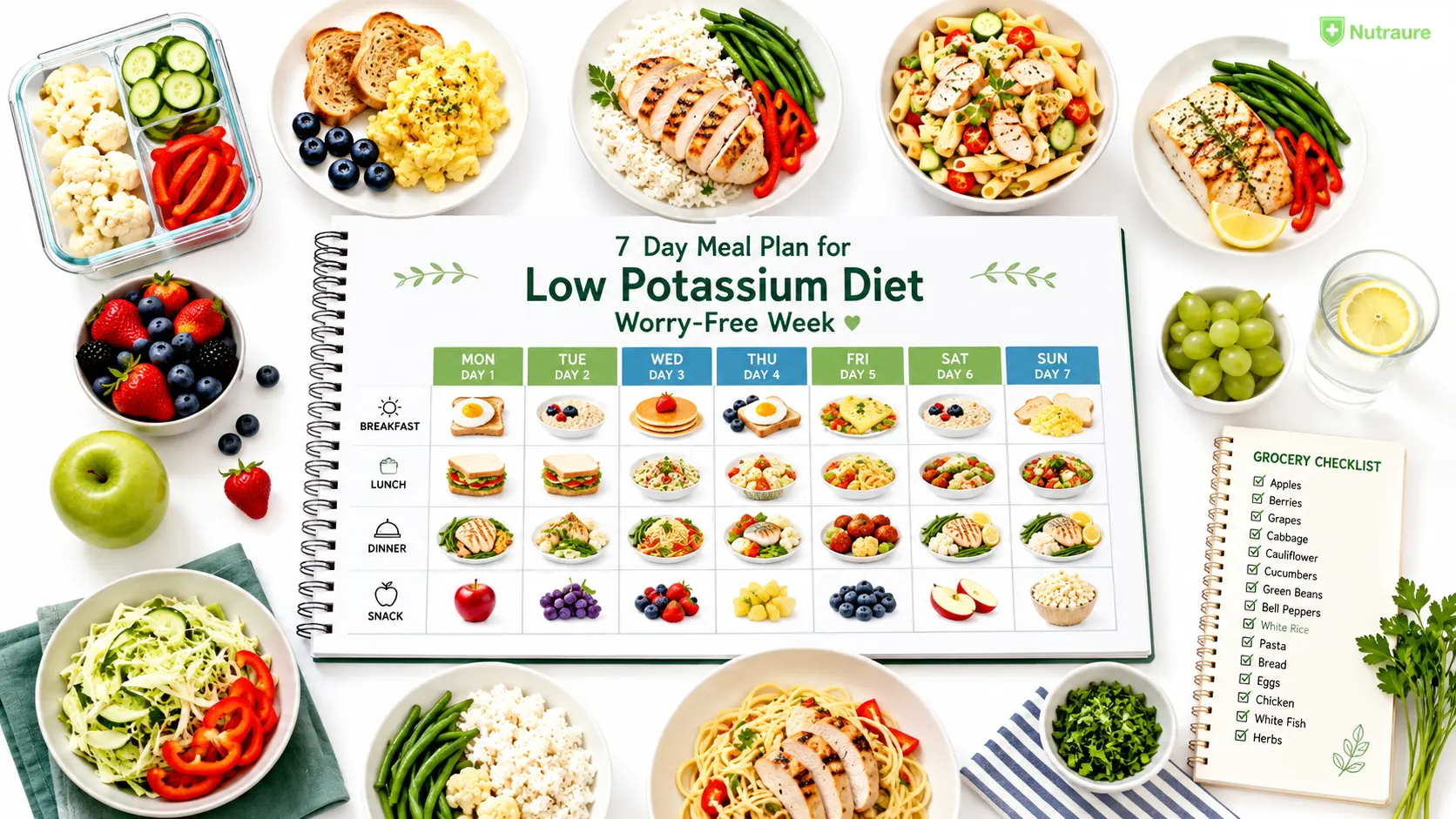
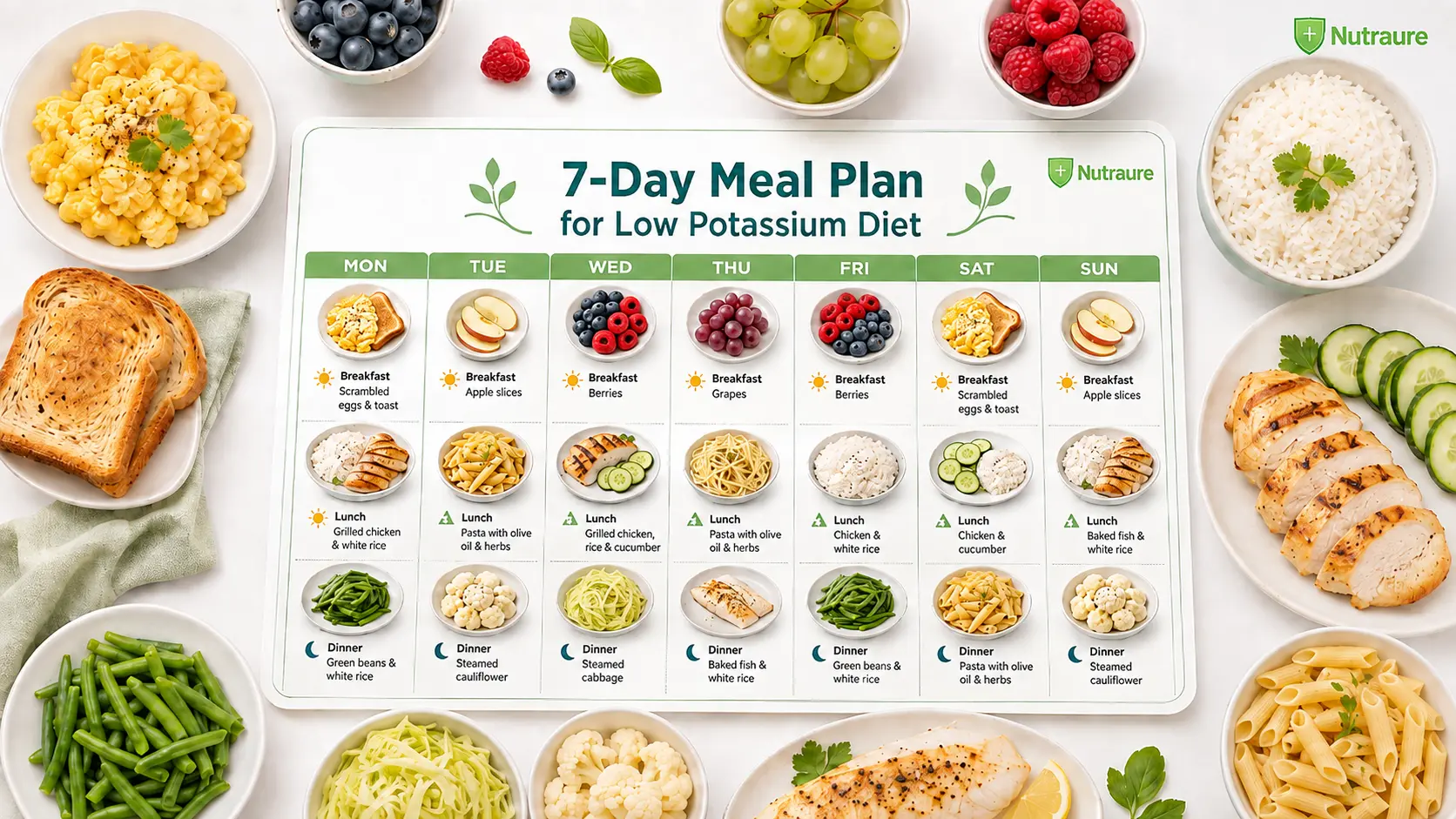
7 Day Meal Plan for Low Potassium Diet
This menu uses familiar ingredients and repeats several foods throughout the week to reduce cost, waste, and preparation time.
The portions are examples for one adult, not medical prescriptions. Exact potassium levels have not been listed because values change according to ingredient variety, brand, cooking method, and serving weight. Calculate the finished recipes with a validated nutrient database and have the numbers checked by a renal dietitian before publishing meal-specific potassium totals.
Fresh protein is generally preferable to heavily processed meat because packaged meats may contain considerable sodium or potassium additives.
Day 1: A Simple, Familiar Start
Breakfast
Scramble one egg and one egg white with ¼ cup chopped bell pepper. Serve with one slice of white or sourdough toast and ½ cup blueberries.
Use black pepper, parsley, or paprika for extra flavor rather than a salt substitute.
Lunch
Serve 2½ ounces of grilled chicken with one cup of cooked white rice and ½ cup cucumber-and-cabbage slaw.
Dress the slaw with olive oil, vinegar, black pepper, and a small amount of garlic.
Dinner
Pair three ounces of baked cod, tilapia, or another approved white fish with one cup of cooked pasta and ½ cup green beans.
Season the fish with garlic, parsley, pepper, and lemon if citrus fits your plan.
Snack
Choose one medium ***** or two cups of unsalted air-popped popcorn.
Prep note: Cook additional rice and chicken for meals later in the week.
Easy swap: Replace the fish with the portion of chicken or turkey recommended by your dietitian.
Day 2: Fresh and Flavorful
Breakfast
Prepare ¾ cup cooked cream of wheat with cinnamon. Top it with ½ cup sliced strawberries.
Check flavored cereal packets carefully because they may contain more sodium, sugar, or additives than the plain version.
Lunch
Make a sandwich with two small slices of bread, two ounces of home-cooked turkey, lettuce, and sliced cucumber. Add pepper, herbs, or a small amount of oil-and-vinegar dressing.
Serve with ½ cup grapes.
Whenever possible, use freshly cooked turkey rather than standard deli meat. If you use a packaged product, compare the sodium, serving size, potassium amount, and ingredient list.
Dinner
Serve 2½ ounces of garlic-seasoned chicken with one cup of cooked couscous and ½ cup roasted cauliflower.
Roast the cauliflower with olive oil, garlic, and smoked paprika.
Snack
Choose ½ cup unsweetened applesauce or one plain rice cake.
Prep note: Prepare extra couscous and cauliflower for another lunch or dinner.
Easy swap: Use rice, pasta, pita bread, or a tortilla instead of couscous.
Day 3: Comfort Food Without the Guesswork
Breakfast
Serve two small, lower-sodium pancakes with ½ cup strawberries or blueberries. Add a modest amount of syrup if it fits your carbohydrate plan.
Avoid oversized restaurant-style pancakes, which make both portion and sodium control more difficult.
Lunch
Make egg salad with one chopped hard-boiled egg, one tablespoon of mayonnaise, pepper, and fresh herbs. Serve it on two small slices of bread with cucumber sticks.
For a larger meal, add lettuce or a small cabbage salad rather than doubling the egg salad automatically.
Dinner
Cook 2½ ounces of lean beef or chicken strips with ¼ cup sliced onions and ¼ cup bell peppers. Serve with one cup of cooked white rice.
Flavor the mixture with garlic, pepper, smoked paprika, and a small amount of vinegar instead of bottled stir-fry sauce.
Snack
Choose two cups of unsalted popcorn or ½ cup applesauce.
Prep note: Cook twice the amount of peppers and onions and save half for Day 7.
Easy swap: Replace beef with chicken, egg, tofu, or another protein approved for your diet.
Day 4: A Make-Ahead Workday Menu
Breakfast
Prepare one slice of French toast using one egg or an appropriate amount of egg mixture. Serve with ½ cup blueberries.
Add cinnamon and vanilla for flavor.
Lunch
Combine one cup of cooked pasta with two ounces of chopped chicken, shredded cabbage, cucumber, parsley, olive oil, and vinegar.
Keep the dressing in a separate container until lunchtime so the salad stays fresh.
Dinner
Serve three ounces of baked tilapia with one cup of cooked rice and ½ cup sautéed zucchini.
Cook the zucchini with onion, garlic, and black pepper.
Snack
Choose ½ cup pineapple. If using canned pineapple, drain the liquid before eating it.
Prep note: Assemble the pasta salad the night before and refrigerate it promptly.
Easy swap: Use leftover chicken instead of fish at dinner.
Day 5: Kidney-Friendly Friday Favorites
Breakfast
Make a breakfast sandwich with one egg, ¼ cup sautéed bell pepper, and a small bread roll or two small slices of toast.
Add black pepper, parsley, or onion for flavor.
Lunch
Mix two ounces of drained, no-salt-added tuna with one tablespoon mayonnaise, chopped cucumber, and pepper.
Serve it with lettuce, six small unsalted crackers, and ½ cup grapes. Check the tuna label because sodium and additives vary between brands.
Dinner
Serve approximately three ounces of homemade turkey meatballs with one cup of pasta and ½ cup roasted cauliflower.
Instead of tomato sauce, toss the pasta with olive oil, garlic, parsley, black pepper, and roasted bell pepper.
Snack
Choose one rice cake with a few ***** slices or a measured serving of unsalted crackers.
Prep note: Make extra turkey meatballs for Day 6. Refrigerate or freeze them promptly according to safe food-storage guidance.
Easy swap: Replace tuna with leftover chicken salad.
Day 6: Easy Weekend Meals
Breakfast
Prepare ¾ cup cooked cream of rice with cinnamon and ½ cup canned peaches. Drain the peaches before serving.
Use fruit packed in juice rather than heavy syrup when that choice fits your carbohydrate plan.
Lunch
Fill one small tortilla with two or three turkey meatballs, shredded cabbage, cucumber, and a small amount of homemade herb dressing.
Serve any remaining slaw on the side.
Dinner
Pair 2½ ounces of grilled chicken with one cup of couscous and a measured serving of asparagus, such as six small spears.
Season the chicken and vegetables with garlic, pepper, parsley, and olive oil.
Snack
Choose ½ cup strawberries or blueberries.
Prep note: Use the ingredients already prepared earlier in the week so the weekend meal doesn’t require a full cooking session.
Easy swap: Replace couscous with rice, pasta, noodles, or bread.
Day 7: A Relaxed Finish
Breakfast
Make an omelet using one egg and one egg white with ¼ cup of onions and peppers. Serve it with one slice of toast.
Use the cooked pepper-and-onion mixture left from Day 3.
Lunch
Build a bowl with 2½ ounces of chicken, one cup of rice, shredded cabbage, cucumber, and a small amount of oil-and-vinegar dressing.
Keep each ingredient in a separate section so it is easy to see and measure the portions.
Dinner
Serve three ounces of herb-baked white fish with one cup of noodles and ½ cup green beans.
Season with garlic, parsley, pepper, olive oil, and lemon if permitted.
Snack
Choose one small *****, ½ cup grapes, or two cups of unsalted popcorn.
Prep note: Write down which meals were easiest, most satisfying, and most affordable. Repeat those meals next week rather than starting from scratch.

Easy swap: Turn the lunch bowl into a sandwich using the same measured chicken, cabbage, and cucumber.
Low Potassium Diet Grocery List for One Week
The quantities below are approximate for one adult following the sample menu. Adjust them for your appetite, prescribed servings, household size, and any substitutions.
Fruits
- 3–4 apples
- 2 cups blueberries
- 2 cups strawberries
- 2 cups grapes
- 1 small container of pineapple
- 1 can of peaches packed in juice
- 1 jar or multipack of unsweetened applesauce
Vegetables
- 1 small cabbage
- 3 cucumbers
- 1 head of cauliflower
- 3 cups green beans
- 4 bell peppers
- 2 onions
- 1 head or bag of lettuce
- 2 zucchini
- 1 small bunch of asparagus
- Garlic
- Fresh parsley or other approved herbs
- Lemons or limes if permitted
Protein
- 10–12 eggs
- 1½–2 pounds fresh chicken
- 1 pound fresh turkey or homemade turkey meatballs
- Approximately 1 pound white fish
- 1 can no-salt-added tuna
- 6–8 ounces lean beef, if using it on Day 3
Grains and pantry items
- White rice
- Pasta or noodles
- Couscous
- Bread
- Small rolls or pita bread
- Tortillas
- Cream of wheat
- Cream of rice
- Plain rice cakes
- Unsalted crackers
- Plain popcorn kernels
- Olive oil
- Vinegar
- Mayonnaise
- Cinnamon
- Black pepper
- Paprika
- Garlic powder without potassium-based additives
- Dried herbs
What to check on every packaged-food label
Start with the serving size. Every calorie and nutrient number on the Nutrition Facts panel is based on that amount. If you eat two servings, you receive approximately twice the listed nutrients.
Then check:
- Potassium per serving
- Sodium per serving
- Number of servings in the package
- Potassium chloride
- Potassium phosphate
- Other ingredients beginning with “potassium”
- Phosphate additives if you also limit phosphorus
A product marked “low sodium” may use potassium chloride to replace some sodium. NIDDK advises people who need to limit potassium to check ingredient lists and avoid or limit products containing potassium chloride unless their healthcare team says otherwise.
The 60-Minute Meal-Prep Plan
You do not need to prepare seven completely different sets of ingredients. Repeating a few basics makes the plan faster, more affordable, and easier to follow.
First 15 minutes: Wash, chop, and measure
Wash the produce and prepare:
- Shredded cabbage
- Sliced cucumber
- Chopped peppers
- Chopped onions
- Cauliflower florets
- Green beans
- Zucchini
Divide the fruits into measured portions so that it is easy to take one serving rather than eating directly from a large bag or container.
Next 20 minutes: Cook the starches and vegetables
Cook a batch of rice and a batch of pasta or couscous.
Roast the cauliflower and peppers. Prepare the cucumber-and-cabbage slaw, but keep the dressing separate until you are ready to eat it.
Next 20 minutes: Prepare the proteins
Grill or bake several portions of chicken. Prepare turkey meatballs and hard-boil a few eggs.
Keep raw and cooked foods separate, refrigerate cooked food promptly, and follow current food-safety recommendations for storage and reheating.
Final five minutes: Assemble the snacks
Measure applesauce, berries, grapes, popcorn, rice cakes, or crackers into individual servings.
Label the containers by food or day. This small step makes the rest of the week feel much more organized.
Five Rules That Keep Potassium From Creeping Up
1. Measure foods instead of guessing
A food may be considered lower in potassium at one serving but not at two or three servings. Use cups, spoons, or a kitchen scale until you can recognize the recommended amount.
2. Drain canned fruit and vegetables
Drain the juice, syrup, or packing liquid instead of adding it to your meal. NIDDK specifically recommends discarding canned fruit and vegetable liquid when managing potassium.
3. Use boiling or leaching carefully
Boiling, soaking, or leaching can lower the potassium content of some vegetables, but these methods do not remove all potassium.
For certain root vegetables, a clinician may recommend peeling, cutting them into smaller pieces, boiling them in plenty of water, draining the water, and cooking them again in fresh water. Portion control is still necessary after preparation.
4. Do not use salt substitutes automatically
Many salt substitutes and “lite salt” products contain potassium chloride. Check the ingredient list before using them.
Instead, try garlic, pepper, paprika, onion, vinegar, fresh herbs, or an approved sodium-free seasoning blend.
5. Plan before eating away from home
Restaurant meals are difficult to calculate because portions are large and ingredient lists may not be available.
Ask for:
- Sauces and dressings on the side
- Plain rice, pasta, noodles, or bread
- A measured vegetable side
- Freshly prepared meat instead of highly processed meat
- Food prepared without salt substitute
- A takeaway box so you can divide a large serving before eating
How to Customize the Plan Safely
Vegetarian low-potassium meal plan
A vegetarian version may use eggs, tofu, seitan, or carefully measured portions of other plant proteins.
Do not assume that every vegetarian protein is naturally low in potassium. Beans, lentils, nuts, seeds, nut butters, dairy products, soy foods, and plant-based meat substitutes vary widely in potassium, sodium, phosphorus, and protein.
A renal dietitian can help you build enough variety without making the diet unnecessarily restrictive.
Low-potassium and low-sodium plan
Use fresh meat, poultry, fish, vegetables, and homemade dressings more often than processed alternatives.
Compare breads, cereals, crackers, canned products, sauces, and seasonings. A food can be lower in potassium but still high in sodium.
Avoid replacing table salt with a potassium-based salt substitute unless your healthcare team has approved it.
CKD and diabetes plan
Fruit, cereal, bread, rice, pasta, syrup, juice, and snacks also affect carbohydrate intake.
Someone managing both kidney disease and diabetes may need to balance potassium with:
- Carbohydrates
- Blood glucose
- Sodium
- Phosphorus
- Protein
- Calories
- Fluid intake
The American Kidney Fund notes that a kidney-friendly eating plan should be adjusted for individual conditions, treatment, food preferences, allergies, and cultural needs.
Dialysis version
People receiving dialysis may have different protein, potassium, phosphorus, sodium, and fluid requirements. The type of dialysis can also affect the plan.
Do not use a general online menu as a replacement for the recommendations given by your dialysis team.
Frequently Asked Questions
What can I eat on a low-potassium diet?
Common choices include measured servings of apples, berries, grapes, pineapple, cabbage, cauliflower, cucumber, lettuce, peppers, green beans, rice, pasta, bread, eggs, chicken, turkey, and fish.
Your total intake and serving sizes matter more than relying on a single food list.
What is a good low-potassium breakfast?
Options may include eggs with toast and berries, Cream of Wheat with strawberries, Cream of Rice with drained peaches, small pancakes with fruit, or an egg-and-pepper sandwich.
Check packaged cereals, pancake mixes, bread, and meat substitutes for sodium and potassium additives.
Are eggs low in potassium?
Eggs can fit many potassium-restricted meal plans when eaten in an appropriate portion.
They also contribute protein, phosphorus, and other nutrients, so the right number depends on your complete kidney-health eating plan.
Is rice low in potassium?
Rice is commonly used as a lower-potassium starch. White rice is frequently included in renal meal plans because it is versatile and easy to portion.
The sauce, protein, vegetables, and serving size added to the rice still affect the complete meal.
Which fruits are lower in potassium?
Apples, applesauce, berries, grapes, peaches, pears, pineapple, plums, and certain drained canned fruits are common lower-potassium options.
Fruit portions still need to be measured. Eating several servings together increases the total potassium.
Can I eat potatoes on a low-potassium diet?
Potatoes are generally higher in potassium, but some people can include a small, prepared portion.
Boiling or double-cooking may lower some of the potassium. It does not make potatoes potassium-free, so ask your dietitian about the appropriate preparation and serving.
Are salt substitutes safe?
Many salt substitutes contain potassium chloride and may not be safe for someone who needs to lower blood potassium.
Check the ingredient list and ask your healthcare team before using any salt replacement.
What are some low-potassium snacks?
Possible options include a measured serving of *****, berries, grapes, pineapple, applesauce, unsalted popcorn, rice cakes, crackers, or another snack approved for your individual plan.
Check serving sizes rather than eating directly from a full package.
Can vegetarians follow a low-potassium diet?
Yes, but vegetarian meal planning may require extra attention because beans, lentils, nuts, seeds, dairy foods, tofu, and plant-based meat products have different potassium and phosphorus levels.
A renal dietitian can help choose the right proteins and portions.
How can I lower dangerously high potassium quickly?
Do not try to treat dangerously high potassium with an online meal plan. Severe hyperkalemia can affect heart rhythm and may require emergency treatment.
Seek immediate medical care for chest pain, shortness of breath, heart palpitations, sudden severe weakness, or other symptoms your healthcare team has told you to treat as urgent.
How long should I follow a low-potassium diet?
Follow it for as long as your healthcare team recommends.
Your needs can change when your kidney function, medications, dialysis treatment, blood sugar control, or blood test results change. Ask when your potassium level should be checked again and whether your diet needs to be adjusted.
Make Next Week Just as Worry-Free
The most sustainable meal plan is not the one with the greatest number of recipes. It is the one you can repeat without feeling overwhelmed.
Choose two breakfasts, two lunches, and two dinners from this week that suited your routine. Repeat them next week and change only one protein, vegetable, or seasoning at a time. Recheck labels whenever you change brands because potassium and sodium values can differ.
Use this 7-day meal plan for a low-potassium diet as an organized starting point—not a rigid prescription. Confirm your serving sizes and potassium target with your doctor or renal dietitian, then adapt the menu around the foods you genuinely enjoy.






Before 3 Image…have Grocery list…