Introduction
Finding time for fitness can feel difficult when work, family, and daily responsibilities take priority. Many beginners want to improve their health but feel that exercise requires a gym membership, expensive equipment, or long workout sessions.
The good news is that a simple home workout routine can help beginners build strength, improve stamina, and create a consistent fitness habit without needing a gym. With the right exercises, even a 10–15 minute workout at home can become a practical first step toward better fitness.
Quick home workouts are designed for people who are starting from zero, returning after a long break, or looking for a simple way to stay active. This guide covers beginner-friendly exercises, a 15-minute routine, common mistakes, and tips to make home fitness easier to maintain.

What Is a Quick Home Workout for Beginners?
A quick home workout is a short exercise session performed at home using bodyweight movements or minimal equipment. For beginners, the focus is not on doing the hardest workout possible. The goal is to build movement skills, gradually improve fitness, and build consistency.
Unlike traditional gym training, which often uses machines and heavy weights, home workouts usually rely on exercises such as squats, push-ups, lunges, planks, and cardio.
A beginner-friendly workout should feel challenging but manageable. Proper form, controlled movements, and steady progress are more important than speed.
Why Quick Workouts Work for Beginners
Short workouts can be easier to follow because they reduce the biggest barrier many beginners face: getting started.
Benefits include:
- Lower commitment compared with long training sessions
- Easier integration into a busy schedule
- More opportunities to build consistency
- Gradual improvement in strength and stamina
A workout habit that you can maintain is usually more valuable than an intense routine that you stop after a few days.
Why Quick Home Workouts Matter for Getting Fit Fast
Benefits of Beginner Home Workouts
A consistent home fitness routine can support several areas of health and fitness.
Improves Cardiovascular Health
Activities such as marching in place, jumping jacks, and mountain climbers increase heart rate and improve cardiovascular endurance.
Builds Muscle Strength
Bodyweight exercises help beginners strengthen major muscle groups, including the legs, chest, arms, and core.
Supports Weight Management
Combining regular exercise with balanced nutrition can help support healthy weight management goals.
Improves Energy Levels
Regular movement can help many people feel more active throughout the day.
Reduces Stress
Exercise is often used to support mental well-being by helping people manage daily stress.

How Quick Home Workouts Work: A Beginner’s Process
Step 1 — Warm Up Your Body
Before exercising, spend a few minutes preparing your muscles and joints.
Examples:
- Arm circles
- Marching in place
- Dynamic stretching
- Gentle bodyweight movements
A warm-up helps your body transition from rest to exercise.
Step 2 — Perform Full Body Movements
Beginner workouts often include movements that train multiple muscle groups.
Examples:
- Squats
- Push-ups
- Lunges
- Planks
These exercises help improve coordination, strength, and body control.
Step 3 — Increase Difficulty Gradually
Fitness improves through progressive overload, which means slowly increasing the challenge over time.
Beginners can progress by:
- Adding more repetitions
- Increasing workout duration
- Improving exercise form
- Reducing rest time
Avoid increasing intensity too quickly. Sustainable progress comes from consistency.

7 Quick Home Workouts for Beginners to Get Fit Fast
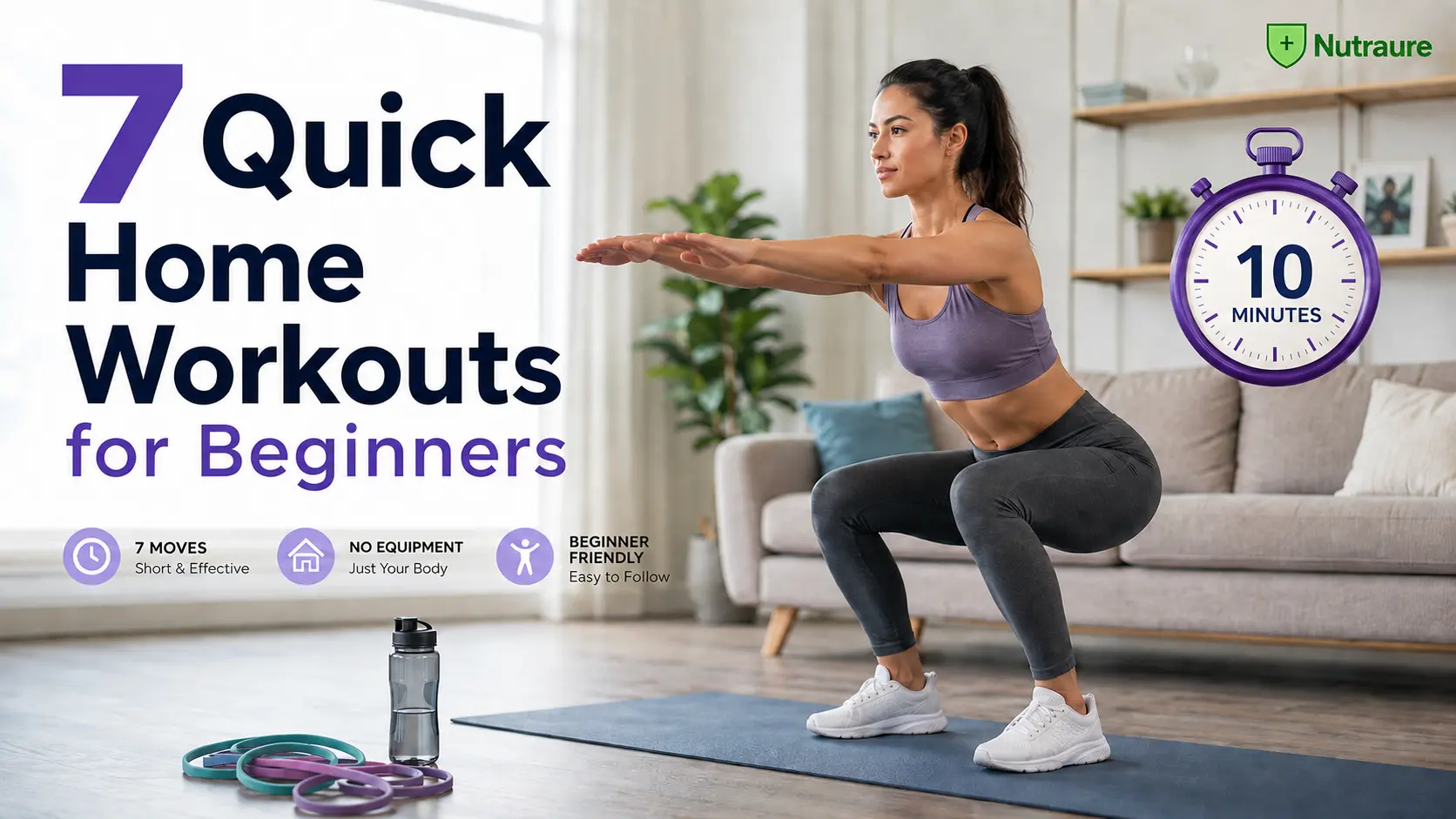
Workout 1: Bodyweight Squats
Bodyweight squats are one of the best beginner exercises because they strengthen the lower body while improving movement control.
Muscles targeted:
- Quadriceps
- Glutes
- Hamstrings
- Core muscles
How to perform:
- Stand with feet around shoulder-width apart.
- Keep your chest upright.
- Lower your hips as if you were sitting in a chair.
- Push through your feet to return to standing.
Beginner mistakes:
- Letting knees collapse inward
- Rounding the back
- Moving too quickly
Workout 2: Incline Push-Ups
Traditional push-ups can feel difficult for beginners. Incline push-ups provide an easier variation while still training the upper body.
Benefits:
- Strengthens chest muscles
- Improves arm strength
- Builds pushing ability
You can perform incline push-ups using a stable table, countertop, or wall.
Workout 3: Walking or Marching in Place
Walking indoors or marching in place is a simple cardio exercise that requires no equipment.
Benefits:
- Improves stamina
- Raises heart rate
- Suitable for beginners
It is a useful option for people who are starting their fitness journey.
Workout 4: Beginner Lunges
Lunges help develop lower-body strength and balance.
Benefits:
- Strengthens legs
- Improves stability
- Supports functional movement
Beginners can start with stationary lunges before progressing to walking lunges.
Workout 5: Plank Hold
Planks train the core muscles that support posture and stability.
Beginner progression:
- Hold for 10–20 seconds
- Rest
- Repeat several times
Focus on maintaining proper form instead of holding the position for a long time.
Workout 6: Jumping Jacks
Jumping jacks are a simple cardio exercise that works the whole body.
Benefits:
- Improves cardiovascular fitness
- Adds intensity to workouts
- Helps increase calorie expenditure
Beginners can modify the movement by stepping side to side instead of jumping.
Workout 7: Mountain Climbers
Mountain climbers combine cardio and core training.
Benefits:
- Works multiple muscle groups
- Improves coordination
- Builds endurance
Beginners can perform slower mountain climbers by focusing on controlled movement.
Beginner 15-Minute Quick Home Workout Routine
A simple beginner workout plan can look like this:
| Exercise | Time |
|---|---|
| Warm-up | 2 minutes |
| Squats | 2 minutes |
| Incline push-ups | 2 minutes |
| Lunges | 2 minutes |
| Plank | 1 minute |
| Jumping jacks | 2 minutes |
| Cool down | 4 minutes |
This routine can be adjusted based on your fitness level. Beginners should focus on completing movements safely rather than rushing.

Common Beginner Mistakes During Home Workouts
Doing Too Much Too Soon
Many beginners start with excessive workouts and lose motivation because the routine becomes difficult to maintain.
Start with realistic goals and increase gradually.
Ignoring Proper Form
Correct technique reduces unnecessary strain and helps you get more benefits from each exercise.
Skipping Recovery
Rest allows your body to adapt and improve. Recovery days, sleep, and hydration are important parts of fitness.
Not Tracking Progress
Tracking workouts can help you notice improvements in strength, endurance, and consistency.
How Fast Can Beginners See Results From Home Workouts?
Results depend on factors such as workout consistency, nutrition, sleep, starting fitness level, and personal goals.
Many beginners may notice early improvements such as:
First 2 Weeks:
- Better energy
- Improved movement confidence
- More workout consistency
4–8 Weeks:
- Increased strength
- Better exercise endurance
- Improved fitness capacity
Long Term:
- Changes in body composition
- Greater physical confidence
- Improved overall fitness habits
The most important factor is staying consistent over time.
Beginner Tips to Stay Consistent With Home Workouts
Create a Fixed Workout Schedule
Choose a realistic time that fits your daily routine.
Start Small
A 10-minute workout that you complete regularly is better than a one-hour workout you avoid.
Track Progress
Record workouts, repetitions, or how you feel after exercise.
Make Workouts Enjoyable
Choose exercises you like and create a routine that feels achievable.
Equipment Needed for Quick Home Workouts
One advantage of home workouts is that beginners can start with little or no equipment.
No Equipment Needed:
- Bodyweight exercises
- Walking
- Mobility movements
Optional Equipment:
- Yoga mat
- Resistance bands
- Dumbbells
Equipment can add variety, but it is not required to begin.
FAQ Section
How long should a beginner home workout be?
Beginners can start with 10–20 minute workouts and gradually increase duration as fitness improves.
Can I get fit with only home workouts?
Yes, home workouts can improve strength, endurance, mobility, and fitness when performed consistently.
What is the easiest workout for beginners at home?
Walking, marching in place, bodyweight squats, and modified push-ups are common beginner-friendly options.
Can beginners lose weight with home workouts?
Home workouts can support weight-loss goals when combined with healthy eating habits and regular physical activity.
How many days a week should beginners exercise?
Many beginners start with three to five workout days per week, depending on their schedule and recovery ability.
Do I need equipment for home workouts?
No. Many effective beginner workouts use only bodyweight exercises.
What is the best time to do a home workout?
The best time is the time you can follow consistently. Morning, afternoon, or evening workouts can all work.
Conclusion
Starting a fitness journey does not require a gym, expensive equipment, or complicated routines. A simple beginner home workout plan can help you build strength, improve stamina, and develop a healthier lifestyle.
The key is consistency. Start with manageable workouts, focus on proper form, and gradually increase the challenge as your fitness improves.
Your first workout does not need to be perfect. It only needs to be the first step.